Dating App Liability: When Platforms Are Held Accountable
🤔 Dating apps aren't immune to liability. This article explores when platforms share responsibility for user safety, examining crucial aspects of dating…
Read article
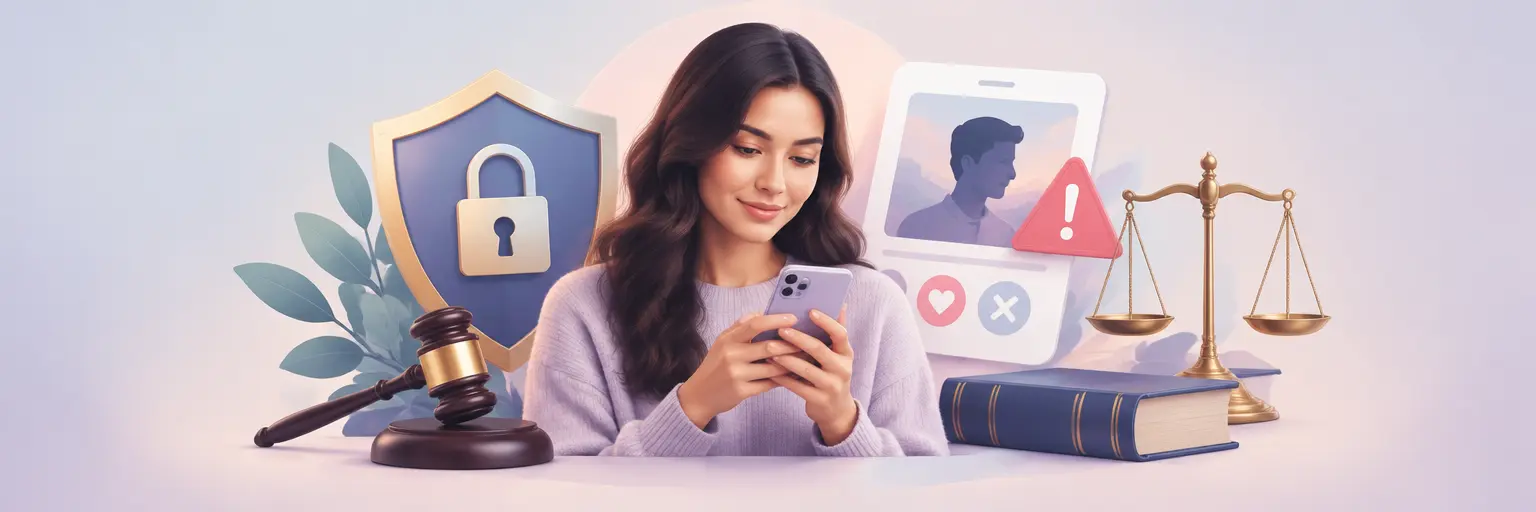
Navigating the legal side of online dating can be just as crucial as crafting the perfect profile. While romance is the goal, understanding the legal aspects of online dating safety helps you protect your identity, finances, and well-being. From knowing your rights against harassment and catfishing to recognizing the boundaries of consent and data privacy, this guidance empowers you to date with confidence. Stay informed, stay protected, and focus on building genuine connections—without legal pitfalls. Your safety begins with awareness, not just caution.

🤔 Dating apps aren't immune to liability. This article explores when platforms share responsibility for user safety, examining crucial aspects of dating…
Read article
🤔 Falling victim to an online dating scam? Don't despair. This article explores your legal options and provides crucial information on securing…
Read article
🤔 Navigating online dating safely requires understanding privacy laws. This article clarifies how these laws protect your data and personal information, ensuring…
Read article
🤔 Dating app financial safety tips are crucial. Never share sensitive financial details with matches. This article provides a legal framework for…
Read article
😊 Navigating online dating's legal landscape is crucial. This article explores key legal precedents, offering insights into online dating legal protection and…
Read article
🤔 Safeguard your online dating experience! This article reveals how to protect online dating profile photos and other personal content from misuse,…
Read article
🤔 Victims of online dating scams can explore legal avenues to recover lost funds. This article outlines strategies for pursuing legal action…
Read article
🤔 Sharing your location on dating apps exposes you to significant safety risks. Learn about the legal ramifications of this practice and…
Read article
🤔 Online dating offers exciting possibilities, but also risks. This article provides crucial online dating identity theft prevention strategies, equipping you to…
Read article
😊 Navigate the world of online dating safely and confidently! This guide provides essential online dating legal safety tips, helping you build…
Read article
🤔 Online dating presents unique challenges for LGBTQ+ individuals. This article explores your legal rights and crucial safety measures for navigating online…
Read article
🤔 Navigating online dating's complexities? Our guide on online dating consent provides crucial legal advice, ensuring you understand your rights and responsibilities…
Read articleNavigating online dating involves more than just emotional connection—it requires awareness of your legal rights and protections. On OnlineDatingSuccess.org, we demystify the laws that safeguard you from fraud, harassment, and identity theft. This subcategory empowers you with actionable legal knowledge to date confidently, report abuse effectively, and avoid inadvertently violating platform policies. From consent laws to data privacy, here’s what every smart dater must know to stay protected both online and offline.
When you encounter romance scams, federal laws like the FTC Act and the Computer Fraud and Abuse Act provide recourse. These laws criminalize deceptive practices, wire fraud, and unauthorized access to personal data. Understanding your ability to file complaints with the FTC, FBI’s IC3, or your local consumer protection office is vital. Many victims hesitate because they feel shame, but legal remedies exist regardless of the amount lost.
State-level consumer protection statutes also offer civil remedies, allowing you to sue for damages. Document everything—messages, payment records, and profiles—to build a strong case. Remember, platforms themselves are legally obligated under the Stop Enabling Sex Traffickers Act (SESTA) to monitor for fraudulent behavior. Knowing these protections lets you pursue justice without fear of retaliation.
Consent is legally central in online dating, covering everything from explicit photos to meeting in person. Digital consent laws often require affirmative, informed agreement—especially for intimate content. Sharing private images without permission can lead to criminal charges under “revenge porn” statutes in many states. Always seek clear, verbal or written consent before sharing personal data or images.
Privacy laws like GDPR and CCPA give you control over your dating profile data. Platforms must disclose how they use your information and allow you to delete it. If a site shares your location or preferences without consent, you can file complaints with data protection authorities. Being proactive about privacy settings reduces legal exposure while enhancing your dating safety.
Online harassment, cyberstalking, and unwanted explicit messages are legally actionable. The Violence Against Women Act (VAWA) and many state laws criminalize electronic stalking, with penalties including restraining orders. You can report persistent harassers to platform moderators, who may ban them, but for serious threats, local police involvement is necessary. Keep every threatening message as evidence.
Many dating apps now have built-in reporting tools that trigger legal documentation. Use the “block and report” function immediately—this preserves a formal trail. For cross-state stalking, the federal Interstate Stalking Act offers additional protections. Understanding the difference between annoyance and illegal stalking helps you decide when escalation is justified. Keep your local law enforcement’s non-emergency number saved.
If you send money to a scammer, your legal recourse includes chargebacks via your credit card under the Fair Credit Billing Act. This law allows you to dispute unauthorized or fraudulent charges within 60 days. Banks often require written documentation of the scam, including emails showing deception. Most card issuers will reverse charges if you prove the transaction was not legitimate.
Beyond chargebacks, you may have rights under the Electronic Fund Transfer Act for wire transfers. However, cryptocurrency payments fall outside these protections, making them prime scam targets. Always use credit cards for any paid dating features to enhance legal coverage. If scammed, contact your bank immediately and file a police report to strengthen your case. Some states also allow civil suits for fraud, which can recover damages beyond the lost amount.
Dating apps rely on Terms of Service (ToS) that limit their liability for user conduct. Legally, platforms are not liable for scammer actions unless they fail to remove reported fake profiles. However, the FTC has sued dating sites for using fake chat bots, establishing that deceptive platform practices are illegal. Read the ToS to understand your rights to refunds and data access.
One legal pitfall is accepting mandatory arbitration clauses—these prevent you from suing in court. Many dating apps include such clauses, but you can still file complaints with the BBB or FTC. Also, beware of “shrinkwrap” terms that change without notice. Download and archive the ToS every few months to track updates. Knowing your contractual rights lets you negotiate or choose safer platforms legally.
Understanding the distinction between criminal and civil law helps you choose your path to justice. Criminal cases involve the state prosecuting offenders for crimes like fraud, stalking, or theft. You may need to testify, but the prosecutor handles the case. Civil cases, however, involve you suing for monetary damages or injunctions, often with lower evidence standards. Many victims pursue both simultaneously.
For dating scams, civil lawsuits can recover losses even if criminal charges fail. However, they are costly and time-consuming. Consult with an attorney specializing in cyber law to assess viability. Some states have small claims courts for under $10,000 claims without lawyers. Always preserve digital evidence, as it becomes crucial in either type of legal process. Knowing which avenue fits your case prevents wasted effort and boosts your chances for resolution.
Yes, but mostly for platform negligence, not the scammer’s actions. You can sue if the site ignored repeated reports, used fake profiles, or violated its own ToS. Most cases involve arbitration, so check your agreement. Success often depends on documented proof of platform knowledge and inaction.
Save all messages, profile screenshots, payment receipts, and usernames. Log the timestamps and platform URLs. Also, export your conversation history from the app. This evidence is vital for police reports, bank disputes, and civil claims. Do not delete any data until after legal consultation.
Yes, in many jurisdictions, sending unwanted explicit images constitutes harassment or even “cyber flashing,” which is criminal in places like California and Texas. It violates civil laws too. Victims can report it to police and the platform, and may seek restraining orders for repeat incidents.
Most states require one-party consent for recording, meaning your date may legally record without telling you. However, sharing intimate recordings without permission can violate revenge porn laws. If you’re in a two-party consent state, secret recording is illegal. Check your local wiretapping statutes and report unauthorized distribution immediately.
It depends on the platform’s refund policy, which is part of its ToS. Many apps offer prorated refunds within a few days, but others have no-refund policies. If the site fails to provide promised services, you may dispute the charge with your bank under consumer protection laws. Read the cancellation terms carefully before signing up.