The Future of Online Dating: Predicting the Next Wave of Innovation
🤔 Online dating's future is bright! This article explores emerging online dating future trends, predicting innovations that will revolutionize how we connect,…
Read article

From dial-up chat rooms to swipe-friendly apps, online dating has evolved into a cultural phenomenon that reshapes how we connect. 🌐 This journey isn’t just about technology—it’s a mirror of shifting social norms, trust-building, and the human quest for love. Understanding this history helps you navigate today’s platforms with sharper insight, whether you’re crafting a standout profile or decoding modern etiquette. Our timeline highlights key milestones—from the first computer-matched couples in the 1960s to the rise of mobile geolocation and algorithm-driven compatibility. By seeing how courtship has adapted to digital spaces, you’ll gain a strategic edge: recognizing why certain features exist, what they signal about user behavior, and how to communicate effectively in an era where first impressions are often a profile photo and a witty bio. Ready to learn from the past to improve your present matches? Dive in to discover how the history of online dating informs smarter choices, safer interactions, and more meaningful relationships today.
🤔 Online dating's future is bright! This article explores emerging online dating future trends, predicting innovations that will revolutionize how we connect,…
Read article
😊 Conquer distance with confidence! Our guide reveals how online dating platforms facilitate long-distance success, offering practical tips to build meaningful connections…
Read article
🤔 Master the art of online dating timing! This article reveals the optimal moments to initiate contact, suggest a date, and progress…
Read article
🤔 Navigating the complexities of online dating? Our expert online dating relationship advice helps you build genuine connections, avoid pitfalls, and find…
Read article
😊 Unlock your dating potential! Learn how choosing the best dating profile photos dramatically increases your matches. This article reveals the secrets…
Read article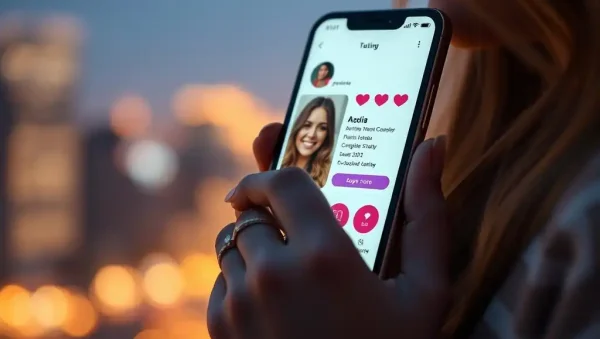
🤔 Dating apps revolutionized romance, but success requires strategy. This article provides expert dating app profile tips to help you craft a…
Read article
😊 Expand your social horizons and discover lasting love! Online dating benefits your social circle by connecting you with compatible individuals you…
Read article
🤔 Online dating presents unique hurdles. This article tackles these challenges, offering practical online dating profile tips and advice to help you…
Read article
🤔 Online dating platforms have fueled a rise in hookup culture, blurring the lines between casual encounters and meaningful connections. Prioritizing Online…
Read article
😊 Online dating has leveled the playing field for romance. This article explores how to navigate this new landscape successfully, offering safe…
Read article
🤔 Uncover the hidden costs of finding love online! This article delves into the financial side of online dating platforms, exploring subscription…
Read article
😊 Navigating the modern dating landscape? Our article, "The Changing Face of Romance," explores how digital platforms have revolutionized love. Discover essential…
Read articleOnline dating has transformed from a niche, stigmatized experiment into a mainstream pathway to romance, with millions of connections forged daily. Understanding its history—from the first computer-mediated matchmaking systems to today’s AI-driven apps—offers crucial insight into modern relationship dynamics. For users of OnlineDatingSuccess.org, this historical context helps you appreciate current trends, avoid outdated pitfalls, and leverage proven strategies for authentic connection. Explore how technological milestones, shifting social norms, and safety innovations have shaped the digital dating landscape you navigate today.
Long before smartphones, the seeds of online dating were sown in the 1960s with computer-based matchmaking. In 1965, Harvard students created “Operation Match,” a punch-card system where users answered questionnaires and received a list of suggested partners. Later, the 1980s saw video dating services like “Great Expectations,” which used VHS tapes to showcase singles—a precursor to today’s visual-first apps. These early systems relied on simplistic algorithms, but they introduced the core concept that technology could facilitate romantic connections beyond one’s immediate social circle.
By understanding these humble beginnings, modern daters can better appreciate the leap in personalization and convenience available today. The pioneers faced immense logistical hurdles—waiting weeks for a match list, or awkwardly rewinding tapes—yet their perseverance normalized the idea of seeking love through machines. This history explains why today’s swipe culture feels so effortless: it’s the culmination of six decades of iterative design. For users, this means your profile’s success depends less on novel tech and more on the timeless human need for clear, authentic self-presentation, just as it did with punch cards.
The mid-1990s marked online dating’s true arrival with websites like Match.com (1995), eHarmony (2000), and OkCupid (2004). These platforms replaced algorithmic novelty with comprehensive personality questionnaires, targeting long-term compatibility. Crucially, this era began destigmatizing digital romance as internet usage surged in Western households. Match.com’s subscription model proved that people would pay for love, while eHarmony’s “29 dimensions of compatibility” promised scientific rigor. By 2005, online dating had shifted from a last resort to a viable alternative to bars and blind dates.
For today’s user, this period established key trust-building features: verified profiles, matching algorithms, and structured icebreakers. The dot-com boom also introduced the now-essential concept of “user profiles” as digital first impressions—a skill still critical for success. Learning from this era, avoid over-optimizing for algorithmic “perfect scores” at the expense of genuine chemistry. Instead, use profile fields to highlight your unique quirks, as pioneers found that authentic storytelling outperformed formulaic answers. The boom’s legacy is your freedom to be selectively vulnerable online, which fosters deeper initial conversations.
The launch of Tinder in 2012 fundamentally rewired online dating’s user experience. Location-based, photo-centric swiping replaced exhaustive profiles with intuitive, game-like interactions. This model boosted user engagement dramatically—daily active users soared because matching felt instant and low-commitment. Concurrently, apps like Hinge (2012) and Bumble (2014) introduced anti-harassment features and prompted-based prompts to encourage substantive dialogue. The smartphone era also democratized dating globally, yet it bred challenges like “ghosting” and shallow decision-making based on 0.5-second photo evaluation.
Understanding this shift helps you navigate current app dynamics strategically. Swipe culture rewards curated photos but penalizes lazy or cliché prompts—use your bio to disrupt the pattern with specific, inviting details (e.g., “I make killer ramen, and I’m training for a half-marathon”). Additionally, Bumble’s women-first messaging model and Hinge’s “designed to be deleted” ethos highlight a post-swipe backlash toward meaningful connections. Your takeaway: leverage gamified features for visibility, but prioritize quality over quantity by pausing before right-swiping. The revolution taught us that while technology dictates interface, your intentionality dictates outcome.
COVID-19 forced online dating into overdrive, turning video chats from an occasional option into a mandatory first step. Platforms rapidly integrated features like video date backgrounds, real-time prompts, and in-app calls to replicate in-person chemistry. This era normalized “slow dating”—spending weeks chatting virtually before meeting, which reduced first-date anxiety and increased self-disclosure. Simultaneously, apps added safety boundaries, such as “safety check” features that share live locations with friends and AI-based scam detection. The pandemic’s legacy is a sophisticated hybrid model: you can now build emotional rapport digitally before committing to physical proximity.
For modern daters, this historical pivot offers tactical advantages. Use video dates as a cost-effective filter: they reveal body language, conversational pace, and responsiveness minus travel or dinner expenses. Craft a “virtual date kit” (good lighting, a neutral background, and open-ended questions) to project professionalism and warmth. Moreover, post-pandemic dating apps have normalized honesty about vaccination status and health habits, reducing awkward conversations later. By embracing these hybrid touchpoints, you reduce misrepresentation risks and increase the likelihood that in-person meetings feel like natural continuations, not risky gambles. The era’s lesson is adaptability—blend digital convenience with human intuition for sustainable connections.
Today’s online dating ecosystem is being reshaped by artificial intelligence. Algorithms now analyze conversational patterns, prompt responses, and even photo aesthetics to suggest matches with predictive accuracy. AI also powers robust background checks, detects fake profiles, and filters explicit content in real-time, enhancing user safety. However, this frontier raises ethical questions: Are AI-generated profile enhancements (like writing prompts for you) authentic? Will algorithmic echo chambers reinforce social biases? Platforms are experimenting with “AI wingmen” that suggest conversation starters, but critics warn this may erode genuine social skills.
For you, the user, this means navigating a double-edged sword. Leverage AI tools for efficiency—like photo selection analysis or message improvement—but maintain your authentic voice to stand out. Remember that algorithms reward consistent engagement, so interact daily but avoid obsessive checking. Additionally, prioritize platforms with transparent AI policies and human moderation for critical reports. As history shows, every technological leap in dating has sparked fears of dehumanization, yet humans adapt by valuing real connections more. The future likely holds hyper-personalized matching, but your success will still hinge on emotional intelligence, clear communication, and respectful boundaries—skills that transcend any algorithm.
Online dating gained mainstream acceptance around the mid-2000s, as broadband internet use expanded and early platforms like Match.com and eHarmony reported successful marriages. However, significant stigma remained until the smartphone-era apps (post-2012), when over 30% of U.S. adults personally knew an online dating couple. Today, it’s widely considered a normal, even preferred, method for meeting partners.
It has broadened the dating pool beyond geographic and social circles, enabling niche matches (e.g., faith-based, hobby-specific). It also shifted initial interactions from in-person charisma to text-based communication, encouraging self-disclosure and structured pacing. Conversely, it has increased choice overload and “disposable” mentalities, making commitment feel harder but more deliberate when chosen.
Early systems lacked verification, leading to misrepresentation and safety risks. For example, video dating services suffered from poor video quality and limited user bases. Also, simplistic algorithms often ignored crucial factors like humor or emotional intelligence, resulting in superficial matches. These failures drove the modern focus on detailed profiles, consent features, and robust moderation.
Yes—patterns suggest continued integration of AI for safety and personalization, plus movement toward “slow dating” and hybrid virtual-physical interactions. Expect more platforms to adopt video-first features and trauma-informed moderation. However, core human desires for authenticity and connection will remain central, meaning competitive differentiation will favor platforms that foster trust rather than just novelty.
Statistically, yes. As of 2023, nearly 40% of new couples met via apps, compared to under 15% in 2009. Success rates for marriages and long-term relationships have doubled, thanks to better compatibility algorithms and behavioral insights. However, success depends heavily on user behavior—crafting honest profiles, practicing active listening, and maintaining realistic expectations—which remains your responsibility regardless of technological evolution.