The Secret to Online Dating Success: Understanding Demographics
🤔Unlock online dating success! Mastering online dating demographics is key. This article provides actionable tips to optimize your profile, messaging, and safety,…
Read article
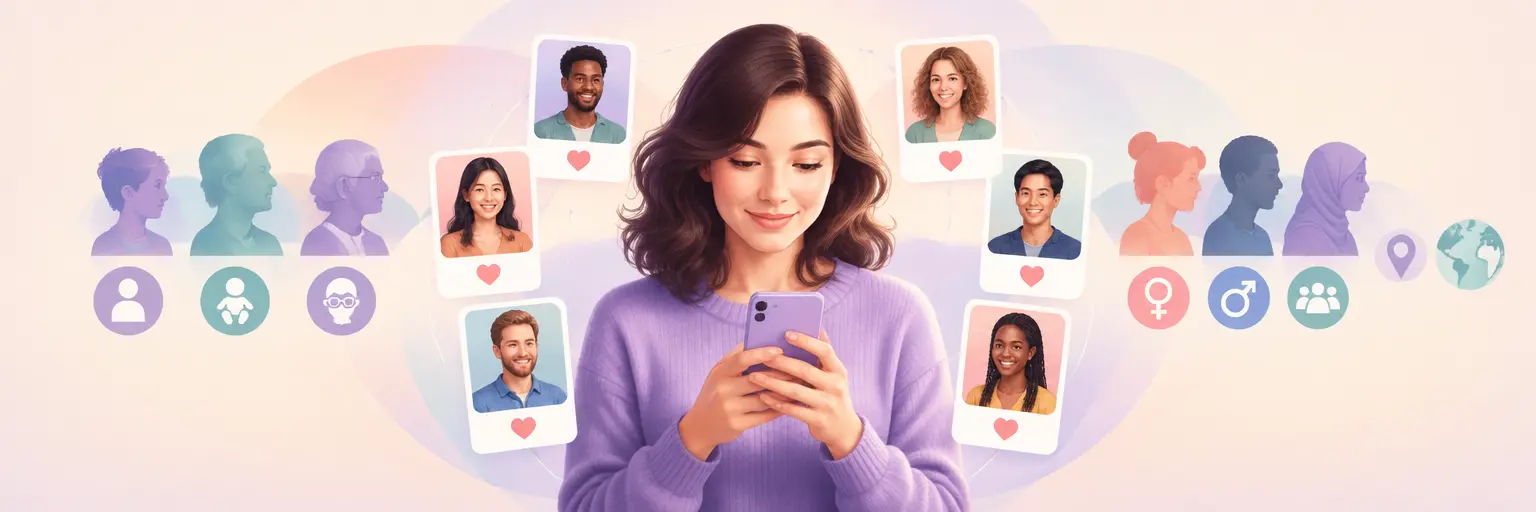
Online dating has evolved into a mainstream social phenomenon, but its success often hinges on understanding the intricate demographic trends that shape user behavior, preferences, and outcomes. From age and gender ratios to geographic density and educational backgrounds, these sociological factors influence everything from swipe patterns to long-term compatibility. At OnlineDatingSuccess.org, we break down the data behind the pixels—helping you leverage this knowledge to optimize your profile, choose the right platform for your age group, and communicate more effectively with potential matches. Whether you’re a digital native or a late bloomer, recognizing how generational norms and cultural expectations impact online interactions gives you a strategic edge. By aligning your approach with real-world demographic realities, you can avoid common pitfalls, enhance your safety, and build more meaningful connections that transcend the algorithm. Explore how these societal dynamics work in your favor—because successful dating isn’t just about luck; it’s about smart, informed engagement.

🤔Unlock online dating success! Mastering online dating demographics is key. This article provides actionable tips to optimize your profile, messaging, and safety,…
Read article
🤔 Make a stellar first impression! Your online dating success hinges on your profile. Learn how to choose the best online dating…
Read article
🤔Navigating online dating? Find partners who truly understand your life stage. Our expert advice helps you craft a profile that attracts compatible…
Read article
😊 Conquer the distance! This guide offers practical tips for navigating international online dating, focusing on building genuine connections while prioritizing your…
Read article
🤔 Re-entering the dating scene after divorce can feel daunting, but with the right approach, it can be rewarding. Our expert advice…
Read article
🤔 Master your online dating demographic strategy! Learn how age, location, and other factors influence profile optimization, communication, and ultimately, finding your…
Read article
🤔 Navigating the digital dating world? Our guide on "The Online Dating Generation Gap: Bridging Differences for Success" offers crucial dating app…
Read article
🤔 Uncover the surprising truths behind online dating preferences. Our analysis of online dating preference research reveals what truly attracts matches, helping…
Read article
🤔 Navigating online dating? Finding someone who shares your faith is crucial. Our guide on online dating religious compatibility helps you create…
Read article
🤔 Social media's integration with online dating presents both opportunities and risks. This article explores how to leverage social media for profile…
Read article
🤔 Online dating cultural differences significantly impact connection success. This article explores navigating diverse backgrounds, offering practical tips for crafting compelling profiles…
Read article
😊Juggling parenthood and online dating? Our expert "Online dating single parent tips" guide helps you craft a compelling profile, manage time effectively,…
Read articleIn the digital age, online dating isn’t a monolith—it’s a vibrant mosaic shaped by age, gender, location, education, and even cultural background. The subcategory of Online Dating and Demographics dives deep into the data behind the swipes, helping you make smarter choices about where to invest your time and energy. Whether you’re a Gen Z user on the latest app or a baby boomer exploring late-life romance, understanding demographic trends can dramatically improve your matchmaking odds. Here, we break down the who, what, and why of modern dating pools, so you can tailor your profile, messaging, and expectations to the reality of your digital neighborhood.
Age is the first and most visible demographic filter on any platform. Younger users (18-24) dominate visual-heavy apps like Tinder and Instagram-style features, favoring quick, casual interactions. Meanwhile, users aged 30-45 often migrate to relationship-focused platforms like Hinge or Match, seeking stability and long-term compatibility. Older adults (55+) increasingly use SilverSingles or OurTime, where the emphasis shifts to companionship and shared life experiences. Understanding these age clusters helps you choose the right app and craft a profile that resonates—no more shouting “serious only” on a hookup-heavy site.
Moreover, age affects communication style: younger users prefer memes and GIFs, while older groups appreciate direct, warm language. By aligning your tone with the demographic norm, you reduce friction and increase response rates. Don’t underestimate the power of age-specific features, like video prompts for Gen Z or detailed profiles for boomers. When you match your approach to the age cohort’s expectations, you’re not just casting a wider net—you’re casting a smarter one.
Where you live drastically changes your dating pool’s size and composition. Urban centers boast dense, diverse user bases, making it easier to find niche interests but harder to stand out. In contrast, rural communities have smaller pools, often leading to more cross-app overlap and longer-distance matches. Demographics also shift by region: coastal cities skew younger and more liberal, while the Midwest may have more family-oriented profiles. Recognizing these geographic patterns helps you adjust your search radius, mention your lifestyle (e.g., walkability vs. car reliance), and set realistic expectations about commute-based dating.
Furthermore, urban users face higher competition—your profile must be crisp, authentic, and visually appealing to cut through noise. Rural users, however, benefit from deeper community ties; leveraging local keywords (e.g., “weekend hikes near Boone”) can resonate instantly. Don’t overlook time zones either: a daily active user in your timezone is far more likely to reply promptly. By tailoring your bio and active hours to your geographic demographic, you maximize visibility without spamming the algorithm.
Gender imbalances are a hidden driver of online dating success. On most mainstream apps, male users outnumber female users by roughly 2:1, which intensifies competition for men’s attention and gives women more inbound messages. Conversely, apps like Bumble flip this dynamic, giving women control. Understanding these ratios lets you adapt: men should write tailored, respectful openers that stand out from generic “hey,” while women might use their inbox influx to filter more selectively. For non-binary users, niche apps like Taimi or Hinge’s expanded options offer more balanced spaces.
Additionally, gender affects profile expectations—women often receive more “likes” but fewer quality matches, while men struggle with visibility. Use high-quality photos, a clear bio, and conversation starters that invite replies. If you’re in a low-competition demographic (e.g., older women on certain apps), leverage that scarcity by being proactive. The key is to avoid frustration: see gender ratios as a strategic map, not a verdict. Optimize your profile based on who is actually viewing it, not who you wish would.
Demographic research consistently shows that online daters prefer partners with similar education and income levels. Apps like EliteSingles or The League cater explicitly to this, using algorithms to filter by degree and profession. But beyond filters, highlighting your education and career goals in your bio attracts like-minded people—whether it’s a PhD student seeking intellectual banter or a tradesperson proud of their craftsmanship. This isn’t about elitism; it’s about compatibility. Shared educational backgrounds often correlate with communication styles, problem-solving approaches, and lifestyle preferences, from travel habits to book choices.
Income is trickier—most users underreport or avoid mentioning it, yet it subtly influences willingness to meet in person. A well-written profile that shows ambition (e.g., “launching my startup” or “teacher who loves summer travel”) signals economic stability without a salary number. For matches, use the first few messages to explore life goals: “What’s a typical weekend for you?” reveals more than a bank balance. By aligning your profile with demographic preferences, you attract partners who value the same trade-offs—like work-life balance or long-term security—increasing the likelihood of a meaningful connection.
Cultural background shapes not only who you swipe but how you interpret profiles. For example, Latinx users often appreciate warmer, family-oriented language, while East Asian profiles may prioritize career achievements and filial piety. White and Black users, meanwhile, face distinct stereotyping—bespoke algorithms may suggest matches based on ethnicity, even when you haven’t explicitly filtered. Understanding these dynamics helps you craft a profile that highlights your cultural identity authentically, whether that’s sharing food traditions, language phrases, or religious practices. It also prepares you for cross-cultural conversations about expectations around marriage, gender roles, and social life.
Moreover, mixed-race and LGBTQ+ users navigate unique demographic waters: they often find more acceptance on apps like OkCupid or Hinge, which allow granular identity filters. Use photo captions to signal open-mindedness (e.g., “Foodie who loves pho and pasta—bonus points if you can teach me”). Within your bio, mention cultural events you enjoy or languages you speak, as these serve as icebreakers that bypass shallow small talk. By embracing your heritage rather than hiding it, you attract partners who value diversity, leading to more respectful and enriching relationships.
Yes, age affects algorithm placement and user expectations. Younger users (20s) often match more quickly, while older users (50+) may see fewer but more serious matches. Optimize by choosing an app aligned with your age group—Tinder for 20s, Hinge for 30s, SilverSingles for 50+—and adjust your profile tone accordingly. Consistency trumps speed.
Older users (35+) and women are more likely to seek long-term relationships, while younger men often lean casual. However, your stated intentions matter more than statistics. Use clear prompts like “looking for a partner for hikes and deep talks” to attract the same mindset. Check demographic benchmarks to set expectations.
In cities with high user density, specificity wins. Avoid generic phrases like “love to travel.” Instead, mention neighborhood favorites (e.g., “Sunday brunch rolls in Brooklyn”), unique hobbies (e.g., “amateur pottery”), or a humorous hook. Quality photos that show you in local settings outperform stock backgrounds.
Filtering by education can save time if intellectual compatibility is critical. But don’t be rigid—many users have unconventional learning paths. Use education as a soft indicator, and rely on conversation to gauge curiosity. Apps like EliteSingles emphasize degrees, but broader apps allow mixed matches.
Show curiosity without stereotypes. For example, “I saw you’re from Seoul—what’s a dish I should try making?” This opens dialogue without assuming. Be respectful of religious or family values; ask open-ended questions about traditions. Genuine interest builds bridges, not barriers.