The Dating App Advantage: How to Use These Platforms to Find Your Ideal Partner
🤔 Unlock your dating potential! Learn the best dating app profile tips to craft a compelling profile, communicate effectively, and navigate the…
Read article
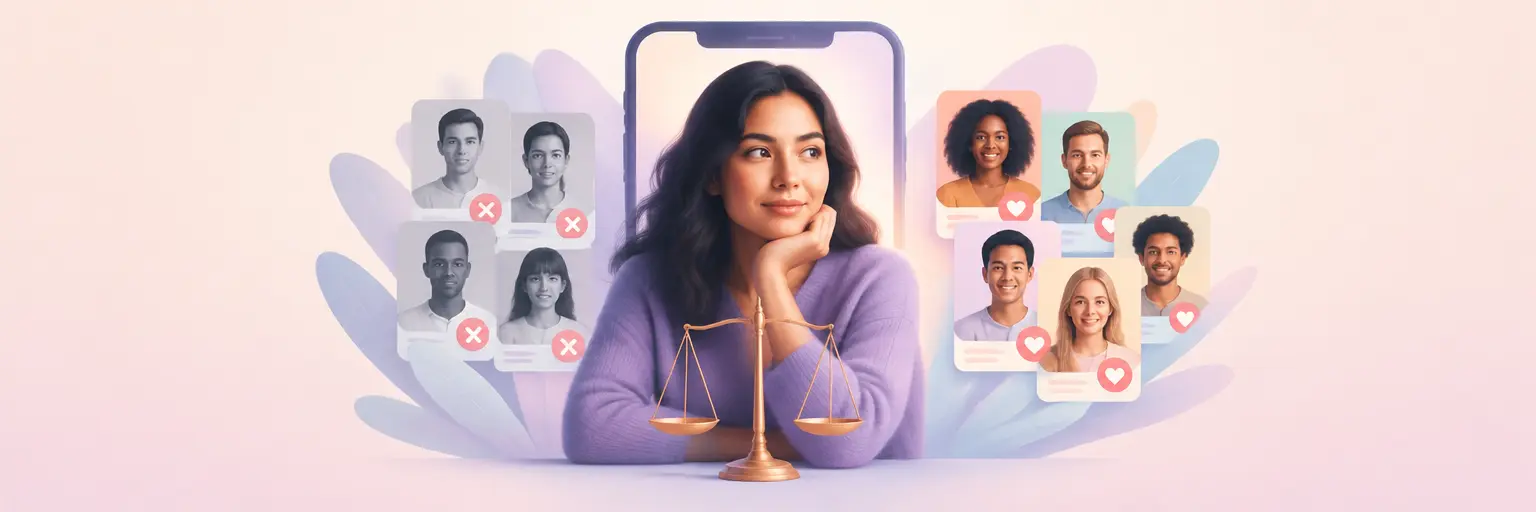
Dating apps promise connection, but hidden biases in algorithms and user behavior can quietly shape who you see—and who sees you. From racial and age-based filtering to gender assumptions and socioeconomic stereotyping, discrimination can undermine the very purpose of finding love. This guide empowers you to recognize bias in swiping, messaging, and profile curation, while offering actionable strategies to push back against unfair patterns—whether you’re tweaking your own preferences, reporting problematic users, or advocating for more inclusive platform policies. Your journey to meaningful connection shouldn’t be derailed by prejudice. Learn to spot red flags, leverage privacy settings to widen your pool, and communicate assertively when you encounter biased treatment. Small, informed actions create ripple effects—both for your own experience and for a more equitable dating ecosystem. Stand up, stay safe, and swipe smarter with confidence, knowing that respect and authenticity always win over bias.

🤔 Unlock your dating potential! Learn the best dating app profile tips to craft a compelling profile, communicate effectively, and navigate the…
Read article
🤔 Tired of dating apps prioritizing profit over people? This article explores how we can demand better from ethical online dating platforms,…
Read article
😊 Tired of swiping endlessly? Our guide, "The Dating App Revolution," unlocks the secrets to online dating success. Master online dating profile…
Read article
🤔 Navigating the online dating world? This article unravels the hidden biases shaping your dating app experience. We explain how algorithmic and…
Read article
🤔 Conquer online dating's challenges! This guide offers expert online dating profile tips, communication strategies, safety advice, and steps to build genuine…
Read article
😊 Tired of superficial swipes? This article reveals the secrets to finding meaningful online dating connections. Learn how to craft a compelling…
Read article
🤔 Stop swiping, start connecting! This article reveals the secrets to crafting a dating profile that attracts genuine dating app connections. Learn…
Read article
😊 Authentic online dating profiles are key to combating discrimination. Showcase your true self; genuine representation attracts compatible partners and fosters healthier,…
Read article
🤔 Feeling burnt out by endless swiping? A dating app break can be the confidence boost you need. Reclaim your self-worth and…
Read article
😊 Tired of online dating's negativity? Learn how to craft an inclusive online dating profile that attracts genuine connections. Our expert tips…
Read article
😊 Tired of exclusionary dating apps? This article explores how to build truly inclusive online dating platforms, fostering safer and more successful…
Read article
😊Tired of generic dating profiles? This article shows you how to reclaim your dating profile narrative, crafting an authentic story that attracts…
Read articleOnline dating should be a gateway to connection, not a mirror of societal prejudice. Yet, bias and discrimination—based on race, body type, age, disability, sexual orientation, or gender identity—can silently shape who gets seen, swiped, and loved. On OnlineDatingSuccess.org, we believe that ethical dating starts with awareness. This subcategory empowers you to recognize, navigate, and challenge these biases, whether you’re a user facing unfair treatment or an ally striving for inclusivity. Discover actionable strategies to foster respect, protect your mental health, and advocate for more equitable platforms.
Dating apps are not neutral; their algorithms learn from user actions, often amplifying existing preferences and stereotypes. For example, racial filtering (explicit or implicit) can skew matches, while “height” or “body type” filters may reinforce narrow beauty standards. As a user, you might notice that certain profiles get shown more frequently, or that you receive fewer responses based on your identity. Understanding these patterns is the first step toward mitigating their impact.
To protect your experience, regularly review your own swipe habits—are you unconsciously excluding certain groups? Use app settings to hide discriminatory filters, and report users who post hateful or exclusionary bios. Research shows that diverse search results lead to more meaningful connections, so deliberately expand your criteria. By acknowledging that bias exists in digital spaces, you can make conscious choices that align with your values, not just societal conditioning.
If you belong to a marginalized group, dating apps can feel exhausting—from fetishization to outright hostility. Establishing firm boundaries is crucial. Craft your bio to clearly state your deal-breakers (e.g., “No racists, no transphobes”), and use block/mute features liberally without guilt. Never tolerate “harmless jokes” that demean your identity; they’re red flags. Also, consider using apps that prioritize inclusivity, such as those with robust reporting systems and identity-based communities.
Confidence is your armor. Remind yourself that rejection often stems from bias, not your worth. Share your experiences in supportive online forums or with trusted friends to combat isolation. If you face severe harassment, document screenshots and report to the platform—and, if necessary, local authorities. Finally, set time limits for app usage to prevent burnout; your mental health is more important than any match. You deserve love without having to shrink yourself.
Allies play a powerful role in disrupting bias. Start by examining your own profile—does it welcome diverse audiences, or does it subtly exclude? Avoid language that stereotypes (“looking for a real man” or “no drama”) and instead focus on shared interests. When you see a discriminatory profile or comment, use the “report” feature; platforms act faster with volume. Also, actively engage with profiles outside your usual “type” to broaden your own perspective and signal to algorithms that diversity matters.
Beyond individual actions, allyship means amplifying marginalized voices. Share articles like this one on your social media, and ask your favorite apps to implement anti-bias training for moderators. Support businesses that enforce strict anti-hate policies. Remember, challenging bias is not about being “woke”—it’s about creating a dating ecosystem where everyone has an equal shot at love. Every respectful interaction you model encourages others to follow suit.
Not all dating apps are created equal. Some, like Hinge, have publicly committed to inclusivity by removing race filters, while others lag behind. Research app policies before downloading—check for explicit anti-discrimination clauses and visible reporting mechanisms. Opt for platforms that offer identity-specific categories (e.g., LGBTQ+ or BIPOC-centric) or use features like “verified” badges to reduce catfishing and harassment. Voting with your wallet forces change.
Advocacy is key. Write to app developers requesting transparent AI audits and user surveys on discrimination experiences. Join user petitions or social media campaigns that demand ethical design. Some apps now publish diversity reports—hold them accountable for their metrics. If you’re a developer or designer, consider this your call to action: build algorithms that penalize hate speech and reward genuine, cross-cultural matches. Ethical design isn’t a luxury; it’s a requirement for sustainable growth.
Sometimes, bias surfaces in direct messages—a microaggression about your accent, a “joke” about your skin color, or an assumption about your disability. Your immediate reaction matters. First, stay calm and decide whether a reply is worth your energy. A concise, firm response works best: “That comment is offensive because…” or “I don’t appreciate being stereotyped.” Then, disengage immediately—do not argue. Block and report the user to prevent further harm.
For less egregious comments, you might choose to educate gently: “Hey, that phrase might alienate others. Just a heads-up.” But remember, you are not a free educator; prioritize your safety over politeness. If the conversation turns hostile, screenshot everything before blocking. This documentation helps platforms act against repeat offenders. Ultimately, your goal is to protect your peace—not to change every bigot. Choose battles that preserve your dignity and time.
Research shows that discrimination on dating apps leads to lower self-esteem, increased anxiety, and even reduced trust in future partners. For example, a 2022 study found that users of color receive up to 30% fewer matches on mainstream platforms, directly affecting their willingness to engage. This isn’t just a personal problem—it’s a systemic barrier to relationship formation. Understanding these statistics empowers you to see rejection as part of a larger pattern, not a personal failure.
Moreover, bias affects who you meet, limiting the diversity of your dating pool and potentially reinforcing echo chambers. By proactively challenging discrimination, you create a ripple effect: more inclusive platforms attract more diverse users, which normalizes cross-group connections. Track your own app usage—do you feel more drained after certain interactions? Mindful reflection helps you set better boundaries and choose platforms that align with your emotional needs. Your wellbeing is the ultimate metric of success.
Check their official policies for explicit anti-discrimination language and look for transparency reports on hate speech moderation. Read user reviews on Reddit or Trustpilot, focusing on experiences from marginalized groups. Also, test their reporting flow—does it offer specific reasons like “racism” or “ableism”? Inclusivity is proven by design features, such as customizable gender options and no race-based filters.
First, review your profile and conversations for unintended bias—sometimes your words are misinterpreted. Contact the app’s support team with screenshots and context. If the issue persists, create a new account with clearer boundaries. Remember, being reported isn’t automatically evidence of wrongdoing; but repeated occurrences may require self-reflection. Keep a log of incidents to spot patterns.
While you have the right to personal preferences, be aware that fixed filters can reinforce harmful stereotypes. Instead, consider focusing on traits that truly matter, like shared values or emotional intelligence. If you do have a physical preference, phrase it constructively (“I’m drawn to athletic builds”) rather than exclusionary (“No short men”). Many users find that openness leads to surprising and rewarding matches.
Remember that reporting protects not only you but also other potential victims. Platforms rely on user reports to enforce rules; your action is civic duty, not tattling. Screenshot the exact message or profile content, then choose “Harassment” or “Hate Speech” as the reason. You don’t need to wait for severe harm—even a subtle microaggression warrants a report if it violates terms. Guilt fades; safety remains.
Yes, but only with intentional design. For instance, some apps use “blind” profiles (no photos first) to encourage personality-based matches, which reduces appearance bias. Others implement AI moderation that flags discriminatory language in real time. However, technology alone isn’t enough—it requires user feedback loops and human oversight. As users, you can push for these features by demanding accountability and supporting apps that invest in fairness.