Mastering the Psychology of Swiping: Decode the Digital Dating Mind
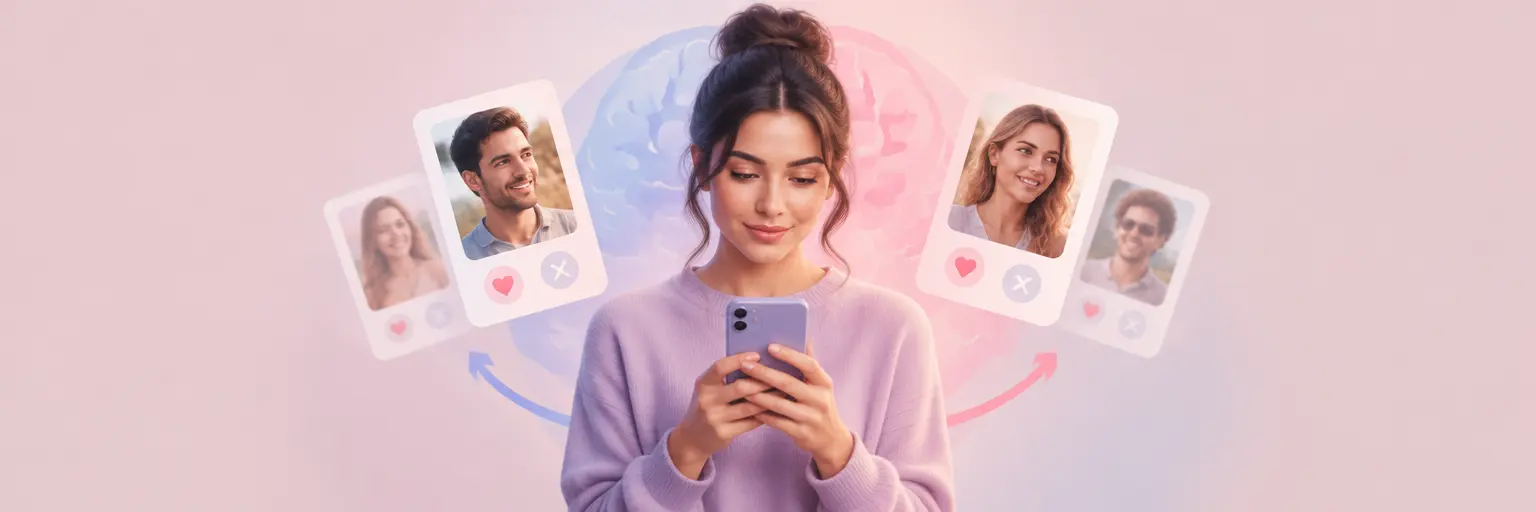
Welcome to The Psychology of Swiping, the core of your Dating App Dynamics strategy here at OnlineDatingSuccess.org. This isn’t just about left or right—it’s about understanding the subconscious triggers, visual cues, and behavioral biases that drive every decision on Tinder, Bumble, Hinge, and beyond. By mastering this psychology, you’ll move from random swiping to strategic profile optimization that boosts your matches and builds meaningful relationships. Let’s unpack the mental mechanics behind every swipe, so you can stand out in a crowded feed.
🧠 The Instant Judgment: Why First Impressions Rule in Under a Second
Your brain evaluates a potential partner in roughly 0.5 to 1 second during a swipe. This is a primal, quick-fire assessment based on visual appeal, facial symmetry, and perceived confidence. The mere-exposure effect also plays a role—people tend to prefer faces that resemble their own or those they’ve seen before. To win here, your first photo must be a high-resolution, warm, and authentic shot that signals openness. Avoid group photos or sunglasses, as they inhibit the rapid subconscious trust-building that determines your fate.
Beyond looks, the halo effect means that one positive trait—like a genuine smile—can overshadow other perceived flaws. Conversely, a low-quality or blurry image creates an immediate negative halo that no bio can fix. The psychology of swiping is heavily biased toward positive visual cues; even a slight head tilt can make you appear more approachable. Therefore, choose a photo with natural lighting, a clear view of your face, and a relaxed posture. This isn’t vanity—it’s cognitive science applied to your dating profile.
📱 The Dopamine Loop: Why Swiping Feels Addictive and How to Use It
Every swipe triggers a small release of dopamine, the brain’s reward chemical, especially when you match. This is the same neurological path activated by slot machines—variable rewards keep you engaged. This means your profile must create curiosity and anticipation. Instead of listing every hobby, use a teaser bio that invites a swipe right and then a conversation. For example, “Ask me about my disastrous hiking story” triggers a playful emotional response. This taps into the Zeigarnik effect—people remember incomplete tasks better than completed ones.
To leverage this positively, position yourself as a reward in the swiping game. Showcase a mix of high-value photos (travel, social adventures, hobbies) that promise a fun, fulfilling interaction. Avoid negativity or bland statements like “looking for a partner in crime,” which are overused and low-dopamine. Instead, highlight unique experiences that make someone subconsciously think, “I want to be part of that.” By understanding this addictive loop, you’ll craft a prompt that stands out, encouraging a match before you even say hello.
🎯 The Similarity-Attraction Bias: Mirroring to Boost Match Rates
Psychologists call it assortative mating—we are instinctively drawn to people who share our interests, values, and even physical traits. On dating apps, this manifests through the similarity-attraction effect. Your profile should therefore communicate clear, specific interests that act as filters. Instead of “I love music,” say “I’m a vinyl collector and indie concert junkie.” This invites like-minded individuals to swipe right, increasing the quality of your matches dramatically. You’re not trying to appeal to everyone; you’re appealing to your tribe.
Likewise, the matching hypothesis suggests people aim for partners of similar perceived attractiveness. Overly glamorous or heavily filtered photos can trigger insecurity and result in left-swipes. Authenticity wins here. Use realistic, unposed shots that show your genuine lifestyle. When you mirror the energy and content of your ideal partner—say, a reader, a hiker, or a foodie—your profile becomes a magnetic beacon. This psychological shortcut explains why profiles with three clear interests outperform generic ones. Start listing what truly excites you, and watch your match rate climb.
🛑 The Negativity Bias: Avoiding Profile Red Flags Instantly
Your brain is hardwired to detect threats faster than rewards, known as the negativity bias. On dating apps, this means a sarcastic or negative bio—like “I hate drama” or “Don’t waste my time”—immediately repels potential partners. Swipers are subconsciously scanning for red flags that signal conflict, insecurity, or entitlement. Instead, position your profile with a positive, solution-oriented tone. Show what you do enjoy (e.g., “I love quiet Sunday brunches and spontaneous road trips”) rather than what you reject. This primes the brain for safety and connection, not caution.
Another hidden red flag is the use of negatively framed prompts, such as “Looking for someone who doesn’t ghost.” This signals past trauma and desperation, which triggers a defensive reaction. The contrast effect also matters—if your bio complains about previous dates, you’re comparing negatively to your competition. Replace any negative language with curious, inviting statements. For example, “Let’s swap travel stories over tacos” is approachable and encouraging. By eliminating negativity, you’ll appear more emotionally stable and attractive, dramatically increasing your right-swipe percentage.
💬 The Conversation Catalyst: How Swipe Psychology Transfers to First Messages
The moment you match, the psychology of swiping shifts from visual appraisal to verbal engagement. Your first message must not feel like a generic “Hey.” Instead, reference something specific from their profile to show you paid attention. This activates the reciprocity principle—if you give a thoughtful compliment, they’re more likely to respond. For instance, “I see you climbed Kilimanjaro—what was the hardest part?” sparks a detailed, emotional answer, bypassing the usual small talk. This reflects the rule of footwear: dive into the heart of their interests.
Beyond that, the expectation-violation theory can work in your favor. Sending a playful, unexpected question—like “What’s your go-to karaoke song?”—breaks the monotony of standard greetings, creating intrigue. Avoid compliments solely on looks; research shows that praising intelligence or humor leads to longer, more meaningful exchanges. This is where the psychology of swiping transitions into relationship-building. By aligning your message with their profile’s cues, you extend your initial match into a genuine connection. Keep the momentum going with open-ended questions that encourage storytelling, and you’ll schedule that first date in no time.
Frequently Asked Questions
How long does the average user spend deciding to swipe left or right?
Research suggests the average swipe decision takes roughly 1 to 3 seconds, though many decide in under a second. This is a subconscious, automatic process driven by visual appeal and emotional resonance. To beat the clock, your primary photo must convey warmth, confidence, and clarity instantly. Avoid cluttered backgrounds or distracting elements that slow down comprehension.
Does swiping psychology differ between men and women?
Yes, studies indicate women are more selective, evaluating social proof, humor, and safety signals in addition to looks. Men often rely more on visual allure initially. However, both genders respond positively to authentic, expressive profiles. Tailor your approach by highlighting emotional intelligence in your bio (for women) or adventure and career drive (for men), but always keep authenticity first.
Why do I often match with people I wouldn't normally date?
This is the mere-exposure effect combined with algorithm fatigue. Apps often show profiles similar to your past swipes, but your subconscious can be tricked by flattering angles or clever prompts. To counter this, actively review your swipe history for patterns and slow down. Set an intention to only swipe right on profiles that genuinely reflect your core values, not just momentary attraction.
Can a well-optimized bio overcome a mediocre photo?
No—photos are king in swiping psychology, as they trigger the affective reaction before your bio is read. While a witty bio can save you from a left-swipe after a decent photo, a weak photo almost always results in a rejection. Prioritize getting 2-3 high-quality, authentic shots that show your face, hobbies, and a genuine smile. Your bio amplifies, but it doesn’t replace visual first impressions.
How does the “swiping fatigue” affect my match strategy?
Swiping fatigue leads to decision fatigue, making users less thoughtful and more impulsive. They may swipe right on profiles they’d normally reject just to feel novelty. To stand out, your profile should offer a mental break—use humor or a unique prompt that feels refreshing. Also, time your swiping when you’re mentally fresh, and remember that quality over quantity always yields better psychological connections.