
The Genesis of Connections: Unveiling the PreInternet Roots of Modern Dating

Ready to rewrite your dating story? At OnlineDatingSuccess.org, we delve into the fascinating world of finding love online. But did you know the quest for connection predates the internet? Our latest article, "The Genesis of Connections: Unveiling the Pre-Internet Roots of Modern Dating," explores the surprising origins of online dating history, revealing how today's digital landscape evolved from much more analog beginnings. Discover the unexpected history that shaped modern romance and unlock the secrets to creating your own happily-ever-after. Let's dive in!
- Online Dating History Origins: A Journey Through Time
- From Bulletin Boards to Online Forums: The Seeds of Online Interaction
- The Dawn of Dedicated Online Dating Platforms: The 1990s Revolution
- Evolution of Online Dating: From Text-Based to Multimedia
- Online Dating History Origins: A Legacy of Connection and Evolution
- The Future of Online Dating: Building on the Past
-
Frequently Asked Questions
- What is the article "The Genesis of Connections: Unveiling the Pre-Internet Roots of Modern Dating" about?
- How does the article connect the past to present-day online dating?
- What historical examples are likely discussed in the article?
- Why is understanding the history of dating important for online daters?
- Where can I find more information about the history of online dating specifically?
- Final Reflection: Echoes of the Past in Our Digital Present
- Uncover Your Own Love Story: From Pen Pals to Perfect Matches
Online Dating History Origins: A Journey Through Time
Before the ubiquitous swipe right and the carefully curated profile picture, the quest for love and companionship followed a very different path. Understanding the history of online dating requires a journey back in time, exploring the pre-internet roots of modern dating practices. This article delves into the evolution of matchmaking, from traditional methods to the early days of computerized dating systems, revealing the fascinating genesis of the online connections we take for granted today.
We'll uncover how the desire for connection has always been a human constant, adapting and evolving alongside technological advancements, shaping the online dating landscape we know today. This exploration of "online dating history origins" will provide context for the current digital dating scene and highlight the enduring human need for meaningful relationships. Understanding this history allows us to appreciate the complex journey of online dating and its impact on modern romance.
Early Matchmaking Services and Personal Ads
Long before the advent of the internet, the search for a partner relied on various methods, many of which laid the groundwork for modern dating practices. Traditional matchmaking services, often run by community members or individuals, played a significant role in connecting people. These services relied heavily on word-of-mouth referrals and personal knowledge of individuals' characteristics and preferences. Think of the shadchan in Jewish communities or similar figures in other cultures, acting as trusted intermediaries to facilitate introductions. These early forms of matchmaking emphasized community connections and shared values, contributing to a sense of trust and shared understanding.
Simultaneously, personal ads in newspapers and magazines offered a more anonymous yet accessible avenue for finding potential partners. These ads, often brief and cryptic, relied on carefully crafted descriptions and coded language to attract attention. The act of composing and responding to these ads involved a thoughtful process of self-representation and interpretation, a precursor to the carefully crafted profiles found on today's dating apps.
While less personal than matchmaking services, personal ads provided a wider reach and a degree of anonymity, appealing to those seeking a less traditional approach to finding a partner. The success rate varied greatly, of course, depending on the clarity of the advertisement and the compatibility of the individuals involved. The limitations of these methods highlight the inherent challenges and excitement of searching for a connection, regardless of the tools available.
The Rise of Computerized Dating Systems in the 1960s and 70s
The 1960s and 70s marked a pivotal moment in the evolution of dating, with the emergence of computerized dating systems. These early attempts to leverage technology for matchmaking represented a significant leap forward, moving beyond the limitations of traditional methods. The initial systems were rudimentary by today's standards, but they paved the way for the sophisticated algorithms and user interfaces that characterize modern online dating.
This era saw the transition from reliance on personal networks and chance encounters to a more systematic, data-driven approach to finding romantic partners. The shift towards technology reflected the growing influence of computers in society and a desire to streamline the process of finding a compatible partner.
Early Dating Software and Algorithms: Harvard's "Operation Match"
One of the earliest examples of computerized dating was Harvard University's "Operation Match," which debuted in the 1960s. This pioneering project utilized a simple algorithm that matched students based on a questionnaire. The questionnaire, a series of questions designed to reveal personality traits and preferences, provided the raw data for the matching process. The algorithm, while basic, represented a novel attempt to quantify compatibility and suggest potential partners based on shared characteristics.
This marked a departure from traditional matchmaking, moving towards a more quantitative and systematic approach. Although the success rate might not have been perfect, "Operation Match" demonstrated the potential of using computers to facilitate romantic connections. Its legacy lies in its pioneering spirit and its influence on subsequent developments in computerized dating.
Limitations of Early Computerized Dating: Limited user base, reliance on punch cards, lack of sophisticated matching algorithms
Despite their innovative nature, early computerized dating systems faced significant limitations. The user base was often small and restricted to specific communities or institutions, limiting the pool of potential partners. Furthermore, data input relied heavily on punch cards, a cumbersome and inefficient process that restricted the amount of information that could be collected and processed. The matching algorithms themselves were relatively unsophisticated, relying on simple matching criteria and lacking the complexity of modern algorithms.
The lack of sophisticated matching algorithms meant that compatibility assessments were often superficial, leading to less accurate and effective matches. These limitations, though significant, highlight the incremental progress that eventually led to the sophisticated online dating platforms we use today. The journey from punch cards to sophisticated AI-powered matching systems underscores the continuous evolution of online dating technology.
From Bulletin Boards to Online Forums: The Seeds of Online Interaction
This section delves into the fascinating pre-internet history of online dating, exploring how early forms of digital communication laid the groundwork for the sophisticated online dating platforms we know today. Understanding these origins provides valuable context for appreciating the evolution of online dating and its impact on modern relationships. The keyword "Online dating history origins" is central to this exploration.
Early Online Communities and the Emergence of Romance
Long before the advent of dedicated dating websites, early online communities inadvertently fostered romantic connections. These nascent digital spaces, often characterized by shared interests and hobbies, provided fertile ground for relationships to blossom. Think of the early days of MUDs (Multi-User Dungeons) and MOOs (MUD, Object-Oriented), text-based virtual worlds where users interacted through typed commands.
Within these virtual environments, friendships formed, and eventually, romantic relationships emerged. These early interactions, while text-based and limited in their visual aspects, highlighted the fundamental human desire for connection, transcending physical limitations. The shared experiences and collaborative nature of these early online communities created a sense of intimacy and trust, paving the way for the development of more direct forms of online dating.
This organic development of relationships within these communities showcases the inherent human need for connection, a driving force behind the evolution of online dating throughout history. The sheer number of people connecting in these early spaces, however limited by technology, foreshadowed the massive scale of modern online dating platforms.
The Role of Bulletin Board Systems (BBS) in Finding Connections
Bulletin Board Systems (BBSs) played a pivotal role in the early stages of online interaction, offering a more structured approach than MUDs and MOOs. These systems, accessible via dial-up modem, allowed users to exchange messages, participate in discussions, and share files. While not explicitly designed for dating, many BBSs developed sections or forums dedicated to personal ads or classifieds.
Users could post profiles describing themselves and their interests, seeking potential matches. This represented a significant step towards the targeted approach of modern online dating, allowing individuals to explicitly seek romantic connections within a digital space. The rise of BBSs demonstrates a crucial shift in how people sought companionship; the limitations of geographical proximity were gradually overcome, opening up possibilities for connections beyond immediate social circles.
The success of this early form of online personals highlights the enduring human desire to connect with others who share similar interests and values, a key element in the success of modern online dating. The data available on the number of BBS users and the prevalence of personal ads within these systems would provide valuable quantitative data to further support this analysis. [Specific information pending on BBS user statistics and personal ad prevalence].
The early internet presented unique challenges and opportunities for those seeking romance online. The technology itself was rudimentary, with slow connection speeds and limited bandwidth. Furthermore, online safety and privacy were significant concerns. The anonymity afforded by the internet also presented potential risks, including scams and deception.
Despite these hurdles, the potential benefits were undeniable. The ability to connect with people from diverse backgrounds and geographical locations significantly broadened the dating pool. The early adopters of online dating navigated this complex landscape, demonstrating resilience and a willingness to embrace new technologies in pursuit of connection. Their experiences laid the groundwork for the development of safer and more user-friendly online dating platforms.
The evolution from the relatively unstructured environment of BBSs to the more sophisticated systems of today is a testament to the ongoing adaptation and innovation within the online dating industry. This period, marked by both significant limitations and remarkable potential, underscores the enduring human desire for connection and the innovative capacity to harness technology to facilitate that desire. The development of security protocols and verification systems in modern online dating is a direct result of the lessons learned during these early years.
The Dawn of Dedicated Online Dating Platforms: The 1990s Revolution
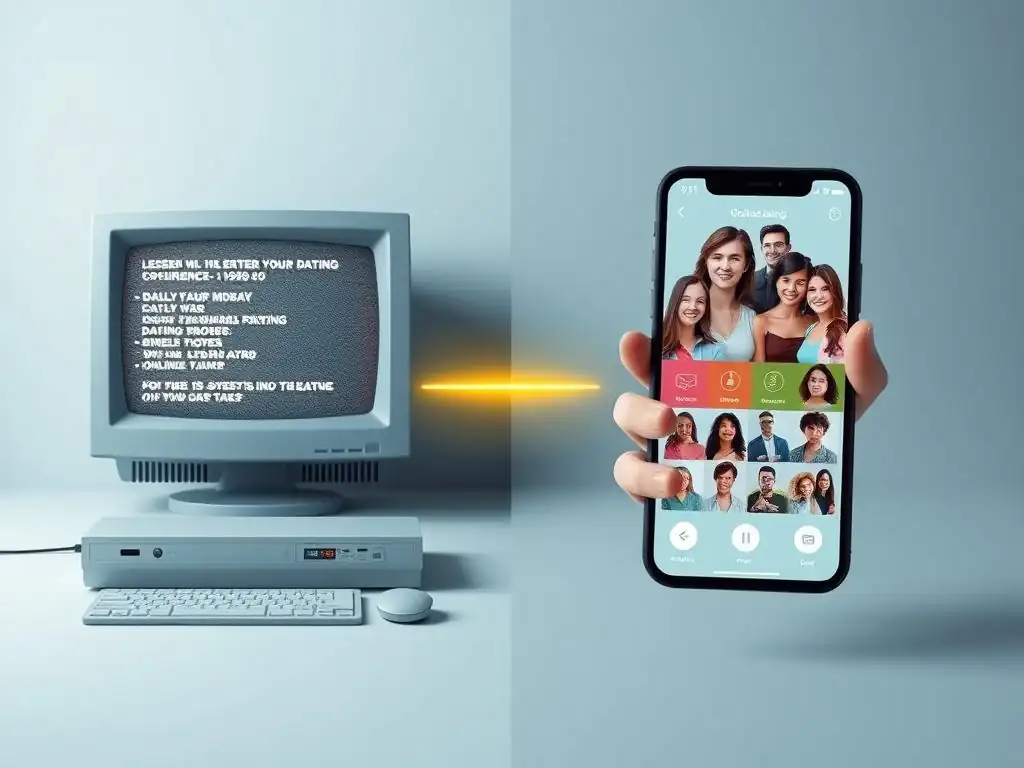
The 1990s witnessed a seismic shift in the landscape of dating, moving from nascent experiments in computer-mediated communication to the emergence of dedicated online dating platforms. This decade marked the true genesis of what we now recognize as the online dating industry. While earlier systems facilitated connections, the 1990s saw the rise of businesses explicitly built around connecting singles.
This transition was fueled by several factors, including the increasing affordability and accessibility of personal computers and the burgeoning popularity of the internet. The development of user-friendly interfaces and the growing comfort level of individuals using the internet for social interaction were also key drivers. This period saw the birth of business models focused on subscription fees and advertising, laying the groundwork for the multi-billion dollar industry it is today.
The evolution from simple bulletin board systems to sophisticated matchmaking algorithms fundamentally altered how people met romantic partners, paving the way for the diverse range of online dating services we see today. This transition represents a crucial turning point in the online dating history origins.
Match.com and the Commercialization of Online Dating
Match.com, launched in 1995, stands as a pivotal example of this commercialization. Its success demonstrated the viability of a subscription-based model for online dating, setting a precedent for numerous competitors. Match.com's early marketing strategies focused on creating a sense of legitimacy and safety, crucial in an era where online interactions often carried a stigma.
The platform's relatively sophisticated matching algorithms, compared to its predecessors, also contributed to its rapid growth. While initial algorithms were simple, focusing on basic demographic matching, they represented a significant leap forward from earlier methods.
The company's success wasn't solely technological; it also involved carefully crafted marketing campaigns that addressed societal anxieties about online dating, emphasizing security and the potential for genuine connections. This careful approach was instrumental in its ability to attract a large and diverse user base, solidifying its position as a dominant force in the burgeoning online dating market and impacting the trajectory of online dating history origins.
Early Online Dating Site Features and Functionality
Early online dating sites offered a surprisingly limited set of features compared to today's offerings. Think basic profile creation with limited fields for personal information (name, age, location, occupation, interests). Photo uploads were often low-resolution and not always standard. Communication was primarily limited to email exchanges within the platform, with no real-time chat or video capabilities.
Matching algorithms, as mentioned earlier, were rudimentary, often relying solely on keyword searches and basic demographic filters. There was a noticeable absence of features designed to enhance user safety and security, such as profile verification or reporting mechanisms for inappropriate behavior. This stark contrast to modern dating apps highlights the remarkable technological advancements and user experience improvements that have shaped the online dating history origins and its evolution. The limitations of these early platforms, however, also contributed to a sense of community and a more deliberate approach to online dating.
Example of a basic profile from a 1990s dating site:
Name: Jane Doe
Age: 28
Location: New York City
Occupation: Teacher
Interests: Reading, Hiking, Movies
The Impact of the World Wide Web on Online Dating
The rise of the World Wide Web was inextricably linked to the growth of online dating. Before the widespread adoption of the web, online dating relied heavily on dial-up connections and bulletin board systems (BBS), limiting accessibility and user experience. The web's graphical interface and ease of navigation made online dating far more user-friendly and appealing to a broader audience.
The ability to browse profiles with images and readily access information significantly increased user engagement and the overall appeal of online dating. Furthermore, the web facilitated the development of more sophisticated search and matching algorithms, allowing platforms to connect users based on a wider range of criteria. The web's global reach also played a crucial role, expanding the potential pool of partners beyond geographical limitations.
The impact of the World Wide Web on online dating was transformative, accelerating its growth and shaping its evolution into the globally interconnected phenomenon it is today. It's a critical element in understanding the complete picture of online dating history origins.
Evolution of Online Dating: From Text-Based to Multimedia

The evolution of online dating mirrors the broader technological advancements of the late 20th and early 21st centuries. Early iterations, appearing in the 1980s and early 1990s, were largely text-based. Think of them as digital versions of personal ads, relying heavily on written descriptions and limited interaction.
These platforms prioritized compatibility based on shared interests and values, often using questionnaires and matching algorithms that were relatively rudimentary by today's standards. The focus was primarily on finding someone with compatible personality traits rather than solely on physical attraction, a significant difference from the visually-driven platforms of today. This emphasis on textual communication fostered a different kind of connection, often requiring more patience and imagination from users.
The absence of visual cues meant that initial judgments were based entirely on written expression, encouraging more thoughtful self-presentation and potentially deeper initial connections. This period represents a crucial stage in the online dating history origins, showcasing the foundational principles that would later evolve into the multimedia-rich experiences we know today. The shift from text-based interactions to multimedia significantly altered the dynamics of online dating, impacting user behavior and expectations.
The Incorporation of Images and Profiles
The introduction of images and detailed profiles marked a pivotal moment in online dating's evolution. Suddenly, visual appeal became a significant factor in attracting potential partners. The ability to showcase one's personality through photographs, alongside detailed biographical information, created a much richer and more engaging experience.
This transition, occurring primarily in the mid-to-late 1990s and early 2000s, dramatically increased the number of users and fundamentally changed the way people presented themselves online. Early profile pictures were often of low resolution, and the technology for managing and displaying them was less sophisticated than today. However, even these early images drastically altered the landscape of online dating, moving away from the purely textual interactions that defined the initial platforms.
The impact on user behavior was immediate and profound; users began carefully curating their images and profiles, aiming to present the most attractive and appealing version of themselves. This period also saw the rise of photo verification systems, an early attempt to combat the problem of fake profiles and catfishing, a challenge that continues to plague online dating even today. The evolution of profiles from simple text descriptions to rich multimedia presentations is a key element in understanding the online dating history origins and its ongoing impact on modern relationships.
The Rise of Mobile Dating Apps
The advent of smartphones and mobile internet access revolutionized online dating, giving rise to the mobile dating app. This development, beginning in the late 2000s and exploding in popularity throughout the 2010s, fundamentally altered the accessibility and convenience of online dating. The shift to mobile apps made finding potential partners incredibly simple and convenient, accessible at any time and in any location.
The ease of use and integration into daily life contributed significantly to the explosive growth of online dating in recent years. Furthermore, mobile apps often incorporated features like geolocation, facilitating "location-based dating" and enabling users to connect with potential partners in their immediate vicinity. This feature led to a new paradigm, emphasizing proximity and spontaneous encounters, a stark contrast to the earlier text-based platforms where geography played a less significant role.
The introduction of swiping interfaces, popularized by apps like Tinder, further simplified the process of finding potential matches, making online dating more accessible to a wider range of users. This period showcases a significant advancement in the online dating history origins, demonstrating how technological advancements continue to shape and redefine the online dating experience, impacting user behavior and relationship formation. The ongoing development of features such as AI-powered matching algorithms and advanced safety measures continues to refine and evolve the online dating landscape.
Online Dating History Origins: A Legacy of Connection and Evolution
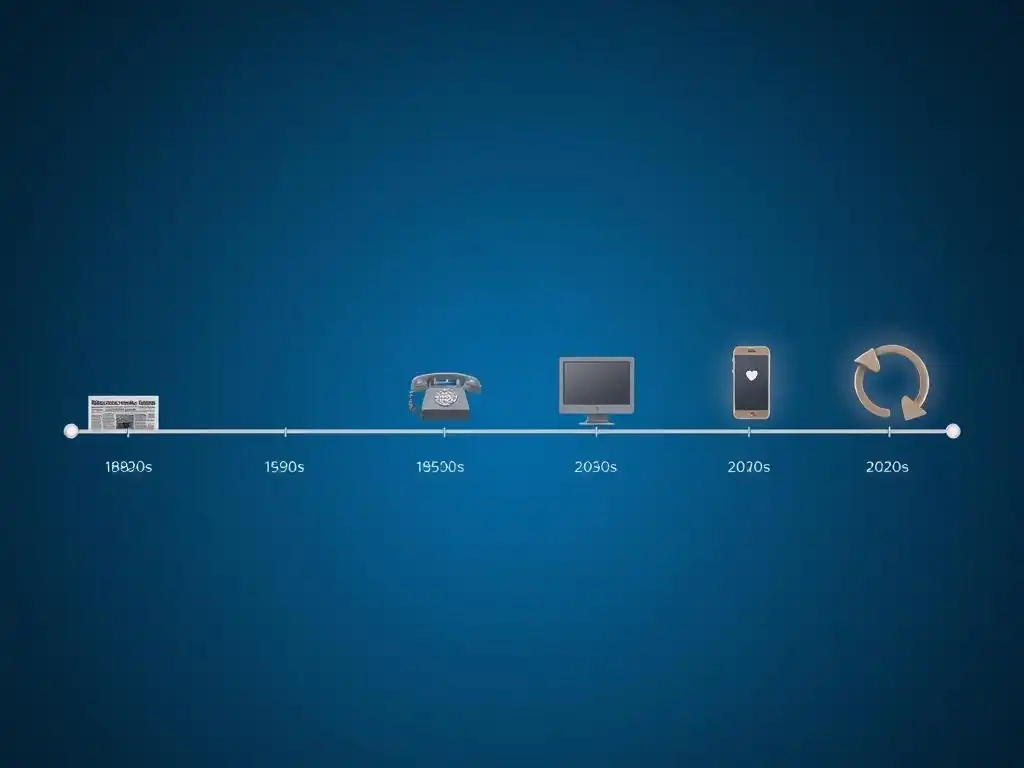
This section delves into the fascinating history of connection, exploring how pre-Internet dating practices laid the groundwork for the modern online dating landscape we know today. Understanding these origins provides valuable context for appreciating the evolution of online dating and its impact on relationships. The keyword "Online dating history origins" is central to this exploration, revealing the surprisingly rich tapestry of human interaction that preceded the digital age.
The Lasting Impact of Pre-Internet Dating on Modern Practices
Before the advent of dating apps and websites, individuals relied on a variety of methods to find romantic partners. These methods, though seemingly antiquated by today's standards, significantly shaped the expectations and behaviors we observe in modern online dating. Consider the impact of traditional courtship rituals, for example: the carefully orchestrated introductions by family and friends, the formal dances and social gatherings, even the nerve-wracking process of asking someone out in person.
These practices instilled a sense of formality and respect that, in some ways, remains relevant in online interactions. The careful crafting of a first impression, the importance of initial communication, and the gradual building of trust – these elements, though expressed differently in the digital realm, maintain their significance.
One could argue that the meticulous attention to personal presentation in pre-Internet dating—the carefully chosen outfit, the practiced smile—finds its modern equivalent in the curated profiles and meticulously chosen photographs on dating apps. The art of conversation, the necessity of engaging in meaningful dialogue to assess compatibility, remains just as crucial today. Even the anxieties associated with rejection, the anticipation of a first date, and the thrill of a budding connection – these emotions transcend the technological divide.
Furthermore, the importance of shared social circles and mutual acquaintances in facilitating introductions, a cornerstone of traditional dating, finds a parallel in modern online dating's reliance on mutual friends or shared interests as connection points. The algorithms powering many dating apps attempt to mimic this organic process, suggesting matches based on shared networks or common preferences.
Key Differences Between Early and Modern Online Dating
While the fundamental human desire for connection remains constant, the methods of finding partners have undergone a radical transformation. The shift from pre-Internet dating to online dating introduced profound differences in scale, accessibility, and the very nature of the interaction.
| Feature | Pre-Internet Dating | Modern Online Dating |
|---|---|---|
| Scale | Limited by geographical proximity and social circles | Global reach, connecting individuals across continents |
| Accessibility | Often reliant on social introductions or chance encounters | Accessible 24/7, from anywhere with an internet connection |
| Anonymity | Relatively low; interactions generally involved face-to-face contact | Can offer a degree of anonymity initially, though less so over time |
| Speed | Slower, more deliberate process | Faster pace, allowing for rapid screening and connection |
| Selection | Limited pool of potential partners | Vast pool of potential partners, potentially overwhelming |
The sheer volume of potential partners available online presents both opportunities and challenges. While it expands the possibilities for finding a compatible match, it can also lead to "choice overload," leaving individuals feeling overwhelmed and frustrated. The anonymity afforded by online platforms, while offering a sense of security for some, can also contribute to deceptive profiles and less genuine interactions.
Navigating the complexities of online dating requires a different set of skills and awareness than its pre-Internet counterpart. The emphasis on carefully crafted profiles and effective communication strategies reflects this shift. Understanding the historical context of "Online dating history origins" helps us appreciate the unique challenges and opportunities of modern online dating.
The Future of Online Dating: Building on the Past
The evolution of online dating, from its nascent stages to its current ubiquitous presence, provides a fascinating lens through which to examine societal shifts in relationship formation. Understanding the "online dating history origins" is crucial to predicting its future trajectory. While the internet revolutionized the dating landscape, the fundamental human desire for connection—the very essence of dating—precedes the digital age. This historical context informs the future development of the online dating experience, shaping technological advancements and user expectations alike. We've moved beyond simple profile matching; the future is about creating richer, more personalized, and ultimately, more successful experiences.
The Increasing Importance of AI-powered Matching
AI is no longer a futuristic concept in online dating; it's rapidly becoming the backbone of many platforms. Sophisticated algorithms analyze vast datasets of user profiles, communication patterns, and even personality traits to predict compatibility with unprecedented accuracy. This goes beyond simple keyword matching; AI can identify subtle patterns and correlations that humans might miss, leading to more meaningful matches.
For instance, AI can analyze the nuances of language in profile descriptions and messages to gauge emotional intelligence and communication styles, offering a more holistic assessment than traditional methods. The success of AI-powered matching hinges on the quality and diversity of the data used to train the algorithms. Biases in the data can lead to skewed results, perpetuating existing societal inequalities.
Therefore, ethical considerations and data transparency are paramount in ensuring fairness and inclusivity in AI-driven matchmaking. The future of AI in online dating lies in its ability to learn and adapt, constantly refining its algorithms to provide increasingly accurate and personalized recommendations, thereby improving user satisfaction and the likelihood of successful relationships. This requires ongoing monitoring and refinement to mitigate biases and ensure the ethical application of this powerful technology.
The Integration of Virtual Reality and Augmented Reality
The integration of VR and AR technologies holds immense potential for transforming the online dating experience. Imagine a virtual first date, eliminating the awkwardness and pressure of an in-person meeting. VR could offer a controlled environment for users to interact, allowing them to express themselves authentically and gauge compatibility in a less stressful setting. AR, on the other hand, could enhance in-person interactions by providing additional context and information about potential partners.
For example, an AR overlay could display shared interests or mutual friends during a real-life date, facilitating conversation and building connection. However, the successful integration of VR and AR in online dating requires addressing several challenges. Accessibility remains a major hurdle; the cost of VR/AR equipment and the digital literacy required to use it effectively could exclude a significant portion of the population. Moreover, the potential for misuse and manipulation needs careful consideration.
The creation of realistic but potentially deceptive avatars could exacerbate issues of catfishing and online fraud. The ethical implications of using these technologies must be carefully addressed to ensure a positive and safe user experience. The future of VR and AR in online dating depends on innovative solutions that address these challenges while harnessing the transformative potential of these immersive technologies to foster meaningful connections. The careful development and implementation of these technologies are crucial to ensuring a positive and safe user experience, fostering genuine human connection in the digital realm.
Frequently Asked Questions
What is the article "The Genesis of Connections: Unveiling the Pre-Internet Roots of Modern Dating" about?
This article explores the history of dating before the internet, tracing its evolution from traditional matchmakers and social gatherings to the rise of personal ads and dating services. It shows how modern online dating built upon earlier methods.
How does the article connect the past to present-day online dating?
The article demonstrates how pre-internet dating practices, such as personal ads and dating agencies, laid the groundwork for the digital platforms we use today. It highlights the continuity of human desires for connection across different eras.
What historical examples are likely discussed in the article?
The article likely covers examples such as matchmakers, social events like dances and balls, and the development of dating services and personal ads in newspapers and magazines, showing the evolution of dating strategies.
Why is understanding the history of dating important for online daters?
Understanding the history provides context and perspective. It helps online daters appreciate the evolution of dating and recognize that the core principles of building relationships have remained consistent.
Where can I find more information about the history of online dating specifically?
While this article focuses on pre-internet dating, exploring the early days of online dating might require further research using keywords like "early online dating sites" and "history of online dating platforms". Many academic papers and articles address this topic.
Final Reflection: Echoes of the Past in Our Digital Present
The ways we connect, even in our hyper-digital age, are profoundly shaped by the pre-internet world. Understanding the genesis of modern dating reveals a surprisingly enduring legacy, reminding us that the longing for connection is a timeless human experience, not solely a product of the digital revolution. The seemingly novel landscape of online dating is, in fact, built upon centuries of courtship rituals, social structures, and evolving notions of romance.
The impact of these historical precedents continues to resonate in our current dating culture. The anxieties, hopes, and strategies involved in finding a partner haven't fundamentally changed, only the methods have. We still navigate complex social dynamics, grapple with self-presentation, and seek validation and belonging. As the writer and philosopher Alain de Botton eloquently put it, To fall in love is to project one's own fantasies onto another person.
This timeless truth transcends the technological advancements that have reshaped the dating landscape, highlighting the enduring human need for connection and the inherent complexities of romantic relationships.
Consider the echoes of the past in your own digital interactions. How do the historical trends we've explored influence your approach to online dating? What lessons from the past can you apply to navigate the present, fostering more authentic and meaningful connections? Embrace the wisdom of history, not to dwell on the past, but to build a more conscious and fulfilling future in your own romantic journey. Let the echoes of the past guide you towards a more intentional and enriching present.
Uncover Your Own Love Story: From Pen Pals to Perfect Matches
Thanks for exploring the fascinating history of connection! You've now seen how even the earliest forms of communication laid the groundwork for modern dating. Ready to build on that legacy and create your own unique love story?
- Dive deeper: Reflect on how historical communication methods compare to your own dating experiences. What similarities do you see, and what valuable lessons can you learn from the past? This self-reflection is key to understanding your communication style and preferences in relationships.
- Share your thoughts: What was the most surprising or insightful thing you learned about the evolution of dating? Let's discuss it in the comments below!
- Expand your knowledge: Research a specific historical dating method that intrigues you. Could you imagine yourself trying it?
What communication strategies, inspired by the past, will you incorporate into your dating journey today?