
Dating App Filters: How to Use Demographics to Your Advantage


Ready to transform your online dating experience? At OnlineDatingSuccess.org, we empower you to build meaningful connections. But with so many choices, how do you navigate the digital dating landscape effectively? Discover the secrets to unlocking your dating potential, starting with our expert guide on Best Dating App Filters and learn how to leverage demographics to find your perfect match. Dive in and uncover the sociological strategies that will dramatically increase your success rate – your ideal date is waiting!
- Understanding the Power of Dating App Filters
- Leveraging Demographics for Successful Dating
- Advanced Filter Strategies for Enhanced Results
- Beyond Demographics: Other Essential Filter Considerations
- Analyzing Your Dating App Filter Results
- Ethical Considerations When Using Dating App Filters
- Frequently Asked Questions
- Final Reflection: Navigating the Digital Dating Landscape
- Unlock Your Dating Potential: Find Your Perfect Match
Understanding the Power of Dating App Filters
Navigating the world of online dating can feel like searching for a needle in a haystack. With millions of profiles vying for attention, effectively using dating app features is crucial for finding compatible partners and building meaningful connections. This article delves into the often-overlooked power of demographic filters, showing you how to leverage them to significantly improve your online dating experience and increase your chances of success.
We'll explore the best dating app filters available, providing practical strategies to refine your search and connect with individuals who align with your preferences and relationship goals. Mastering these techniques will not only save you valuable time but also help you focus your energy on genuinely compatible matches, leading to more rewarding interactions and potentially, lasting relationships. Ultimately, understanding how to effectively utilize demographic filters is key to maximizing your online dating success.
Best Dating App Filters: A Quick Overview
Many dating apps offer a range of filters to help you narrow your search. These aren't just about superficial preferences; they're powerful tools for finding compatibility. Understanding which filters are available and how to use them effectively is paramount. Some of the most common and effective filters include:
- Age Range: Specify a minimum and maximum age to focus your search on people within your desired age bracket. Consider your own age and desired age gap when setting these parameters.
- Location: Most apps use GPS to show nearby users, but you can often refine this further by specifying a radius or selecting specific neighborhoods or cities. This helps you meet people within a comfortable commuting distance.
- Relationship Status: Filter for single, divorced, widowed, or other relationship statuses to ensure you're connecting with people who are looking for the same type of relationship as you.
- Distance: Fine-tune your search based on proximity. This is crucial for those who prefer to meet people nearby.
- Height: This seemingly minor detail can be surprisingly important to some users, and many apps allow you to filter by height range.
- Religion: For those who prioritize shared religious beliefs, this filter allows you to connect with people who share similar spiritual values.
- Education: Some apps allow you to filter based on education level, providing a way to connect with people who have similar academic backgrounds.
- Ethnicity: This filter allows you to specify ethnic preferences, though it is crucial to use it responsibly and avoid perpetuating harmful stereotypes.
Choosing the right combination of filters is a personal process. Experiment to find what works best for you and your dating goals. Remember, the goal is to refine your search, not to exclude potential matches based on arbitrary criteria.
Optimizing Your Search with Demographic Filters
Effectively using demographic filters involves more than just selecting arbitrary criteria. It requires a strategic approach that considers your own preferences, relationship goals, and the specific demographics of your area. For example, focusing on highly specific criteria in a less populated area might significantly limit your options. Conversely, being too broad in a densely populated area could lead to an overwhelming number of profiles to sift through.
Think about the trade-off between specificity and the number of potential matches. Start with broader parameters and gradually narrow your search as you gain a better understanding of the app's user base and your own preferences. Regularly review and adjust your filters based on your experiences. What's worked well? What hasn't? This iterative process will help you optimize your search and find the best matches for you.
Refining Your Search: Age, Location, and More
Age and location are often the most commonly used filters, but they are far from the only tools at your disposal. Consider these additional refinements:
- Age: Don't be afraid to experiment with your age range. A slightly wider or narrower range could dramatically alter your results. Consider the age gap you're comfortable with.
- Location: Think beyond just proximity. Consider the types of neighborhoods or areas you'd prefer to meet people in. Are there specific communities or areas known for their social scene?
- Advanced Filters: Explore any advanced filtering options provided by the app. These could include filters for lifestyle preferences, interests, or even specific personality traits (if the app provides such information).
Remember, the key is to find a balance. Be specific enough to find compatible matches, but not so narrow that you limit your options unnecessarily. The best dating app filters are the ones that work for you, helping you find meaningful connections, not just a large number of profiles. Using these filters strategically can transform your online dating journey, leading to a more efficient and rewarding experience. 🎉
Leveraging Demographics for Successful Dating

Finding the right partner online often feels like searching for a needle in a haystack. However, utilizing the demographic filters offered by most dating apps can significantly streamline this process, transforming that haystack into a more manageable pile of… well, still hay, but much less of it. Understanding how to effectively leverage these filters is key to maximizing your chances of finding compatible partners.
This section explores how to best utilize demographic filters to improve your online dating experience, focusing on age, location, religion, ethnicity, and education. By strategically employing these tools, you can increase your chances of connecting with individuals who share your values and life goals. This ultimately leads to more meaningful connections and a more positive online dating journey.
Finding Compatible Partners Using Age Filters
Age is often a primary factor in compatibility. While attraction transcends age brackets, shared life stages and perspectives often lead to more harmonious relationships. Most dating apps allow you to specify a desired age range. Don't be afraid to set a fairly specific range; this isn't about being exclusionary, but about efficiently focusing your search. For example, instead of selecting a broad range of 25-45, consider narrowing it to 30-38 if that better reflects your ideal partner's age.
Experiment with different ranges to see what yields the best results. Consider your own age and life goals. Are you looking for someone to settle down with, or are you seeking more casual connections? Your desired age range should align with this.
Remember, the "best" age filter is subjective and depends entirely on your personal preferences and relationship goals. There's no magic number or range; it's all about finding what works best for you. Keep in mind that age is just one piece of the puzzle; personality, values, and interests are equally, if not more, important.
Location-Based Dating: Maximizing Your Chances
Proximity plays a crucial role in the success of any relationship, especially in the initial stages. Dating apps often incorporate robust location-based filters, allowing you to specify a radius around your current location or a specific area of interest. This feature is invaluable for meeting people you can realistically meet in person. Consider your commuting distance and social circles when setting your location radius.
For example, setting a radius of 10 miles might be ideal if you're looking for someone within easy driving distance, while a broader radius might be suitable if you're willing to travel a bit further for dates. However, excessively broad radii can lead to a diluted pool of potential matches, making it harder to find truly compatible individuals. Finding that sweet spot is key to maximizing the efficiency of your search. Think about your lifestyle and how far you're realistically willing to travel for a date.
Targeting Specific Demographics: Religion, Ethnicity, and Education
Beyond age and location, many dating apps allow you to filter potential matches based on other demographic factors like religion, ethnicity, and education level. These filters can be powerful tools for finding individuals who share your cultural background, religious beliefs, or educational aspirations. However, it's crucial to use these filters responsibly and ethically.
Using these filters to exclude entire groups of people is discriminatory and unproductive. Instead, focus on identifying characteristics that align with your personal preferences and values, without resorting to exclusionary practices. For instance, if sharing religious beliefs is important to you, using the religion filter to find individuals with similar faiths can be a valuable tool.
Similarly, if educational background is a factor, specifying a preferred educational level can help you find individuals with compatible intellectual interests and life goals. Remember, these filters are designed to refine your search, not to limit your options based on prejudice. Focus on finding what resonates with you, not what excludes others.
Advanced Filter Strategies for Enhanced Results
This section dives into sophisticated techniques to leverage dating app filters, moving beyond basic parameters to achieve more precise and successful matches. Mastering advanced filter strategies can significantly increase your chances of connecting with compatible individuals. Finding the best dating app filters isn't just about ticking boxes; it's about understanding how to combine them strategically.
Combining Filters for Precise Matching
The power of dating app filters lies not just in their individual application, but in their synergistic effect when combined. Instead of using filters in isolation, consider how different criteria intersect to create a more refined pool of potential matches. For example, filtering for individuals within a specific age range ( e.g., 30-35) and those who have indicated an interest in a particular activity ( e.g., hiking) significantly narrows your search, increasing the likelihood of finding someone who shares your interests and life stage.
Think of it like building a detailed profile of your ideal partner. Each filter represents a facet of that profile. Combining filters allows you to construct a more complete picture, leading to more relevant matches. Don't be afraid to experiment with different filter combinations. Observe the results and adjust your strategy accordingly. You might discover unexpected patterns and preferences that lead you to your perfect match. This iterative process of refinement is key to maximizing the effectiveness of your dating app filters. The best dating app filters are those that are tailored to your unique preferences and goals.
The Importance of Filter Flexibility
While precise targeting is valuable, maintaining filter flexibility is equally crucial. Rigidly adhering to a narrow set of criteria might inadvertently exclude potentially compatible individuals who don't perfectly fit your pre-defined parameters. Consider broadening your search occasionally by relaxing some filters or trying new combinations. Being open to meeting people outside your initial comfort zone can lead to surprising and rewarding connections.
Remember, online dating is a journey of discovery. Your ideal partner might not perfectly align with every filter you initially set. Maintaining some flexibility allows you to discover unexpected compatibility and expand your dating horizons. It’s about finding a balance between targeted searching and openness to new possibilities. The best dating app filters are those that allow for both precision and exploration. A balanced approach increases your chances of meaningful connections.
Avoiding Filter Overload: Striking the Right Balance
Using too many filters can be counterproductive. Overly restrictive filters drastically reduce the number of potential matches, potentially limiting your opportunities. A balance is key. While precise filtering is beneficial, it's important to avoid creating a filter profile so specific that it excludes everyone. This can lead to frustration and a sense of being overwhelmed by the process.
Consider the Pareto Principle (the 80/20 rule): Focus on the 20% of filters that yield 80% of the desirable results. Prioritize the most important criteria for you, such as age, location, and relationship goals. Then, gradually add other filters as needed, always monitoring the results and adjusting accordingly. Striking the right balance between precision and inclusivity is essential for a positive and successful online dating experience.
Finding the best dating app filters involves constant evaluation and adjustment based on your experience and preferences. Remember, the goal is to connect with compatible individuals, not to eliminate everyone. A balanced approach increases your chances of finding a meaningful relationship.
Beyond Demographics: Other Essential Filter Considerations
While age, location, and other demographic filters are a great starting point for narrowing your search on dating apps, focusing solely on these can limit your potential for meaningful connections. The "best dating app filters" strategy involves a multi-faceted approach, incorporating lifestyle, relationship goals, and communication preferences to find truly compatible matches. Don't overlook the power of these often-underutilized filtering options.
They can significantly enhance your chances of finding someone who aligns with your values and aspirations. This section explores these crucial non-demographic filters to help you optimize your dating app experience and improve your chances of finding a great match.
Finding someone with compatible lifestyle preferences is crucial for long-term relationship success. Shared interests provide common ground for conversation, shared activities, and a stronger sense of connection. Many dating apps allow you to filter based on lifestyle factors, such as activity level, dietary restrictions, or travel habits.
For example, if you're an avid hiker, filtering for users who also enjoy outdoor activities significantly increases your chances of meeting someone who shares your passion. Similarly, if you're a vegan, filtering for users with similar dietary preferences can lead to more meaningful conversations and shared experiences around food and lifestyle choices. Consider these examples:
- Active Lifestyle: Filter for users who indicate an interest in fitness, outdoor activities, or sports. This could be expressed through profile text, photos, or specific prompts answered within the app.
- Travel Enthusiasts: If you love to travel, filtering for users who frequently travel or express a desire to explore new places can lead to exciting conversations and potential travel companions.
- Pet Owners: For pet lovers, filtering for users who own pets can be a significant factor, ensuring compatibility and shared responsibility.
- Cultural Interests: Filtering based on cultural interests, such as music genres, books, or movies, can help you connect with people who share your passions.
Utilizing these lifestyle filters allows you to connect with people who share your interests and values, leading to more fulfilling and sustainable connections. Think carefully about what aspects of your lifestyle are important to you and use the app's filters accordingly. Don't be afraid to be specific! The more detailed your filters, the more likely you are to find a truly compatible match.
Relationship Goals: Defining What You're Seeking
Defining your relationship goals is paramount when using dating apps. Knowing what you're looking for—whether it's a casual relationship, a long-term partnership, or something in between—helps you attract compatible partners and avoid wasting time on unsuitable matches. Many dating apps now include options to specify relationship goals directly in your profile or filter options. This allows you to connect with people who share similar intentions, saving you time and emotional energy. Consider these scenarios:
| Relationship Goal | Filter Options (Examples) | Potential Benefits |
|---|---|---|
| Casual Dating | "Looking for fun," "Dating" | Increased chances of meeting like-minded individuals for casual connections. |
| Long-Term Relationship | "Marriage-minded," "Serious" | Focuses your search on individuals seeking commitment. |
| Open Relationship | "Open to exploring" | Connects you with individuals who have similar relationship styles. |
Clearly defining your relationship goals through these filters will help you attract individuals who are on the same page, leading to more meaningful and less frustrating interactions. Be honest with yourself and others about your intentions. This transparency is key to building healthy and respectful relationships.
Communication Style: Finding Compatible Connections
Communication style is often overlooked, but it’s a critical factor in relationship compatibility. While some apps don't offer direct filters for communication style, you can often infer it from profile information and prompts. Look for users who demonstrate communication styles that align with your preferences. For example, if you value open and honest communication, look for profiles that reflect that quality. Conversely, if you prefer a more reserved or indirect style, you might want to avoid users who appear overly extroverted or assertive in their profiles.
Consider these aspects of communication style:
- Responsiveness: Do they seem prompt and engaged in their communication based on their profile information or answers to prompts?
- Humor: Do they have a similar sense of humor? This can be a great indicator of communication compatibility.
- Directness: Do they appear direct and honest in their communication, or do they prefer a more subtle approach?
While you can't directly filter by communication style on most apps, carefully reviewing profiles and looking for clues regarding communication preferences will help you identify potential matches with compatible styles. Remember, effective communication is the cornerstone of any successful relationship. Focusing on identifying these subtle cues within profiles can greatly improve your chances of finding a compatible partner.
Analyzing Your Dating App Filter Results
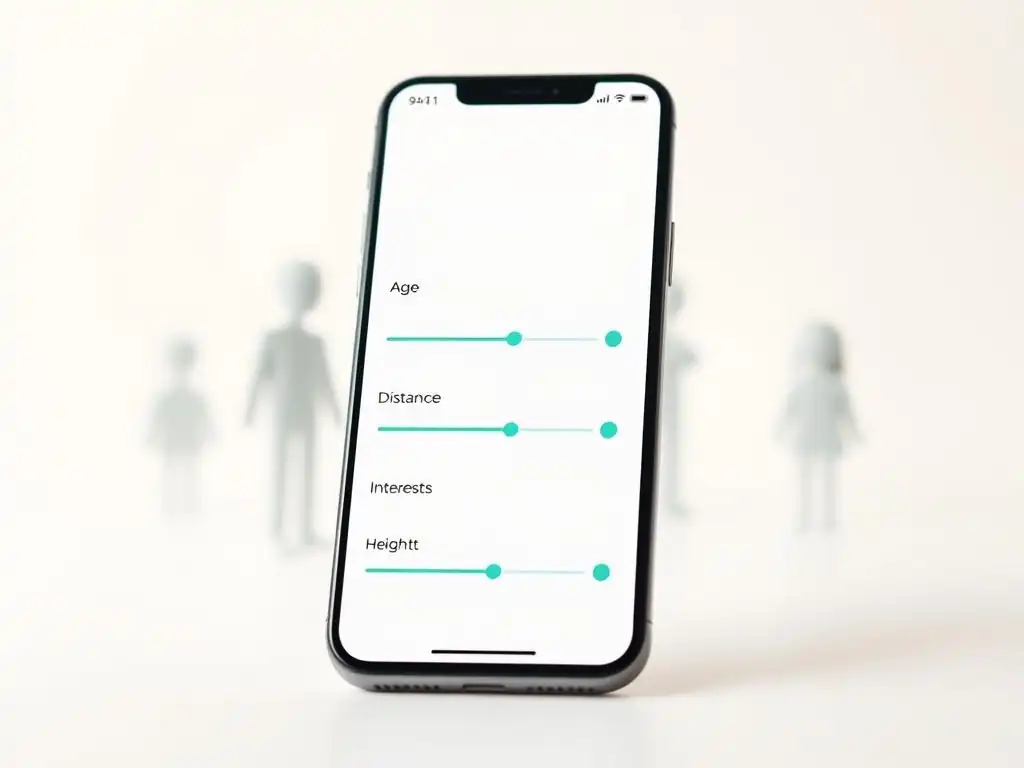
Finding the best dating app filters isn't a one-size-fits-all solution. It's a process of refinement, requiring analysis and adjustment based on your experiences. Understanding how to interpret the data presented by your search results is crucial for optimizing your filter strategy. This section will guide you through that process.
Interpreting Search Results: Identifying Patterns
After running several searches with different filter combinations, you'll likely observe certain patterns. Don't just focus on the sheer number of profiles returned; instead, analyze the quality of those profiles. Are you seeing a lot of profiles that are incomplete, lack photos, or have generic bios? This might indicate your filters are too broad, casting a wide net that catches a lot of undesirable profiles.
Conversely, very few results might suggest your filters are too restrictive, potentially missing out on compatible individuals. Pay attention to the common traits among the profiles that do appear. Are they consistently within a certain age range? Do they share similar interests or professional backgrounds? These patterns provide valuable insights into refining your filter strategy.
For example, let's say you consistently find profiles with limited information when you select a broad age range (25-45). This suggests narrowing that range to a smaller, more specific bracket—perhaps 30-35—might yield higher-quality results. Similarly, if you're seeing a disproportionate number of profiles with a certain occupation, consider adjusting the "Occupation" filter to broaden or narrow your search depending on your preferences.
Remember, the goal isn't to find the most profiles, but the best profiles. Quality over quantity should always be your guiding principle. Analyzing the patterns within your search results helps you achieve this. 📈
Adjusting Your Filters Based on Results
Once you've identified patterns in your search results, it's time to adjust your filters accordingly. This is an iterative process, and you might need to experiment with several iterations before finding the optimal settings.
Consider these adjustments:
- Age Range: Start with a slightly narrower age range than your initial preference. If results are still unsatisfactory, broaden it incrementally.
- Location: Refining your location radius can significantly impact results. Start with a smaller radius and gradually increase it if needed.
- Relationship Status: While seemingly straightforward, ensuring this filter is correctly set is crucial for efficient searches.
- Other Preferences: Experiment with filters related to lifestyle, interests, education, and other relevant factors. Keep a record of your adjustments and the corresponding results.
Remember to document your filter adjustments and the resulting profile quality. This data allows for a more informed approach in subsequent iterations. Creating a simple spreadsheet or even a notebook can be immensely helpful in this process. A well-documented approach enhances your ability to fine-tune your filters for optimal results. This structured approach will lead to better matches and ultimately, improved online dating experiences.
The Iterative Process of Filter Optimization
Finding the best dating app filters is not a one-time task; it's an ongoing process of refinement. Think of it as an iterative loop: you set filters, analyze results, adjust filters, and repeat. Each iteration brings you closer to optimizing your search for compatible individuals.
The key is consistent observation and adaptation. Don't be afraid to experiment, and don't be discouraged if your initial attempts don't yield perfect results. The more you experiment with different filter combinations, the better you'll understand how to leverage these tools to your advantage. This iterative process is crucial for maximizing your success rate on dating apps. Remember, patience and persistence are key to finding the perfect match! ✨
Ethical Considerations When Using Dating App Filters
Dating apps offer a plethora of filters, allowing users to refine their searches based on various demographic factors. While these tools can streamline the process of finding compatible partners, it's crucial to use them responsibly and ethically. Misusing these features can lead to discriminatory practices and hinder the potential for meaningful connections.
Understanding the ethical implications is paramount to maximizing the benefits of dating app filters while avoiding their pitfalls. This section explores the responsible and respectful use of demographic filters to ensure a positive and inclusive online dating experience. Finding the best dating app filters means finding the ones you can use ethically and effectively.
Avoiding Discrimination and Prejudice in Your Search
The power of dating app filters to narrow down potential matches can be easily misused. Filtering based solely on superficial characteristics like race, religion, or body type can perpetuate harmful stereotypes and discriminatory practices. Remember, judging individuals based on limited information presented in a profile is inherently unfair and can lead to missed opportunities for genuine connections.
Instead of focusing solely on demographic filters, prioritize compatibility in terms of values, interests, and life goals. Consider broadening your search parameters and engaging with profiles that initially might seem outside your typical preferences. You might be surprised by the connections you discover.
The best approach is to be open-minded and avoid prejudging potential partners based on limited profile information. For example, filtering out individuals based solely on their age range might exclude someone who could be a perfect match, while inadvertently selecting individuals who are simply within your arbitrarily chosen range but lack genuine compatibility. Using best dating app filters means focusing on compatibility, not exclusion.
Respectful Use of Filters: Promoting Positive Interactions
Even when using filters responsibly, it’s important to consider the impact on the individuals you might filter out. While personal preferences are valid, it’s crucial to ensure your filters don't inadvertently contribute to a negative or exclusionary online dating experience for others. For example, setting extremely narrow parameters for height, weight, or age could unintentionally signal a lack of respect for diversity in body types or age groups.
Instead of focusing on eliminating potential matches, consider using filters to refine your search to a reasonable degree, focusing on factors truly relevant to compatibility, such as location, relationship goals, and lifestyle preferences. This approach fosters a more positive and inclusive online dating environment, increasing your chances of building meaningful connections.
Think of it as curating your search rather than eliminating potential matches. Remember, the goal is to find a compatible partner, not to create a filter that perfectly matches a preconceived ideal.
Maintaining Open-mindedness and Inclusivity
Ultimately, the best dating app filters are those that promote open-mindedness and inclusivity. While filters can help streamline the dating process, they should not be used to limit your exposure to diverse individuals. The most successful online dating experiences often arise from unexpected connections.
By embracing a broader perspective and actively seeking out individuals from diverse backgrounds, you increase your chances of finding a truly compatible partner and enrich your own understanding of different perspectives and experiences. Remember that filtering based on superficial characteristics can inadvertently lead to biases and missed opportunities. Prioritize genuine connection over superficial preferences.
Strive to be open-minded and accepting of individuals from all walks of life – this is key to finding lasting love and building meaningful relationships online. The goal isn't to find the perfect match based on a checklist, but rather to find a connection based on shared values, mutual respect, and genuine compatibility.
Frequently Asked Questions
What are the best dating app filters to use?
The best filters depend on your preferences and goals. Experiment with filters like age, location, and relationship status to narrow your search. Consider adding filters for interests or lifestyle preferences for more refined results.
How can I avoid wasting time with incompatible matches using filters?
Use filters strategically to target individuals who align with your values and relationship goals. Be honest about your must-haves and dealbreakers when selecting filter criteria. Don't be afraid to be specific!
Are there any downsides to using too many filters?
Yes, using too many filters can significantly limit your potential matches. It's a balance between being specific and remaining open to possibilities. Consider starting with a few key filters and gradually adding more as needed.
How do I know which filters are most effective on different dating apps?
Each app has its own set of filters and user base. Read reviews and explore the app's features to understand its filter options. Experiment to see which filters yield the best results for you on each platform.
Can I use filters to improve my online dating safety?
While filters can't guarantee safety, you can use them to reduce exposure to potentially risky individuals. For example, you could filter out users with inconsistent profiles or those who seem to be seeking something other than a genuine connection. Always prioritize your safety and trust your gut.
The curated world of dating apps, once a novelty, has become a dominant force in modern relationships. The ability to filter potential partners based on demographics, while seemingly superficial, profoundly impacts connection and self-discovery in the digital age. Understanding how these filters function and how to use them strategically is no longer a luxury, but a crucial skill for navigating the complexities of online dating.
The impact of demographic filtering extends far beyond simply finding a match; it reflects our evolving societal values and expectations. It forces us to confront our own biases and preferences, prompting introspection about what we truly seek in a partner. This process of self-reflection, while sometimes uncomfortable, is ultimately empowering. The most important thing in life is to learn how to give out love, and to let it come in.
– Morrie Schwartz. This quote, while not directly about dating apps, speaks to the core of human connection that these platforms, despite their flaws, attempt to facilitate. The filters, therefore, become tools not just for finding a match, but for understanding ourselves better in the context of relationships.
Now, consider your own dating experiences. How have you used – or avoided using – filters? What have you learned about yourself and your preferences through this process? I encourage you to approach online dating with intentionality, using the information in this article as a guide, but always remembering the importance of genuine connection over superficial metrics. Don't let the filters define you; let them help you define what you're looking for, and then bravely step outside the box to find it.
Unlock Your Dating Potential: Find Your Perfect Match
Thank you for exploring the power of demographic filters on dating apps! We hope you learned how to create a more effective search strategy. Now, let's put your new knowledge to work.
Here's how to get started:
- Refine your search filters: Review your current settings and apply the strategies we discussed. Experiment with different age ranges, locations, and interests to see what resonates. This is the most crucial step!
- Share your success: What filter combination has worked best for you? Share your tips with other readers in the comments below! We can all learn from each other's experiences.
- Explore new dating apps: Consider trying a new platform with advanced demographic filtering options. This could significantly expand your dating pool.
Ready to find your perfect match? What unique combination of filters will you try next?