
The "I'm Not Like Other Guys/Girls" Claim: Why it's a Red Flag

Dive into the world of successful online dating with OnlineDatingSuccess.org! Are you tired of wasting time on incompatible matches? Learn to spot the warning signs before they derail your search for a meaningful connection. We'll unravel the mystery behind the seemingly harmless phrase, "I'm not like other guys/girls," and reveal why it's a major online dating red flag phrase you should be aware of. Discover how to navigate the complexities of online dating with confidence and find the relationship you deserve. Read on to unlock the secrets to online dating success!
- Understanding Online Dating Red Flag Phrases: The "Different" Deception
- Analyzing the Phrase's Impact on Online Dating Communication
- Beyond the Words: Behavioral Red Flags to Watch For
- Protecting Yourself from Manipulative Daters Online
- Healthy Alternatives to the "I'm Different" Approach in Online Dating
-
Frequently Asked Questions
- What exactly is meant by the "I'm not like other guys/girls" claim in online dating?
- Why is this phrase considered a red flag in online dating profiles?
- Are there any situations where this phrase might be acceptable?
- What are some better alternatives to express individuality in an online dating profile?
- How can I identify other red flag phrases in online dating profiles?
- Final Reflection: Deconstructing the "Not Like Others" Illusion
- Unmask Your Authentic Dating Approach: Ditch the "Not Like Others" Trap
Understanding Online Dating Red Flag Phrases: The "Different" Deception
Navigating the world of online dating can feel like traversing a minefield. One wrong step, one poorly chosen phrase, can lead to disappointment, wasted time, or even worse. This article focuses on a common, yet insidious, red flag phrase often found in online dating profiles: "I'm not like other guys/girls."
While seemingly harmless, or even appealing at first glance, this statement often masks deeper issues and can serve as a warning sign of potential incompatibility or even manipulative behavior. We'll delve into why this phrase is a red flag, exploring the underlying insecurities it often reveals and the manipulative tactics it can subtly employ. Understanding these nuances will empower you to make more informed decisions and protect yourself from potentially damaging relationships.
Learning to identify these "online dating red flag phrases" is crucial for building healthy and fulfilling connections in the digital age. This guide will equip you with the knowledge to navigate the complexities of online dating with greater confidence and awareness.
Deconstructing the "I'm Not Like Other Guys/Girls" Trope in Online Dating Profiles
The phrase "I'm not like other guys/girls" is a common trope used in online dating profiles, frequently presented as a badge of honor. However, a closer examination reveals its inherent problems. The statement often implies a superiority complex, suggesting the individual possesses qualities lacking in others. This can manifest in several ways:
- Vague Generalities: The profile may offer no concrete examples to support this claim, leaving the reader wondering how they are different. This lack of specificity is a significant red flag. Instead of concrete examples of unique qualities, the profile relies on broad, unsupported assertions.
- Implicit Criticism: By claiming to be different, the user implicitly criticizes others, painting them with a broad brush of negative stereotypes. This can be subtly condescending and indicates a potential lack of empathy.
- Unrealistic Expectations: This phrase often sets an impossibly high bar for potential matches, creating unrealistic expectations and setting the stage for disappointment. It suggests a belief that they are somehow "above" the average dater.
The use of this phrase often stems from a desire to stand out in a crowded online dating landscape. However, it often backfires, creating more suspicion than intrigue. Instead of attracting genuine connections, it can alienate potential partners.
Identifying the Underlying Insecurity in "I'm Different" Dating Profiles
Often, the statement "I'm not like other guys/girls" masks underlying insecurity. Individuals who use this phrase may be grappling with:
- Low Self-Esteem: They may be seeking validation through comparison, attempting to elevate themselves by putting others down. This is a clear sign of insecurity and a lack of self-acceptance.
- Fear of Rejection: This phrase can be a defensive mechanism, preemptively addressing potential criticisms before they are even voiced. This fear of rejection can stem from past negative experiences.
- Identity Issues: Some individuals may struggle with establishing a strong sense of self, leading them to define themselves in opposition to others. This lack of clarity about their own identity makes it difficult to form genuine connections.
Understanding these underlying insecurities is key to interpreting the phrase's true meaning. It's crucial to look beyond the surface-level claim and consider the potential emotional baggage it might represent. A healthy individual confidently presents their unique attributes without the need to denigrate others.
Recognizing Manipulation Tactics Behind the "Unique" Persona
In some cases, the "I'm not like other guys/girls" claim can be a manipulative tactic. This might involve:
- Creating a False Sense of Exclusivity: The profile aims to create a sense of mystery and intrigue, potentially making the individual seem more desirable. This can be a tactic to attract attention and control the narrative.
- Setting Unrealistic Standards: The statement sets a high bar, potentially discouraging genuine connection attempts. This can be a way to filter out potential partners deemed "undesirable" based on subjective criteria.
- Gaslighting: In more extreme cases, this phrase might be used to subtly undermine a partner's self-worth and make them feel lucky to be considered. This manipulation is insidious and emotionally damaging.
It's crucial to remain vigilant and recognize the potential for manipulation behind seemingly harmless phrases. Focus on concrete actions and qualities rather than vague claims of difference. A genuine connection is built on mutual respect and understanding, not on the assertion of superiority.
Analyzing the Phrase's Impact on Online Dating Communication
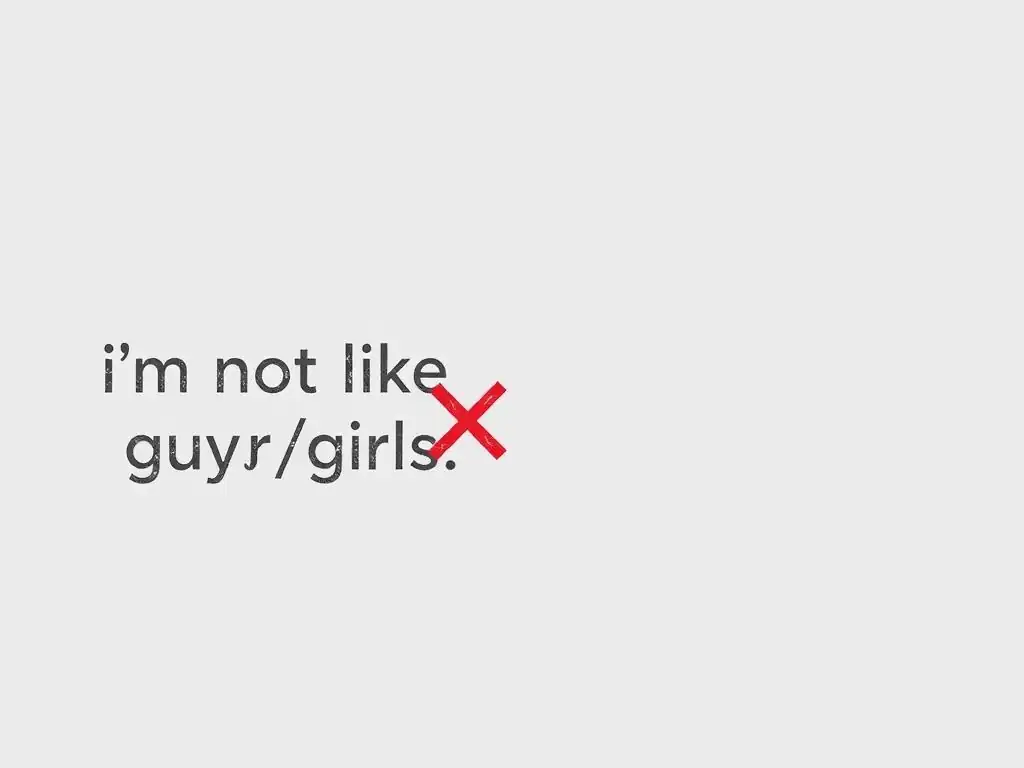
This section delves into the detrimental effects of the phrase "I'm not like other guys/girls" on online dating communication. We'll examine how this seemingly innocuous statement often masks deeper issues and functions as a significant red flag in the initial stages of online interaction. The overuse of this phrase in online dating profiles and messages indicates a potential lack of self-awareness and can significantly impact the success of online dating efforts.
Understanding its negative implications is crucial for navigating the complexities of online dating and building healthy relationships. We will analyze this phrase through the lens of communication styles, red flag identification, and overall relationship potential.
How "I'm Not Like Others" Affects Initial Online Interactions
The phrase "I'm not like other guys/girls" immediately sets up a defensive posture. It suggests a preemptive rejection of common criticisms or stereotypes, often without providing concrete examples of how the individual is different. This can leave potential partners feeling suspicious and wondering what negative qualities are being implicitly acknowledged. Instead of attracting interest, it often creates a sense of distance and distrust.
Imagine receiving a message that begins with this statement. The initial impression is likely to be one of arrogance or insecurity, rather than genuine appeal. The statement lacks specificity; it's a broad generalization that fails to showcase unique personality traits or genuine interests.
This vagueness makes it difficult for potential matches to connect with the individual on a personal level. The claim also implies a judgment on others, potentially alienating those who might otherwise be compatible. Early interactions should focus on building connection, not on differentiating oneself through negative comparisons.
Negative Communication Patterns Associated with this Dating Profile Claim
Using "I'm not like other guys/girls" often correlates with other negative communication patterns. Individuals who rely on this phrase might exhibit:
- Passive-aggressiveness: Instead of directly addressing concerns or insecurities, they use this phrase to hint at flaws in others without taking responsibility for their own actions or beliefs.
- Lack of self-awareness: They may not fully understand their own behaviors or shortcomings, projecting their insecurities onto others.
- Entitled behavior: They may feel they deserve special treatment or attention simply because they claim to be different.
- Difficulty with constructive criticism: They might react defensively to feedback, seeing it as an attack rather than an opportunity for growth.
Consider this example: A profile states, "I'm not like other guys; I actually listen." This implies that other men don't listen, creating a negative comparison. A more effective approach would be to highlight positive listening skills directly: "I value open communication and actively listen to understand my partner's perspective." The difference is subtle yet significant, shifting the focus from negativity to positive attributes.
| Communication Pattern | Example | Impact on Online Dating |
|---|---|---|
| Passive-aggressiveness | "I'm not like other guys; I'm actually respectful." | Implies others are disrespectful, creating negativity. |
| Lack of self-awareness | "I'm not like other girls; I'm not high-maintenance." | Fails to address specific actions or behaviors. |
| Entitled behavior | "I'm not like other guys; I treat women like queens." | Sounds condescending and potentially manipulative. |
Interpreting Early Red Flags in Online Dating Conversations
The phrase "I'm not like other guys/girls" serves as a significant red flag in online dating conversations. It indicates potential incompatibility and should prompt further investigation. Look for patterns of behavior that confirm your initial suspicions. Does the person consistently engage in passive-aggressive communication? Do they struggle to accept feedback or responsibility?
Do they exhibit signs of entitlement or disregard for others' feelings? These are all warning signs that suggest a potentially unhealthy relationship dynamic. Remember, a healthy relationship is built on mutual respect, understanding, and open communication – not on differentiating oneself from a negative stereotype. Trust your instincts; if the phrase raises concerns, it's likely a valid red flag indicating the need for caution or to move on to other potential partners. Prioritizing your emotional well-being and identifying red flags early on is crucial for a positive online dating experience.
Beyond the Words: Behavioral Red Flags to Watch For
The phrase "I'm not like other guys/girls" is a verbal red flag, but it often masks deeper behavioral issues. While the statement itself is a cliché, it's the actions that follow—or the lack thereof—that truly reveal the individual's character and intentions. This section focuses on identifying those behavioral red flags that often accompany this problematic phrase. Observing these behaviors is crucial for online dating safety and avoiding potentially harmful relationships. Understanding these patterns can significantly improve your ability to identify potential online dating red flag phrases and the actions that reinforce them.
Assessing Consistency Between Words and Actions in Online Dating
Inconsistency is a major red flag. Someone claiming to be "different" might shower you with compliments and promises initially, creating a whirlwind romance. However, their actions may not align with their words. Do their messages become less frequent or less thoughtful over time? Do they cancel plans frequently without sufficient explanation, or provide excuses that seem flimsy or inconsistent? These inconsistencies betray a lack of genuine interest and commitment, regardless of their initial proclamations of being unique.
For instance, consider this scenario: A person uses the "I'm not like other guys" line and promises to be a devoted partner. Yet, they are slow to respond to messages, rarely initiate contact, and avoid discussing deeper topics or future plans. This discrepancy between their words ("devoted partner") and actions (lack of consistent communication and commitment) is a clear warning sign. Analyzing this disconnect is key to identifying online dating red flag phrases that go beyond simple words.
Another example involves grand gestures initially, followed by a sudden withdrawal. They might send expensive gifts early on, only to become distant and less communicative later. This pattern suggests a manipulative tactic rather than genuine affection. Remember, consistent behavior, not just grand gestures or flowery words, is the true indicator of a healthy relationship.
Recognizing Gaslighting Techniques in Online Daters
Gaslighting, a form of emotional abuse, is often subtly woven into the "I'm not like other guys/girls" narrative. Individuals employing this tactic might twist your perceptions of reality to make you doubt your own judgment or sanity. For example, they might initially agree with your perspective, only to later deny ever having said it, leaving you feeling confused and questioning your memory.
This can manifest in online dating through inconsistent messages or changing their stories. They might initially express strong interest, only to later claim you misinterpreted their intentions or that you are being overly sensitive. This pattern of manipulation aims to control the narrative and undermine your confidence. Learning to recognize these subtle gaslighting techniques is crucial in protecting yourself from potentially abusive relationships. Recognizing such behavior is a vital aspect of understanding online dating red flag phrases and their implications.
Spotting Controlling Behaviors Masquerading as Uniqueness
The claim of being "different" can be a smokescreen for controlling behaviors. Individuals might present their controlling tendencies as unique personality traits or signs of deep care. However, these behaviors often involve excessive jealousy, possessiveness, or attempts to isolate you from friends and family.
For example, someone might insist on constant communication, becoming angry or accusatory if you don't respond immediately. They might criticize your friends or family, attempting to undermine your relationships outside of the dating context. Such behaviors, presented as expressions of care or devotion, are actually forms of control and manipulation.
These actions represent a significant online dating red flag phrase, regardless of the initial charm or flattery. Understanding these subtle control mechanisms is vital for establishing healthy boundaries and prioritizing your well-being in the online dating world. Remember, healthy relationships are built on mutual respect and trust, not control and manipulation.
Protecting Yourself from Manipulative Daters Online
Online dating offers exciting possibilities, but it also exposes you to individuals who might try to manipulate or exploit you. Understanding how to protect yourself is crucial for a positive and safe online dating experience. This involves recognizing manipulative tactics and establishing firm boundaries. Remember, your safety and well-being are paramount. Don't feel pressured to compromise your values or comfort level for anyone.
Setting Boundaries and Maintaining Self-Respect in Online Dating
Maintaining self-respect is key to a healthy online dating experience. This means setting clear boundaries from the outset and sticking to them. For example, don't share personal information too readily. Avoid revealing your full address, workplace, or financial details until you've met in person and built trust. It's also essential to be assertive about your needs and preferences.
If someone is pressuring you to do something you're uncomfortable with, politely but firmly decline. Remember, a healthy relationship is built on mutual respect and understanding, not pressure or coercion. If someone consistently disregards your boundaries, it's a significant red flag and a reason to reconsider continuing the interaction. Prioritize your emotional and physical safety.
Strategies for Identifying and Avoiding Red Flag Phrases in Online Dating
The phrase "I'm not like other guys/girls" is a classic red flag, often signifying an attempt to manipulate or control. Other phrases that should raise concerns include grandiose statements, excessive negativity, or overly possessive language. Analyzing communication patterns is key. Look for inconsistencies in their words and actions. Do their online profiles and messages match their behavior in person?
If there are significant discrepancies, it’s another potential warning sign. Learning to spot these subtle yet important nuances can help you avoid potentially toxic relationships. Always trust your intuition; if something feels off, it probably is. Consider keeping a record of concerning messages or interactions – this can be helpful if you need to report suspicious behavior.
| Red Flag Phrase Category | Example Phrases | What it Might Indicate |
|---|---|---|
| Grandiose Self-Image | "I'm incredibly successful," "Everyone wants me," | Narcissism, inflated ego, lack of self-awareness |
| Excessive Negativity | "Women/Men are all the same," "I've been hurt before," | Potential for projecting blame, difficulty with trust |
| Possessive/Controlling | "You're mine," "I don't want you talking to others," | Controlling behavior, lack of respect for boundaries |
| Victim Mentality | "Everyone's against me," "I'm always the victim," | Difficulty taking responsibility, manipulative tactics |
Moving On from Potentially Toxic Online Dating Interactions
Ending contact with someone who exhibits red flags can be difficult, but it's crucial for your well-being. Remember, you deserve to be treated with respect and kindness. If you've identified warning signs, don't hesitate to end the interaction, even if it feels uncomfortable. Block their number and social media accounts to prevent further contact. Consider confiding in a trusted friend or family member for support and guidance.
Remember, moving on is a sign of strength and self-preservation. Focusing on self-care and building positive relationships will help you navigate the online dating world with confidence and resilience. Learning from these experiences will empower you to make better choices in the future. Don’t let one negative experience deter you from finding a healthy and fulfilling relationship. The right person will appreciate and respect you for who you are.
Healthy Alternatives to the "I'm Different" Approach in Online Dating
The phrase "I'm not like other guys/girls" is a common online dating red flag, often signaling insecurity or a lack of self-awareness. It suggests a need for validation through contrast rather than genuine self-expression. Instead of relying on this tired trope, potential partners should focus on highlighting their unique qualities in a positive and authentic way. This section explores healthier approaches to showcasing individuality and attracting compatible matches.
Remember, genuine connection stems from authenticity, not from negativity. This is a crucial aspect of navigating the complexities of online dating successfully. Mastering this skill will significantly improve your chances of finding a meaningful relationship.
Authentic Profile Creation: Showcasing Your True Self Online
Crafting an authentic online dating profile is paramount. Instead of stating "I'm not like other guys," demonstrate your individuality through concrete examples. For instance, instead of saying "I'm a great listener," describe a specific situation where your listening skills helped someone. Perhaps you helped a friend navigate a difficult situation by offering a supportive ear.
Instead of focusing on what you aren't, focus on what you are. Use specific details to paint a vivid picture of your personality, hobbies, and values. Include photos that accurately reflect your appearance and lifestyle. Avoid generic or overly posed pictures; instead opt for images that show you engaging in activities you enjoy.
This authenticity is key to attracting genuine interest and avoiding mismatches based on false pretenses. Remember, honesty is the best policy in online dating, and it's far more attractive than generic claims of difference. Consider including details about your passions—whether it's hiking, cooking, or volunteering—to showcase your unique interests and values.
Honest and Transparent Communication: Building Trust in Online Dating
Building trust is crucial in online dating, and transparency plays a vital role. Avoid vague or misleading statements. Instead of suggesting you're "different" without explanation, be upfront about your expectations, values, and relationship goals. Clear communication fosters genuine connections. For example, if you're looking for a long-term relationship, explicitly state that in your profile and early messages. This allows potential partners to self-select, ensuring compatibility from the outset.
Be honest about your flaws and imperfections; everyone has them. Authenticity is far more attractive than a fabricated persona. Open and honest communication prevents misunderstandings and builds trust, which is the cornerstone of any successful relationship, online or offline. Remember, trust is built over time, but it starts with honesty and transparency. This is crucial for finding a genuine connection and avoiding the pitfalls of superficial interactions.
Instead of focusing on how you're different, emphasize what you're passionate about. Highlighting shared values and interests is a far more effective way to attract compatible partners. Instead of saying "I'm not like other guys," talk about your love for classic literature, your commitment to environmental causes, or your passion for cooking. This allows potential matches to identify common ground and fosters meaningful conversations.
Consider creating a list of your top five values and interests. When reviewing profiles, look for those who share similar values and interests. This approach ensures that you're connecting with people who are truly compatible with you, rather than those who are simply attracted to a vague claim of difference.
Remember, shared values and interests provide a strong foundation for lasting relationships. This is a key strategy for building meaningful connections in the often superficial world of online dating. Focus on building genuine connections, rather than trying to stand out through negativity.
Frequently Asked Questions
What exactly is meant by the "I'm not like other guys/girls" claim in online dating?
This phrase is a red flag because it's a generalization implying superiority. It often suggests insecurity and a lack of self-awareness, rather than genuine uniqueness.
Why is this phrase considered a red flag in online dating profiles?
It's a vague statement that lacks specifics. It raises concerns about potential narcissism or a tendency to dismiss others negatively.
Are there any situations where this phrase might be acceptable?
Rarely. While attempting to differentiate oneself is understandable, this phrase is usually ineffective and comes across as pretentious rather than genuine.
What are some better alternatives to express individuality in an online dating profile?
Focus on specific interests, hobbies, and values. Show, don't tell, by sharing concrete examples of your personality and lifestyle.
How can I identify other red flag phrases in online dating profiles?
Look for negative generalizations, excessive boasting, and statements that demonstrate a lack of self-awareness or empathy. Pay close attention to the overall tone and message.
Final Reflection: Deconstructing the "Not Like Others" Illusion
The pervasive "I'm not like other guys/girls" claim in online dating profiles isn't just a cliché; it's a significant indicator of potential incompatibility and unhealthy relationship dynamics. This seemingly harmless phrase often masks deeper issues, revealing a lack of self-awareness, a tendency towards arrogance, or even a manipulative personality. Understanding this subtle red flag can significantly improve your online dating experience and help you avoid potentially damaging relationships.
The insidious nature of this phrase lies in its inherent rejection of an entire group of people. It creates an "us vs. them" mentality, suggesting a superiority complex and a lack of empathy. This often translates to a dismissive attitude towards others' feelings and experiences in real-life relationships. The greatest danger for most of us is not that our aim is too high and we miss it, but that it is too low and we reach it.
- Michelangelo. This quote highlights the importance of self-reflection and setting realistic expectations in relationships, a stark contrast to the unrealistic and often arrogant claims of those who use this phrase.
So, the next time you encounter this phrase in an online dating profile, take a moment to pause. Consider the underlying message and ask yourself: Is this person truly unique and self-aware, or are they simply hiding insecurities behind a facade of superiority? Don't let the allure of perceived uniqueness blind you to potential red flags.
Take the time to assess the entire profile, look for genuine connection, and remember that healthy relationships are built on mutual respect, understanding, and a willingness to engage with the world, not isolate oneself from it. Your happiness and well-being are worth the extra effort.
Unmask Your Authentic Dating Approach: Ditch the "Not Like Others" Trap
Thanks for exploring the complexities of dating and recognizing the red flag of the "I'm not like other guys/girls" claim. You've gained valuable insight into healthier relationships, and it's time to put that knowledge into practice!
- Identify and Adjust: Review your dating profile and conversations. Are you inadvertently falling into the same trap? Consciously showcase your unique personality instead of relying on comparisons to others.
- Share Your Insights: Start a conversation! Share this article with friends or on social media, encouraging others to examine their dating strategies. Let's cultivate a more authentic and genuine dating culture.
- Embrace Transparency: Try a new approach to your dating profile – focus on your passions and values. See how this changes the interactions you receive.
Are you ready to embrace authenticity and attract more meaningful connections, or will you continue to rely on tired clichés to find love?