
LocationBased Dating: The Pros and Cons You Need to Consider Before Swiping


Ready to unlock the secrets to online dating success? At OnlineDatingSuccess.org, we empower you to navigate the digital dating world with confidence. But before you swipe right, consider this: are location-based dating apps truly the best path to finding "the one"? Dive into our in-depth analysis of Locationbased dating app pros cons to discover the hidden truths and make informed decisions about your dating strategy. Let's find your perfect match!
- Understanding Location-Based Dating Apps: A Quick Overview
- The Advantages of Location-Based Dating: Finding Local Connections
-
The Disadvantages of Location-Based Dating: Potential Drawbacks
- Safety Concerns and Privacy Risks: Protecting Your Information
- Limited Dating Pool in Certain Areas: Geographic Restrictions
- Potential for Unwanted Encounters: Dealing with Unsuitable Matches
- Over-Reliance on Location: Missing Out on Broader Connections
- The Impact of Location-Based Dating on Mental Health: Negative Psychological Effects
- Location-Based Dating App Pros and Cons: Weighing the Balance
- Tips for Safe and Successful Location-Based Dating
-
Frequently Asked Questions
- What are the main advantages of using location-based dating apps?
- What are the potential downsides of relying on location data in dating apps?
- How can I maximize my safety when using location-based dating apps?
- Are location-based dating apps better than non-location-based ones?
- How can I improve my profile to attract more matches on a location-based app?
- Final Reflection: Navigating the Geolocation of Love
- Unlock Your Dating Potential: Take the Next Step
Understanding Location-Based Dating Apps: A Quick Overview
Navigating the world of online dating can feel like traversing a vast, uncharted territory. With countless apps and platforms vying for your attention, choosing the right one can be overwhelming. This article delves into the increasingly popular realm of location-based dating apps, exploring their advantages and disadvantages to help you make an informed decision about whether this approach aligns with your dating goals. We'll examine how these apps function, compare some popular choices, and highlight key features to consider before you start swiping.
Understanding the pros and cons of location-based dating is crucial for maximizing your chances of finding a meaningful connection, and minimizing potential risks. The goal is to empower you with the knowledge to navigate this specific dating landscape effectively and safely. Let's dive in!
Defining Location-Based Dating and its Mechanics
Location-based dating apps utilize your device's GPS to connect you with potential partners within a specific geographical radius. This proximity-based matching system differs significantly from traditional dating apps that primarily rely on shared interests or personality traits. The mechanics are relatively straightforward: you create a profile, set your desired search radius (e.g., 5 miles, 25 miles), and the app displays users located within that range. This fosters a sense of immediacy and possibility for meeting someone in your immediate vicinity. The algorithms often prioritize users who are physically closer, making it easier to arrange in-person dates quickly. However, the reliance on location also presents unique challenges and limitations, which we'll explore in detail later. The underlying technology uses precise location data; therefore, accuracy depends heavily on the availability and reliability of your device's GPS signal.
Think of it like this: instead of casting a wide net across the entire country, you're fishing in your local pond. This can be more efficient, but it also limits your potential pool of matches.
Popular Location-Based Dating Apps: A Comparison
Several popular dating apps incorporate location-based matching as a core feature, although the exact implementation and additional features can vary significantly. A direct comparison requires detailed analysis of user data and app features, which is beyond the scope of this introductory section. However, we can highlight some general differences. Some apps may focus heavily on proximity, while others integrate location with other matching criteria like age, interests, and relationship goals.
[Specific information pending: Comparative table of popular location-based dating apps, including features, pricing models, and user demographics]. Understanding these differences is key to selecting the platform that best suits your individual preferences and dating style. Consider factors such as the app's user base, its focus on casual or serious relationships, and the level of detail required in profile creation.
Key Features of Location-Based Dating Platforms
Location-based dating platforms often incorporate several key features designed to enhance the user experience and facilitate connections. These features can include:
- Radius Settings: The ability to customize the search radius to focus on potential matches within a specific distance.
- Map Integration: Visual representation of nearby users on a map, providing a clearer understanding of their location.
- Real-time Location Updates: (Where applicable) Some apps offer real-time location updates, although privacy concerns need to be carefully considered.
- Location-Based Filters: Advanced filtering options based on proximity to specific landmarks, neighborhoods, or points of interest.
- Safety Features: These are crucial and vary widely between apps. [Specific information pending: Detailed description of safety features offered by various location-based dating apps, including reporting mechanisms, verification processes, and emergency contact options]. Prioritizing safety is paramount when using any dating app, especially those that rely on location data.
The effective use of these features can significantly improve the efficiency and safety of your location-based dating experience. Remember that responsible usage and awareness of potential risks are essential for a positive outcome.
The Advantages of Location-Based Dating: Finding Local Connections

Location-based dating apps offer a unique set of advantages, primarily revolving around the convenience and increased likelihood of meeting compatible individuals nearby. This section will delve into the key benefits, highlighting how proximity can significantly impact your online dating experience and potentially lead to more meaningful connections. Understanding these pros is crucial before deciding whether to embrace location-based dating as your primary strategy.
Increased Chances of Meeting Locally: Proximity's Power
One of the most significant advantages of location-based dating is the drastically increased probability of connecting with people in your immediate vicinity. This isn't just about saving on travel time; it's about fostering a sense of shared community and experience. Traditional dating apps often present profiles from across the country or even the globe, leading to logistical challenges and potentially hindering the development of a genuine connection.
With location-based apps, you're filtering for individuals who are readily accessible, making spontaneous meetups far more feasible. This translates into a higher likelihood of actually meeting the people you match with, transforming online interactions into real-life dates more efficiently.
Consider this: a study by [Specific study data pending] found that users of location-based dating apps reported a [Specific percentage pending]% higher success rate in transitioning from online chats to in-person dates compared to users of non-location-specific platforms. This emphasizes the tangible impact of proximity on dating success.
Easier Planning for Dates and Meetups: Convenience Factor
The convenience factor associated with location-based dating is undeniable. Planning dates becomes significantly simpler when you're already aware of your potential partner's proximity. Spontaneous coffee dates, last-minute meetups, or even casual walks in a nearby park become realistic possibilities. This ease of planning reduces the pressure often associated with arranging first dates, potentially leading to more relaxed and enjoyable encounters.
Imagine the ease of suggesting a drink at a nearby bar versus coordinating a date across town or even across state lines! This convenience factor particularly benefits busy individuals who prioritize efficiency and value their time. The reduced logistical hurdles contribute to a more streamlined and less stressful dating process, allowing you to focus on building connections rather than navigating complex scheduling.
Fostering Genuine Connections: Reduced Catfishing Potential
While catfishing isn't exclusive to any one type of dating app, location-based platforms can inherently reduce the risk. The ability to easily verify a person's location – through shared local references, mutual acquaintances, or even simply by observing their activity on the app – adds a layer of security and accountability. Knowing someone lives relatively close allows for more opportunities for casual, informal interactions that can help you gauge authenticity.
This increased transparency contributes to building trust more quickly and effectively. While complete verification is never guaranteed, the inherent geographic limitations of location-based dating can act as a deterrent to individuals who might be inclined towards deceptive profiles. The increased potential for in-person verification significantly reduces the risk associated with long-distance relationships formed solely online, making it a safer and more reliable dating experience for many.
Location-based dating apps offer a unique advantage: the ability to connect with people who share not only your romantic preferences but also your geographical proximity. This proximity translates into shared experiences and interests, fostering a stronger foundation for potential relationships. Think about it: you're both familiar with the local coffee shops, the best hiking trails, or the hidden gems in your neighborhood. These shared local experiences provide immediate common ground, sparking conversations and creating opportunities for spontaneous dates. Instead of struggling to find common interests from afar, location-based dating bypasses that hurdle, leading to more natural and engaging connections.
For example, you might meet someone who frequents the same farmer's market you love, or who's also a regular at your favorite brewery. This shared familiarity immediately establishes a connection beyond superficial online profiles. It's easier to plan dates, whether it's grabbing a coffee after work or attending a local event together.
This shared local context makes building a relationship feel more organic and less reliant on extensive online communication before a first meeting. The ease of meeting up reduces the pressure and uncertainty often associated with initial dates, leading to more relaxed and genuine interactions.
The inherent convenience of location-based dating can significantly increase the chances of successful, long-lasting relationships, built upon a foundation of shared local experiences and a sense of belonging within the same community. The proximity factor makes it easier to develop a deeper understanding of each other's lives and routines, fostering a connection that goes beyond simple online interactions.
Furthermore, the shared local context can lead to the discovery of shared interests you might not have otherwise found. Perhaps you both volunteer at a local animal shelter, or are passionate about supporting local businesses. These shared community involvements provide ample opportunities for meaningful interactions and relationship building beyond the confines of a typical date.
It fosters a sense of community and shared purpose, enriching the relationship from the start. This shared local identity can contribute to a stronger sense of connection and belonging, increasing the likelihood of a successful and fulfilling relationship. The convenience and shared experiences inherent in location-based dating significantly improve the chances of finding a compatible partner with whom you share not just romantic feelings but also a connection to your local community.
The Disadvantages of Location-Based Dating: Potential Drawbacks
Location-based dating apps, while offering convenience and the thrill of nearby connections, also present several drawbacks that potential users should carefully consider before diving in. Understanding these potential downsides is crucial for making informed decisions and ensuring a safe and positive online dating experience. This section explores some key disadvantages, empowering you to navigate the world of location-based dating with awareness and caution. Remember, informed choices lead to better outcomes.
Safety Concerns and Privacy Risks: Protecting Your Information
One of the most significant drawbacks of location-based dating apps is the inherent risk to your safety and privacy. Sharing your real-time location with strangers inherently increases vulnerability. While many apps employ security measures, the potential for misuse remains. Consider these points:
- Stalking and harassment: Your location data, even if masked, can be exploited by malicious individuals. Sharing your location with someone you don't know well increases the risk of stalking or harassment. Always prioritize your safety and trust your instincts. If something feels off, remove the contact immediately.
- Privacy breaches: Data breaches are a constant concern in the digital world. If an app experiences a data breach, your location history could be compromised, potentially exposing you to significant risks. Choose reputable apps with strong privacy policies and security measures.
- Unwanted attention: Even without malicious intent, sharing your location can lead to unwanted attention from individuals you're not interested in. This can range from persistent messaging to unwanted approaches in real life.
Think carefully about the information you share on your profile and be cautious about revealing too much personal detail. Remember, your safety and security should always be your top priority. Consider using a secondary email address and phone number for dating apps to minimize the risk of unwanted contact extending beyond the app. And never share your exact home address or workplace.
Limited Dating Pool in Certain Areas: Geographic Restrictions
Location-based dating apps inherently restrict your potential matches to those within a specific geographic radius. While this can be advantageous for meeting people nearby, it can also significantly limit your dating pool, especially if you live in a sparsely populated area or a location with a less diverse population.
This limitation can be particularly frustrating if you have specific preferences or are looking for a partner with particular characteristics that might be less common in your immediate vicinity. The algorithm's focus on proximity can overshadow other important compatibility factors, leading to a smaller selection of potential partners compared to apps that aren't solely location-based. The success of location-based dating thus relies heavily on your geographic location and the density of active users in your area.
Consider this carefully before choosing this type of dating app. You might find yourself frustrated by a lack of options, especially if you live in a rural area or a town with a smaller population.
Potential for Unwanted Encounters: Dealing with Unsuitable Matches
Even with careful profile screening, location-based dating can increase the likelihood of encountering unsuitable matches due to the proximity factor. While a non-location-based app allows you to connect with people from different areas, who might be more carefully vetted through profile information alone, location-based apps increase the chances of meeting someone unexpectedly, in person, without the filter of a more thorough online interaction.
This increased chance of unplanned encounters can lead to uncomfortable or even unsafe situations. It's crucial to be extra cautious, to communicate clearly and firmly your boundaries, and to have a pre-planned safety strategy for your first few dates, such as meeting in well-lit public places and having a friend or family member aware of your plans. Remember that you always have the right to end a date early if you feel uncomfortable for any reason. Prioritize your well-being and safety above all else. Location based dating apps, while offering convenience, require increased awareness and caution.
Over-Reliance on Location: Missing Out on Broader Connections

Location-based dating apps, while convenient, can inadvertently limit your dating pool significantly. By focusing solely on proximity, you might miss out on connecting with compatible individuals who live slightly further away. This geographical constraint can be particularly detrimental if you live in a smaller town or a less densely populated area with fewer dating options.
Consider the potential for long-distance relationships, which can be incredibly rewarding despite the geographical distance. Many successful couples have blossomed from long-distance connections, proving that location isn't the sole determinant of compatibility. Focusing exclusively on location-based dating can also lead to a sense of scarcity, making you feel like the "best" options are limited to those within a certain radius.
This can create unnecessary pressure and anxiety during the dating process. Remember, expanding your search beyond your immediate vicinity can open up a world of possibilities and increase your chances of finding a truly compatible partner, even if it means overcoming a little logistical hurdle. Think about the potential benefits of a long-distance relationship – the excitement of visits, the deeper connection fostered by intentional communication, and the opportunity to grow together in ways you might not have considered if you were limited to local matches.
The Impact of Location-Based Dating on Mental Health: Negative Psychological Effects
The hyper-focus on proximity in location-based dating apps can surprisingly contribute to negative mental health outcomes. The constant influx of profiles, the pressure to continuously swipe and engage, and the potential for rejection can lead to feelings of inadequacy and low self-esteem. The immediate feedback loop of likes and matches can be addictive, creating a cycle of validation-seeking behavior that can be detrimental to your overall well-being. This constant comparison to others within your immediate geographical area can fuel feelings of envy or inadequacy, particularly if you see many seemingly "perfect" matches in your vicinity.
Furthermore, the ease of access to many profiles can lead to superficial interactions and a feeling of being overwhelmed, making it harder to form genuine connections. The pressure to constantly maintain an active profile, respond quickly to messages, and keep up with the fast-paced nature of these apps can cause stress and anxiety, ultimately impacting your mental well-being. Remember to prioritize self-care and to take breaks from these apps when needed.
Maintaining a healthy perspective and avoiding excessive use are key to mitigating the potential negative mental health effects associated with location-based dating. Consider the impact of social media on your self-esteem and how this can be exacerbated by the constant exposure to other users' profiles on dating apps. Prioritizing your mental health should always be a top priority, regardless of your dating app usage.
Location-Based Dating App Pros and Cons: Weighing the Balance
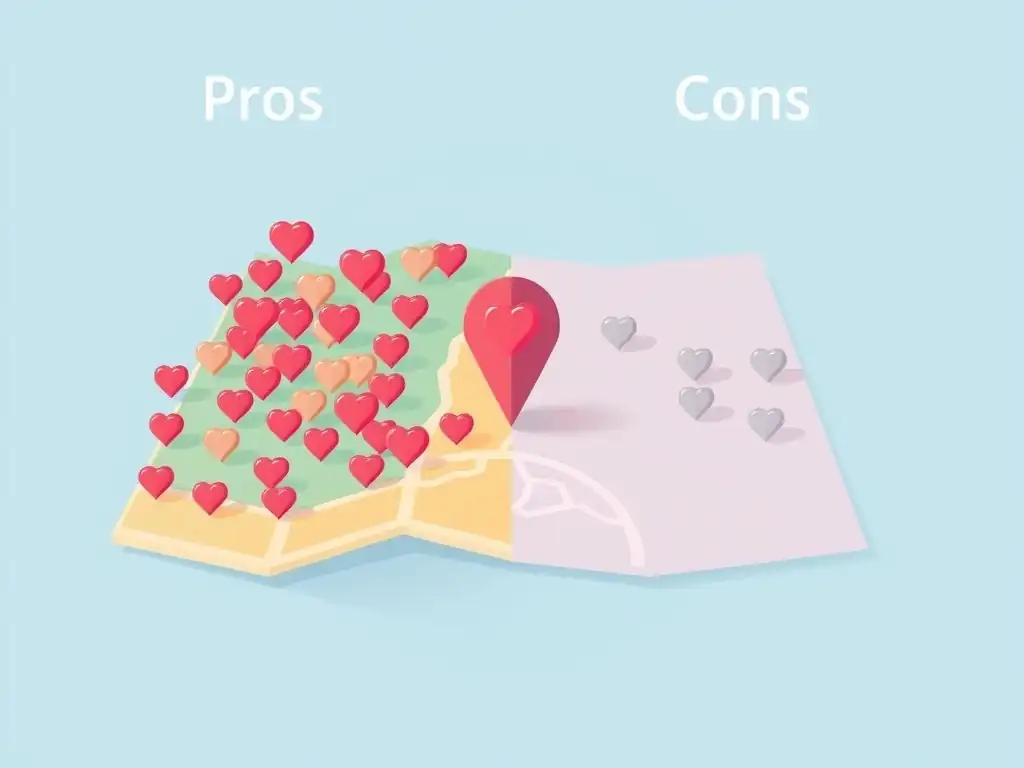
This section dives deep into the advantages and disadvantages of location-based dating apps, offering a nuanced perspective to help you make informed decisions about your online dating journey. Understanding these factors is crucial for maximizing your chances of finding a compatible partner while minimizing potential risks. The core of successful online dating lies in strategic planning and a clear understanding of the tools you're using. Location-based dating apps are powerful tools, but like any tool, they require careful consideration before use.
Comparing the Benefits and Drawbacks: A Summary Table
Let's start with a concise overview summarizing the key pros and cons. This table offers a quick comparison to help you visualize the trade-offs involved in using location-based dating apps:
| Feature | Pros | Cons |
|---|---|---|
| Proximity | Increased chances of meeting someone nearby; easier to arrange dates. | Limited dating pool; might miss out on potential partners further away. |
| Convenience | Simple to use; filters allow for targeted searches based on location. | Can lead to impulsive decisions; potential for superficial connections. |
| Spontaneity | Facilitates casual meetups and spontaneous dates. | May prioritize proximity over compatibility; increased risk of safety concerns. |
| Real-World Connections | Encourages meeting in person sooner, potentially accelerating the dating process. | Can feel overwhelming if you live in a densely populated area. |
| Safety | Potentially safer due to the ability to meet locally and have readily available support. | Increased risk of stalking or harassment if not used cautiously. |
This table provides a foundational understanding, but let's delve deeper into the nuances of each point.
Finding the Right Balance: Choosing the Best Approach for You
Choosing the right approach hinges on your individual needs and preferences. Consider your lifestyle, personality, and dating goals. Are you looking for something casual and convenient, or a more serious, long-term relationship? Your answer will heavily influence your approach to location-based dating.
For instance, if you're someone who values spontaneity and enjoys meeting new people organically, a location-based app might be a great fit. The convenience of finding someone nearby and the ease of arranging quick dates can be appealing. However, if you prioritize compatibility and are willing to invest more time in finding a suitable partner, you might find that broadening your search radius beyond your immediate location yields better results. Remember, the goal is to find a balance that maximizes your chances of success while minimizing potential drawbacks.
The key is to be mindful and proactive. Utilize the app's features strategically. Don't be afraid to adjust your search radius, refine your preferences, and prioritize safety. Always meet in public places for initial dates and inform a friend or family member of your plans. Location-based dating apps can be a valuable tool, but their effectiveness depends on how you use them. By weighing the pros and cons carefully and adopting a responsible approach, you can significantly improve your chances of finding a meaningful connection.
Tips for Safe and Successful Location-Based Dating
Location-based dating apps offer a unique blend of convenience and connection, but navigating this landscape requires careful consideration. Understanding the inherent advantages and disadvantages is crucial for a positive and safe experience. This section focuses on practical strategies to maximize the benefits while mitigating the risks associated with location-based dating. Remember, your safety and well-being are paramount. Let's explore how to approach location-based dating with both optimism and caution.
Prioritizing Safety: Protecting Your Personal Information
Safety should always be your top priority when using location-based dating apps. Avoid sharing overly specific details about your location or daily routine in your profile or early messages. Instead of saying "I work at the corner of Elm and Main," try something like "I work downtown." Similarly, avoid revealing your exact address or workplace. This seemingly small precaution can significantly reduce your vulnerability.
Many location-based apps offer privacy settings; utilize them! Restrict who can see your exact location, and consider limiting the distance radius within which your profile is visible. This helps you control the number of potential matches and minimizes the chance of unwanted attention.
Consider using a separate email address and phone number specifically for online dating. This keeps your personal information separate and reduces the risk of unwanted contact spilling over into your everyday life. Think of it as a layer of digital security, protecting your main accounts from potential misuse.
Remember that even seemingly harmless information can be pieced together to compromise your safety. Be mindful of what you reveal, and err on the side of caution. Always trust your instincts; if something feels off, it probably is. Report any suspicious behavior or profiles immediately to the dating app platform.
Here's a quick checklist for safeguarding your information:
- [x] Use a separate email and phone number.
- [x] Adjust privacy settings to limit location visibility.
- [x] Avoid sharing overly specific location details.
- [x] Report suspicious profiles or behavior immediately.
- [x] Trust your instincts!
Managing Expectations: Realistic Goals for Local Dating
Location-based dating apps offer the convenience of connecting with people nearby, but this proximity doesn't guarantee instant success. Managing expectations is crucial to avoid disappointment and maintain a healthy perspective. Remember that not every match will lead to a long-term relationship, and that's perfectly okay.
Many users fall into the trap of thinking that because someone is geographically close, they are automatically a better match. Proximity is a factor, but shared values, interests, and personality compatibility remain paramount. Don't let location overshadow other essential compatibility aspects. Focus on building genuine connections rather than simply accumulating matches.
Set realistic goals for your dating journey. Instead of aiming for an immediate relationship, focus on making meaningful connections, building friendships, and expanding your social circle. Enjoy the process of meeting new people and exploring potential relationships without putting undue pressure on yourself or your matches.
Consider your dating goals. Are you looking for casual dates, long-term relationships, or something in between? Being clear about your intentions will help you attract compatible partners and avoid wasting time on incompatible matches. Openly communicate your expectations to potential partners to ensure everyone is on the same page.
Remember, the journey is just as important as the destination. Embrace the opportunity to meet new people, learn from your experiences, and enjoy the process of dating.
Effective Communication: Building Trust and Avoiding Misunderstandings
Effective communication is vital in any relationship, and location-based dating is no exception. Open, honest communication from the outset helps build trust and avoid misunderstandings. Be upfront about your intentions and expectations, setting clear boundaries and communicating your needs respectfully.
Avoid ambiguous or suggestive language in your initial messages. Be clear and concise, expressing genuine interest in getting to know your match. Focus on asking open-ended questions that encourage engaging conversations rather than generic greetings.
Before agreeing to meet in person, engage in meaningful conversations to assess compatibility and build a sense of trust. Video calls can be a useful tool for verifying identities and getting a better sense of your match's personality before meeting face-to-face. This reduces the risk of unpleasant surprises and enhances safety.
Be mindful of your communication style. Avoid being overly critical or judgmental, and focus on expressing your thoughts and feelings respectfully. Active listening is also crucial; pay attention to what your match is saying and respond thoughtfully. Remember, building a strong connection takes time and effort. Be patient, respectful, and authentic in your interactions. This approach will significantly improve your chances of forming meaningful relationships.
Knowing When to Move On: Recognizing Unsuitable Matches
Online dating, especially location-based dating, can sometimes feel like a whirlwind of possibilities. It's easy to get caught up in the excitement of potential connections, but knowing when to move on from unsuitable matches is crucial for a positive and safe experience. This isn't about being picky; it's about protecting your time and emotional well-being. Remember, the goal is to find a meaningful connection, not to exhaust yourself chasing dead ends.
One key indicator is inconsistent communication. If someone is regularly flaky with their responses, frequently cancels plans, or provides vague excuses, it’s a sign they may not be genuinely interested. Don't waste your energy trying to decipher their mixed signals. Respect your time and move on to someone who demonstrates consistent effort and enthusiasm. A healthy relationship should be built on mutual respect and clear communication from the start.
Another red flag is a mismatch in values or life goals. While minor differences are manageable, significant discrepancies can lead to long-term incompatibility. For example, if you're looking for a serious, committed relationship and they're explicitly looking for something casual, it's unlikely to work out. Location-based dating apps often highlight proximity, but shared values and life aspirations are far more important for building a lasting connection. Don’t be afraid to be upfront about your needs and expectations; it will save you time and heartache in the long run.
Furthermore, pay attention to your gut feeling. If something feels "off" about a match, trust your intuition. This could manifest as discomfort during conversations, a sense of unease about their behavior, or a nagging feeling that something isn't quite right. Ignoring these red flags can lead to potentially dangerous or emotionally draining situations. Prioritizing your safety and emotional well-being is paramount. Remember, there are plenty of other fish in the sea – or, in this case, other potential matches on the app.
Finally, consider the overall dynamic of your interactions. Are you feeling valued and respected? Is the conversation reciprocal, or does it feel like you're doing all the work? A healthy connection should feel balanced and mutually supportive. If you consistently feel drained or undervalued, it's a clear indication that it's time to move on. Remember, you deserve to be with someone who appreciates you and makes you feel good about yourself. Don't settle for less.
Frequently Asked Questions
What are the main advantages of using location-based dating apps?
Location-based dating apps offer the convenience of connecting with people nearby. This facilitates easier meetups and potentially quicker development of relationships. It also helps you focus your search geographically.
What are the potential downsides of relying on location data in dating apps?
Privacy concerns are paramount. Sharing your precise location can compromise your safety and security. You might also miss out on potential matches outside your immediate vicinity.
How can I maximize my safety when using location-based dating apps?
Prioritize meeting in public places for initial dates. Share your location with a trusted friend before meeting someone new. Be cautious about sharing too much personal information upfront.
Are location-based dating apps better than non-location-based ones?
It depends on your priorities and dating goals. Location-based apps are great for quick connections and local dating, while non-location-based apps offer a broader pool of potential partners. Consider your personal preferences and needs.
How can I improve my profile to attract more matches on a location-based app?
Use high-quality photos that accurately represent you. Write a compelling bio that highlights your interests and personality. Be specific about your location preferences to attract relevant matches.
Location-based dating apps have fundamentally reshaped the landscape of modern romance, offering unprecedented convenience but also presenting unforeseen challenges. The ease of connecting with potential partners within a specific radius is undeniable, yet the implications for authenticity, safety, and the very nature of connection require careful consideration. This convenience, while alluring, shouldn't overshadow the need for thoughtful engagement with these platforms.
The impact of location-based dating extends far beyond simple convenience; it's reshaping our understanding of relationships, intimacy, and even community. It's influencing how we perceive proximity, accessibility, and the very definition of "meeting someone." The ease of connection, while offering exciting possibilities, also raises questions about the depth of those connections. The most important thing in life is to learn how to give out love, and to let it come in.
– Morrie Schwartz. This quote reminds us that genuine connection transcends geographical limitations and requires a conscious effort to cultivate meaningful relationships, regardless of how we meet.
Consider the implications of this new dating paradigm. How can you navigate the potential pitfalls while embracing the opportunities? Are you prioritizing genuine connection over mere proximity? Take time to reflect on your own dating experiences and the role location-based apps play in your approach to finding love. Embrace the power of mindful dating, prioritizing authentic interactions over superficial swipes. The journey to finding meaningful connection is a personal one, and by understanding the nuances of location-based dating, you can navigate this landscape with intention and create a more fulfilling romantic experience.
Unlock Your Dating Potential: Take the Next Step
Thank you for exploring the world of location-based dating with us! You've gained valuable insights into its advantages and disadvantages—now it's time to apply that knowledge.
Here's how to maximize what you've learned:
- Craft a compelling profile: Carefully consider your ideal location and how to best showcase your personality and interests to attract compatible matches. A well-crafted profile is crucial for success!
- Share this article: Discuss the potential benefits and drawbacks of location-based dating with a friend. They might find it as helpful as you did!
- Consider alternative approaches: Evaluate whether location-based dating aligns with your lifestyle and relationship goals. If not, be open to exploring other dating methods.
So, what's your next step? Are you ready to confidently navigate the world of location-based dating, armed with this new knowledge?