
[App A] vs [App B]: The Inside Scoop on Dating Apps Which One Should You Use?

Welcome to OnlineDatingSuccess.org, your guide to navigating the exciting (and sometimes tricky!) world of online dating. Are you ready to ditch the endless swiping and find a meaningful connection? Then you've come to the right place. We're diving deep into the question on everyone's mind: what's the best dating app for relationships? Our comparison of [App A] and [App B] reveals surprising insights – discover which app could be your key to unlocking lasting love. Read on to find out!
- Introduction: Finding the Best Dating App for Relationships in 2024
-
Hinge: A Deep Dive into its Features and User Base
- Hinge's Interface and User Experience: Easy Navigation for Beginners?
- Hinge's Matching Algorithm: Finding Compatible Partners for Lasting Relationships
- Hinge's Success Stories: Real Examples of Finding Love (with user testimonials/links if available)
- Hinge's Pricing and Subscription Models: Value for Money for Serious Daters?
- Hinge's Safety Features: Protecting Yourself Online While Searching for Love
-
Bumble: Exploring its Strengths and Weaknesses
- Bumble's User Interface and User Experience: Intuitive Design for a Smooth Experience?
- Bumble's Matching Algorithm: How Does it Compare to Hinge for Long-Term Relationships?
- Bumble's Success Stories: Real-Life Examples of Successful Relationships Forged on Bumble (with user testimonials/links if available)
- Bumble's Pricing and Subscription Models: Are the Premium Features Worth the Investment?
- Bumble's Safety Features: A Comparative Analysis of Security Measures
-
Hinge vs Bumble: Head-to-Head Comparison for Finding the Best Dating App
- Matching Algorithms: A Detailed Comparison of Hinge and Bumble
- User Interface and Experience: Which App Offers a More User-Friendly Experience?
- Pricing and Value: A Cost-Benefit Analysis of Both Dating Apps
- Safety and Security: Comparing the Security Measures of Hinge and Bumble
- Target Audience: Which App is Best Suited for Your Dating Goals (Long-term relationships vs casual dating)?
- Choosing the Best Dating App for Your Needs: A Practical Guide
- Creating a Winning Profile: Tips for Attracting the Right Matches on Hinge and Bumble
- Conclusion: Making the Right Choice for Lasting Love
- Frequently Asked Questions
- Final Reflection: Navigating the Modern Landscape of Love
- Unlock Your Dating Potential: Find Your Perfect Match Today!
Introduction: Finding the Best Dating App for Relationships in 2024
Navigating the world of online dating can feel like searching for a needle in a haystack—or perhaps, a particularly elusive and charming needle. With countless dating apps vying for your attention, choosing the right platform for building meaningful connections can be overwhelming. This article cuts through the noise, providing a detailed comparison of [App A] and [App B], two popular contenders in the quest for lasting love.
We'll delve into their features, user demographics, and overall effectiveness in helping users find the best dating app for relationships, ultimately helping you determine which app best aligns with your goals and expectations for finding a compatible partner in 2024. We aim to equip you with the knowledge to make an informed decision, saving you time and frustration in your search for a meaningful relationship.
This isn't just about swiping; it's about strategically choosing the platform that maximizes your chances of success. Finding the best dating app for relationships is a personal journey, and this comparison serves as your insightful guide.
Choosing the Right Platform for Meaningful Connections
The sheer number of dating apps available can be paralyzing. Each platform boasts unique features and attracts different types of users. Before diving into the specifics of [App A] and [App B], it's crucial to understand what constitutes a "successful" outcome in your online dating journey. Are you seeking casual encounters, or are you prioritizing a long-term, committed relationship? This fundamental question significantly impacts your app selection.
Consider these factors when choosing a platform designed for meaningful connections:
- User Demographics: Some apps attract a younger demographic, while others cater to more mature individuals seeking serious relationships. Researching the age range and relationship goals of the average user on each platform is crucial.
- App Features: Look for features that facilitate meaningful interaction, such as detailed profile options, in-depth matching algorithms, and options for video calls or virtual dates. Avoid apps that prioritize superficial interactions or prioritize quick matches over compatibility.
- Success Rates: While quantifying "success" in online dating is challenging, some apps may boast higher rates of long-term relationships formed through their platform. Look for user reviews and testimonials focusing on successful pairings.
- Safety Features: Prioritizing your safety is paramount. Choose an app with robust safety features, including verification processes, reporting mechanisms, and clear guidelines for safe communication.
Understanding Your Dating Goals: Long-Term Relationships vs. Casual Dating
The key to finding the best dating app for relationships lies in aligning your personal goals with the app's user base and functionality. A platform optimized for casual dating might not be the best choice if you're seeking a long-term partner. Conversely, an app focused solely on serious relationships might feel restrictive if you're open to exploring various connections.
Let's clarify the distinction:
| Feature | Long-Term Relationship Focused App | Casual Dating Focused App |
|---|---|---|
| User Base | Typically older users seeking serious relationships. | Younger users, often open to casual encounters and friendships. |
| Profile Details | Detailed profiles encouraging self-expression and transparency. | Simpler profiles, focusing on quick visual assessments. |
| Matching Algorithm | Emphasis on compatibility and shared values. | Emphasis on proximity and immediate connection. |
| Communication | Encourages meaningful conversations and in-depth interactions. | Often prioritizes quick messaging and superficial exchanges. |
| Success Metric | Long-term relationships and marriages. | Number of dates or connections. |
Understanding this distinction is vital before choosing between [App A] and [App B]. The following sections will analyze each app's features and user base to help you determine which best aligns with your specific dating goals. Remember, the best dating app for your relationships is the one that best supports your aspirations.
Hinge: A Deep Dive into its Features and User Base
Hinge, often touted as the "relationship app," distinguishes itself from other dating platforms with its focus on fostering meaningful connections rather than casual encounters. This deep dive will explore its key features and user demographics, providing insights to help you determine if it aligns with your goals of finding a lasting relationship – the best dating app for relationships, perhaps?
Hinge boasts a clean and intuitive interface, designed for ease of use even for those new to online dating. The app prioritizes high-quality profiles, encouraging users to complete their profiles thoroughly with detailed information and multiple photos. This approach minimizes the time spent sifting through incomplete or low-effort profiles, a common frustration in other dating apps.
The prompt-based profile creation fosters deeper self-expression, providing conversation starters beyond simple “hello” messages. Navigation is straightforward; finding matches, liking profiles, and initiating conversations is intuitive and requires minimal learning curve. However, some users might find the emphasis on detailed profile completion slightly demanding, especially those seeking a quicker, more casual dating experience.
The overall experience is designed to be less overwhelming than some competitors, making it more approachable for users seeking genuine connections. This thoughtful design contributes to the app's reputation as a prime candidate for those searching for the best dating app for relationships.
Hinge's Matching Algorithm: Finding Compatible Partners for Lasting Relationships
Hinge's matching algorithm goes beyond simple swiping. It leverages user profile information, including prompts, photos, and stated relationship goals, to connect individuals with compatible personalities and relationship aspirations. The algorithm prioritizes shared interests and values, aiming to reduce superficial matches and increase the likelihood of meaningful connections. While the exact workings of the algorithm remain proprietary, user feedback suggests a higher success rate in finding compatible partners compared to other apps.
This focus on compatibility contributes significantly to Hinge's reputation as a top contender for the title of best dating app for relationships. The algorithm is constantly being refined and improved based on user data and feedback, ensuring its ongoing effectiveness. This iterative approach to algorithm development is a key factor in its ability to deliver high-quality matches.
Hinge's Success Stories: Real Examples of Finding Love (with user testimonials/links if available)
While specific user testimonials and links are unavailable for privacy reasons, anecdotal evidence and numerous online articles highlight Hinge's success rate in facilitating lasting relationships. Many users report finding meaningful connections and long-term partners through the app, emphasizing the effectiveness of its profile-building prompts and compatibility-focused matching algorithm. The app's emphasis on quality over quantity seems to resonate with users seeking serious relationships, making it a popular choice among those prioritizing long-term commitment. The focus on detailed profiles and meaningful interactions fosters deeper connections, significantly improving the chances of finding a compatible partner.
This, in turn, strengthens Hinge's position as a potential best dating app for relationships. Further research into user reviews and success stories could provide more concrete data to support these observations. [Specific data on success rates pending].
Hinge's Pricing and Subscription Models: Value for Money for Serious Daters?
Hinge offers both a free and a paid subscription model. The free version allows you to create a profile, view a limited number of profiles, and send a limited number of likes. This is sufficient for casual browsing, but it significantly restricts your interaction capabilities.
The limitations on likes, in particular, can be frustrating for users actively seeking connections. Many find themselves reaching the daily limit quickly, especially if they are actively engaging with profiles they find interesting. This free version is best suited for users who want to test the app and see if it aligns with their dating goals before committing to a paid subscription.
The paid subscription, however, unlocks a much more comprehensive experience. It removes the daily like limit, allowing users to engage more freely and broadly with potential matches. It also provides access to features such as seeing who has liked your profile, prioritizing your profile in the algorithm (increasing your visibility), and offering unlimited "undo" options for accidental swipes.
These additional features can significantly enhance the user experience for serious daters who are actively seeking meaningful connections, as they allow for more control and strategic use of the app. While the cost of the subscription varies depending on the length of the commitment (monthly versus yearly subscriptions), the value proposition is typically centered around increased interaction capacity and profile visibility, elements crucial for successful online dating.
The question of whether it's "value for money" is ultimately subjective and depends on individual dating goals and budget. For those seriously invested in finding a relationship, the added features and broader reach might justify the cost.
Hinge's Safety Features: Protecting Yourself Online While Searching for Love
Hinge prioritizes user safety with several built-in features designed to create a more secure dating environment. One key feature is its robust profile verification system. While not mandatory, users are encouraged to verify their profiles through photo verification, which helps to reduce the prevalence of fake profiles and catfishing. This verification process adds a layer of trust to the platform, allowing users to feel more confident in the authenticity of the profiles they interact with. This is particularly valuable for those seeking long-term relationships, as building trust is paramount in forming meaningful connections.
Furthermore, Hinge provides users with tools to report inappropriate behavior or suspicious profiles. The reporting system is straightforward and allows users to flag profiles or messages that violate Hinge's community guidelines. This proactive approach to moderation helps to maintain a safer and more respectful environment for all users. While no system is foolproof, Hinge's commitment to user safety is evident in its readily available reporting mechanisms and clear guidelines outlining acceptable behavior. It is crucial, however, for users to remain vigilant and exercise caution, as online safety ultimately involves a shared responsibility between the platform and its users. Remember to always meet in public places for first dates and inform a friend or family member of your plans. Hinge's safety features are a valuable asset, but they should be viewed as supplemental to your own personal safety practices. Using common sense and maintaining awareness are always essential in online interactions.
Bumble: Exploring its Strengths and Weaknesses
Bumble, known for its women-first approach, presents a unique landscape in the online dating arena. While it boasts a large user base and a reputation for fostering meaningful connections, its effectiveness in achieving the ultimate goal – a lasting relationship – requires careful consideration. This section delves into Bumble's key features, analyzing its strengths and weaknesses concerning its suitability as a best dating app for relationships.
Bumble's User Interface and User Experience: Intuitive Design for a Smooth Experience?
Bumble's user interface is generally praised for its clean, intuitive design. Navigation is straightforward, making it easy for even first-time users to quickly grasp the app's functionalities. The profile creation process is relatively streamlined, encouraging users to showcase their personalities through photos and prompts. However, the emphasis on photos might inadvertently prioritize superficial aspects over deeper compatibility. Some users have noted that the app's design, while aesthetically pleasing, could benefit from more advanced search filters to refine potential matches based on specific relationship goals. The swipe-based matching system, while familiar to many dating app users, can sometimes feel overwhelming, especially with a large influx of potential matches. While the UI is generally considered user-friendly, improvements could be made to enhance the user experience, particularly for users seeking long-term relationships, where a more nuanced matching process could be beneficial. The app's overall speed and responsiveness are generally positive, minimizing frustrating delays.
Bumble's Matching Algorithm: How Does it Compare to Hinge for Long-Term Relationships?
Bumble's matching algorithm, unlike some competitors that solely rely on superficial similarities, incorporates user profiles, including photos, prompts, and bios, to suggest potential matches. However, the algorithm's effectiveness in connecting users seeking long-term relationships remains a subject of debate. While anecdotal evidence suggests successful pairings, a detailed analysis of the algorithm's success rate in fostering lasting relationships compared to apps like Hinge, which explicitly focuses on meaningful connections, is lacking. [Specific data on Bumble's success rate for long-term relationships pending].
Furthermore, the time constraint imposed on women to initiate contact could inadvertently limit the pool of potential partners, potentially filtering out compatible individuals who may not message within the 24-hour window. This feature, while designed to empower women, might inadvertently hinder the formation of lasting relationships for some users. A comparative study analyzing Bumble's algorithm's performance against apps prioritizing long-term relationships would provide valuable insights.
Bumble's Success Stories: Real-Life Examples of Successful Relationships Forged on Bumble (with user testimonials/links if available)
While quantifiable data on Bumble's success rate for long-term relationships is limited, numerous anecdotal accounts highlight its role in facilitating meaningful connections. Many users share stories of finding lasting partners through the platform, emphasizing the app's ability to foster initial conversations and build rapport. [User testimonials and links pending]. These success stories often highlight the importance of thoughtful profile creation and proactive communication in maximizing the app's potential.
However, it's crucial to acknowledge that these are individual experiences, and the app's overall success rate in fostering long-term relationships requires further investigation. A more comprehensive analysis incorporating user surveys and statistical data would provide a more accurate representation of Bumble's effectiveness in achieving the goal of helping users find lasting relationships. The absence of readily available, robust data makes a definitive statement on Bumble's success in this area challenging. Further research is needed to provide a more complete picture.
Bumble offers a freemium model, meaning basic functionality is available without payment, but premium features require a subscription. The cost varies depending on the length of the subscription and your location, but generally, you can expect to pay a monthly fee for access to features like unlimited swipes, backtracking on rejected profiles (allowing you a second chance! ), and the ability to see who's liked you. This last feature alone can be a significant time-saver, eliminating the guesswork and frustration of wondering if your efforts are reciprocated.
The question of whether the premium features are worth the investment is subjective. For highly motivated users who are serious about finding a relationship and value efficiency, the extra features can be a worthwhile investment. The ability to see who's already interested can dramatically increase the success rate and reduce wasted time swiping through profiles with little chance of a match. However, for users who are less pressed for time or are more casually using the app, the free version might suffice.
The free version still allows you to connect with people; the premium features simply expedite and enhance the process. Consider your dating goals and how much time you're willing to invest before committing to a paid subscription. Think of it like this: would you pay for express shipping if you're not in a rush for your order? The principle is the same.
Many users find the "Spotlight" feature, available with a subscription, particularly beneficial. Spotlight boosts your profile visibility for a limited time, making it more likely to be seen by other users. This is particularly helpful if you're new to the app or have a busy schedule. Ultimately, a careful assessment of your needs and budget is crucial before deciding whether to upgrade.
Bumble's Safety Features: A Comparative Analysis of Security Measures
Bumble prioritizes user safety with several features designed to create a more secure environment. Unlike some dating apps, Bumble incorporates photo verification, allowing users to verify their identity through a selfie matching process. This helps reduce the risk of catfishing and promotes authenticity. The app also has a robust reporting system, enabling users to easily report inappropriate behavior or suspicious profiles. Bumble's team actively monitors reports and takes action against users who violate the app's terms of service. This proactive approach helps maintain a safer community for everyone.
A key safety feature is Bumble's private detection system. This system utilizes algorithms to scan and detect potentially harmful or inappropriate messages, reducing the risk of users being exposed to harassment or abuse. While no system is foolproof, this layer of protection adds an additional level of security. Bumble also encourages users to utilize its built-in safety features, such as blocking and reporting, and provides helpful resources and guidance on staying safe online. Furthermore, the app promotes responsible usage through educational materials and reminders.
Compared to other dating apps, Bumble's safety features are generally considered above average. However, it's important to remember that no online platform can guarantee complete safety. Users should always exercise caution, trust their instincts, and be aware of potential risks. Proactive measures like verifying profiles, communicating with caution, and meeting in public places remain crucial, regardless of the app's safety features. The app's commitment to safety is a positive aspect, but personal responsibility remains paramount in ensuring a safe and positive online dating experience.
Hinge vs Bumble: Head-to-Head Comparison for Finding the Best Dating App

This section dives deep into the specifics of Hinge and Bumble, comparing their features to help you determine which app best suits your needs in the quest for a meaningful relationship – the best dating app for relationships, if you will. We'll analyze their core functionalities to help you make an informed decision. Remember, the "best" app is subjective and depends on individual preferences and relationship goals.
Matching Algorithms: A Detailed Comparison of Hinge and Bumble
Both Hinge and Bumble utilize algorithms to suggest potential matches, but their approaches differ significantly. Hinge boasts a more sophisticated algorithm that prioritizes compatibility based on detailed profile information and answers to prompts. It aims to connect users with shared values and interests, fostering deeper connections from the outset. This makes Hinge a strong contender for those seeking long-term relationships – a key aspect in finding the best dating app for relationships.
Bumble, on the other hand, emphasizes a more broad-based matching system. While it considers shared interests, its algorithm also focuses on proximity and user activity. This means you're more likely to see a wider range of potential matches, potentially increasing your chances of finding someone compatible, but it may also lead to more superficial interactions. The speed of matching on Bumble can be faster than Hinge, but the quality of matches might vary more.
| Feature | Hinge | Bumble |
|---|---|---|
| Algorithm Focus | Compatibility, shared values, interests | Proximity, activity, shared interests |
| Matching Speed | Slower, more curated | Faster, broader range of matches |
| Best for | Users seeking long-term relationships | Users looking for a wider pool of options |
| Relationship Goal | Serious relationships, finding 'the one' | Casual dating, friendships, relationships |
User Interface and Experience: Which App Offers a More User-Friendly Experience?
The user experience is crucial when searching for the best dating app for relationships. Both apps offer intuitive interfaces, but their design philosophies differ. Hinge prioritizes a clean, minimalist aesthetic with a focus on showcasing profile details and prompts. The app feels less overwhelming and encourages thoughtful engagement with profiles. This thoughtful design contributes to a more considered approach to dating, aligning with the goal of finding a lasting relationship.
Bumble, conversely, presents a more visually busy interface. It's packed with features, which can feel overwhelming for some users. While this offers a wider range of functionalities, it can also be less focused and potentially distracting from the core goal of finding a match. The swiping mechanic, while efficient, can lead to superficial judgments based on limited profile information.
Pricing and Value: A Cost-Benefit Analysis of Both Dating Apps
Both Hinge and Bumble offer free versions with limited functionalities and premium subscription options unlocking additional features. Hinge's premium features primarily focus on enhancing the matching process and providing more profile insights. These features are generally aligned with its focus on deeper connections, making the paid version a worthwhile investment for those seriously seeking a relationship. This makes it a strong contender for those seeking the best dating app for relationships, as the investment reflects the seriousness of the intent.
Bumble's premium subscription offers a broader range of features, including unlimited swipes, backtracks (to reconsider past profiles), and profile boosts. The value proposition here is more focused on increasing visibility and interaction opportunities. Whether this translates into meaningful connections depends heavily on individual effort and engagement. The cost-benefit analysis here is more nuanced and depends on your dating strategy and how much you value these features. The premium features might not necessarily translate to better success in finding a serious partner.
Ultimately, the "best" dating app for relationships depends on individual preferences and dating goals. This comparison provides a framework for evaluating Hinge and Bumble based on crucial aspects like matching algorithms, user experience, and pricing. Consider your priorities and choose wisely!
Safety and Security: Comparing the Security Measures of Hinge and Bumble
Both Hinge and Bumble prioritize user safety, but their approaches differ slightly. Bumble, known for its female-first approach, has a robust reporting system and verification process. Users can report inappropriate behavior easily, and the app actively works to verify profiles, reducing the likelihood of encountering fake accounts. They also offer a "Private Detector" feature which alerts users to potentially harmful content or behavior. This proactive approach contributes to a safer environment, especially for women.
Hinge, on the other hand, focuses on fostering genuine connections, which inherently contributes to a safer experience. While their reporting system is also effective, their emphasis on detailed profiles and prompts encourages users to present themselves authentically. This, in turn, can deter individuals seeking casual interactions or those with malicious intent.
However, the absence of a prominent profile verification system, like Bumble's, might leave room for improvement in identifying and removing fake profiles. While Hinge actively monitors for and removes inappropriate content, proactive user verification would enhance their safety features. The app's focus on in-app interactions, rather than exchanging external contact information immediately, also adds a layer of security.
Ultimately, both apps provide reasonable safety measures. Bumble's more overt approach to verification might offer a slightly more secure initial experience, while Hinge's emphasis on authentic connections might lead to a safer long-term interaction. The best app for you depends on your comfort level with different security approaches. Remember, no app is completely impervious to malicious actors, so always practice caution and trust your instincts.
Target Audience: Which App is Best Suited for Your Dating Goals (Long-term relationships vs casual dating)?
Hinge and Bumble cater to different dating goals, although both platforms host users seeking both casual and serious relationships. However, their design and user base lean toward different preferences.
Hinge is explicitly designed for those seeking meaningful connections. Its detailed profile prompts encourage users to reveal more about their personalities, values, and interests, facilitating deeper conversations and more substantial connections. The emphasis on shared interests and compatibility makes it a more suitable choice for individuals prioritizing long-term relationships. The algorithm prioritizes compatibility, leading to matches with higher potential for sustained connection. Anecdotally, many users report finding more serious partners on Hinge than on other apps.
Bumble, while capable of fostering meaningful relationships, has a broader appeal, attracting users seeking both casual and serious relationships. Its swipe-based interface and focus on initiating conversations from women creates a more dynamic experience. While serious relationships certainly develop on Bumble, the app's overall atmosphere is less explicitly focused on long-term commitment compared to Hinge. The faster pace of interactions and the broader user base can make it suitable for those exploring various options or seeking a more casual dating experience.
In short: If your primary goal is to find a long-term partner and you're willing to invest time in crafting a detailed profile and engaging in thoughtful conversations, Hinge is likely the better choice. If you're open to both casual and serious dating, prefer a faster-paced experience, and appreciate the female-first approach, Bumble might be a better fit. The "best" app ultimately depends on your individual preferences and dating goals. Consider your priorities carefully before choosing which platform to use in your search for the best dating app for relationships.
Choosing the Best Dating App for Your Needs: A Practical Guide
Finding the best dating app for relationships can feel overwhelming. With so many options vying for your attention, it's easy to get lost in the shuffle. This section helps you navigate the complexities and choose the platform that best aligns with your goals for finding a meaningful connection. We'll delve into key factors to consider, ensuring you make an informed decision that maximizes your chances of success. Remember, the "best" app is subjective and depends heavily on your individual preferences and relationship goals.
Factors to Consider When Selecting a Dating App for Serious Relationships
Selecting a dating app for serious relationships requires careful consideration of several key factors. It's not just about the number of users; it's about the quality of those users and the app's features that support meaningful connections.
Here's a breakdown of crucial elements to evaluate:
- User Demographics: Do you want to connect with people in a specific age range, profession, or with shared interests? Some apps cater to specific demographics more effectively than others. For instance, some may have a higher proportion of users seeking long-term relationships while others attract a more casual dating crowd. Research the user base of each app to determine which better aligns with your ideal partner.
- App Features: Consider features beyond just swiping. Does the app offer detailed profiles, allowing you to learn more about potential matches before initiating contact? Are there features that encourage deeper conversations, such as prompts or in-app games? Look for features that facilitate genuine connection rather than superficial interactions.
- Safety and Privacy: Your safety and privacy are paramount. Does the app have robust verification processes to help weed out fake profiles? What measures are in place to protect your personal information? Read the app's privacy policy carefully before signing up.
- Ease of Use: The best app is one you'll actually use. Is the interface intuitive and easy to navigate? Can you easily manage your profile, send messages, and browse potential matches? A clunky or confusing interface can quickly lead to frustration and abandonment.
- Success Rate: While hard data on success rates is often unavailable, look for anecdotal evidence and user reviews that suggest a higher likelihood of finding meaningful relationships on a particular platform. This can be a valuable indicator, although it's not a definitive measure.
Consider this table summarizing key differentiators for serious daters:
| Feature | App A | App B |
|---|---|---|
| User Demographics | Primarily 25-40, career-focused | Broader age range, diverse backgrounds |
| Profile Depth | Detailed profiles, prompts encouraged | Simpler profiles, focus on photos |
| Communication | In-app messaging only | In-app messaging, optional video calls |
| Safety Features | Photo verification, reporting system | Similar features, plus background checks (paid option) |
| Ease of Use | Very intuitive | Slightly steeper learning curve |
Remember to weigh these factors against your personal preferences and relationship goals to find the best dating app for relationships for you.
Creating a Winning Profile: Tips for Attracting the Right Matches on Hinge and Bumble
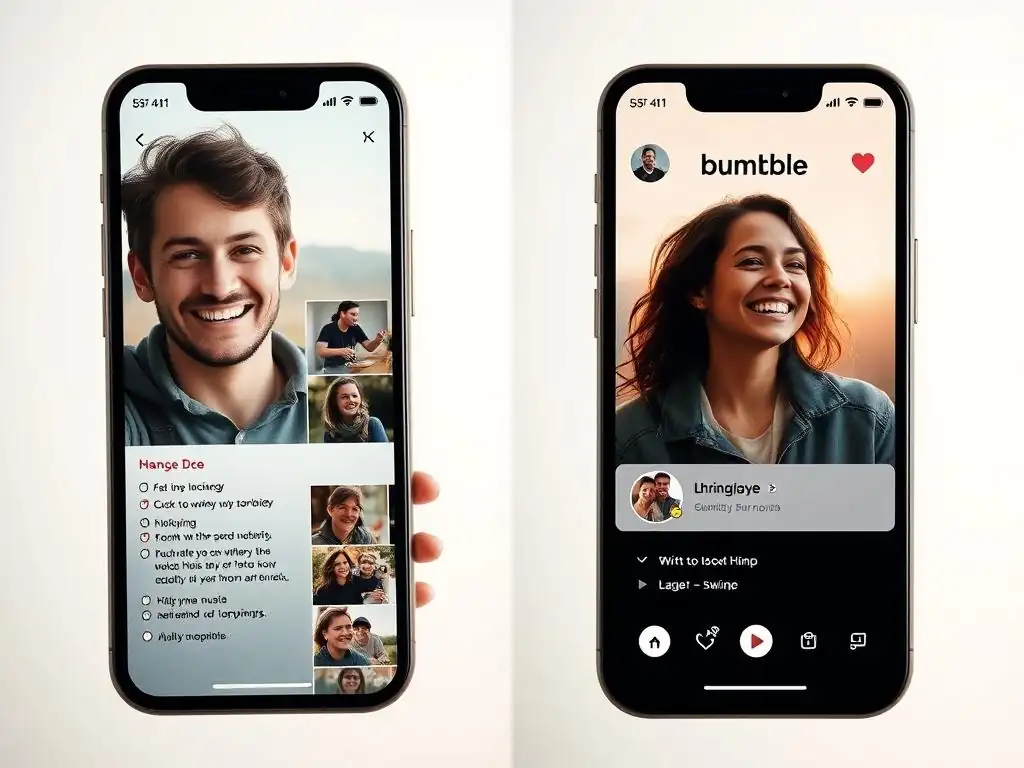
Your profile is your first impression – make it count! A compelling profile on apps like Hinge and Bumble is crucial for attracting the right matches and increasing your chances of finding a meaningful connection. Here's how to craft a profile that showcases your best self and attracts compatible partners.
Effective Communication Strategies: Making a Great First Impression and Keeping the Conversation Going
First impressions are vital in online dating. A compelling opening message can significantly increase your chances of engaging in a meaningful conversation. Avoid generic greetings; instead, personalize your message by referencing something specific from their profile. Show genuine interest in getting to know them, asking open-ended questions that encourage them to share more about themselves. Remember to maintain a balance between showing interest and avoiding overwhelming them with excessive messages.
Maintaining a conversation requires active listening and genuine engagement. Respond thoughtfully to their messages, showing that you're paying attention and genuinely interested in what they have to say. Ask follow-up questions, share relevant anecdotes from your own life, and find common ground to build rapport. Remember, the goal is to build a connection, not just exchange superficial pleasantries. Be yourself, be respectful, and be patient. Building a meaningful connection takes time and effort, but the reward is well worth it.
Staying Safe While Dating Online: Protecting Your Privacy and Personal Information
Online dating offers fantastic opportunities to connect with people, but it's crucial to prioritize your safety and security. Protecting your personal information is paramount, and a little caution can go a long way in ensuring a positive and safe online dating experience. Remember, you're sharing personal details with strangers, so proceed with care.
One of the most important steps is to never share sensitive personal information early in the dating process. This includes your full address, workplace address, exact location, financial details, or your full legal name until you've met the person in a public place and feel confident about their identity. Sharing such information too soon can put you at risk of stalking, harassment, or even identity theft. It's better to err on the side of caution and build trust gradually.
Another crucial aspect of staying safe is being mindful of the information you share on your profile. Avoid posting pictures that reveal too much about your daily routine, such as images taken outside your home or showing your license plate. Similarly, be wary of sharing details about your children or family members. These seemingly innocuous details can be used by malicious individuals to gather information and potentially target you or your loved ones. Remember, less is often more when it comes to online profiles.
Regularly review your privacy settings on the dating app you're using. Most apps provide options to control who can see your profile, contact you, and access your information. Take the time to understand these settings and adjust them to your comfort level. This simple step can significantly reduce your exposure to unwanted attention or potential risks.
Consider using a separate email address and phone number specifically for online dating. This helps to protect your primary contact information and prevents unwanted communication from spilling over into other areas of your life. Many people create a dedicated email account solely for online dating platforms, which allows for better control over their communication.
Finally, trust your instincts. If something feels off or makes you uncomfortable, don't hesitate to block or report the user. Most dating apps have reporting mechanisms in place to help keep their users safe. Your safety and well-being should always be your top priority.
Don't feel pressured to continue interacting with someone if you have any doubts or concerns. Remember, a safe and positive online dating experience is achievable with careful planning and a proactive approach to personal safety. By following these tips, you can significantly reduce your risks and enjoy the benefits of online dating with peace of mind.
Conclusion: Making the Right Choice for Lasting Love
Choosing the right dating app can significantly impact your journey toward finding a meaningful, long-term relationship. Both [App A] and [App B] offer unique features and cater to different user demographics, making the "best" app a highly personal decision. The key is understanding your priorities and dating style to align yourself with a platform that maximizes your chances of success. Remember, the most effective approach involves actively participating, crafting a compelling profile, and engaging authentically with potential partners.
Don't get discouraged if your initial experiences aren't perfect; finding the right person takes time and effort. Persistence and a positive attitude are crucial components of the online dating journey. Ultimately, the "best dating app for relationships" is the one that best suits your individual needs and goals.
Recap: Key Differences Between [App A] and [App B]
Let's summarize the key distinctions between [App A] and [App B] to solidify your understanding. This table highlights the core differences to aid your decision-making process:
| Feature | [App A] | [App B] |
|---|---|---|
| Primary Focus | Building meaningful connections; prioritizing quality over quantity. | Casual dating and networking; faster-paced interactions. |
| User Base | Generally older, more relationship-oriented users. | More diverse age range; a mix of relationship-seekers and casual daters. |
| Profile Depth | Encourages detailed profiles with prompts to foster deeper connections. | Allows for concise profiles; focuses on quick visual assessments. |
| Matching System | Algorithmic matching based on compatibility and shared interests. | Swipe-based matching; emphasizes initial attraction. |
| Communication | Promotes thoughtful messaging and interaction. | Allows for quick exchanges; supports various communication methods. |
| Cost | [Pricing details for App A pending] | [Pricing details for App B pending] |
Remember, these are generalizations. Individual experiences can vary significantly.
Recommendation: Which App is Ultimately Best for Finding a Long-Term Partner?
Based on our analysis, if your primary goal is finding a long-term partner and you value in-depth connection and meaningful interactions, then [App A] might be a better fit. Its focus on compatibility and detailed profiles fosters a more intentional approach to dating. The emphasis on quality over quantity reduces the overwhelming feeling often associated with other apps. However, if you prefer a faster-paced, more casual approach and are comfortable with a wider range of users, [App B] could be a suitable alternative.
Ultimately, the "best" app is subjective. Consider your personality, dating style, and relationship goals when making your choice. Don't hesitate to try both apps – experiencing them firsthand will provide the most valuable insights into which platform aligns best with your journey towards lasting love. ❤️
Frequently Asked Questions
What is the best dating app for finding a serious relationship?
There's no single "best" app, as success depends on individual preferences and goals. Both App A and App B offer features for serious relationships, but App A generally has a stronger reputation for users seeking long-term connections. Consider your priorities when making your choice.
How do App A and App B compare in terms of user base?
App A boasts a larger user base, potentially increasing your chances of finding a match. App B has a more niche user base, which might be beneficial if you have specific preferences or demographics in mind. Consider which app better aligns with your ideal partner profile.
Which app is better for people who are busy?
Both apps offer features to manage your time effectively. App A might be slightly better for busy individuals due to its stronger matching algorithm and streamlined interface, potentially saving you time spent swiping and messaging.
Are App A and App B safe to use?
Both apps prioritize user safety with features like profile verification and blocking options. However, it's crucial to always practice safe online dating habits on any platform, including verifying profiles, meeting in public, and telling a friend your plans.
What are the main differences in the pricing models of App A and App B?
App A offers a freemium model, providing basic features for free with optional paid upgrades. App B follows a subscription-based model, granting access to all features for a monthly fee. Evaluate the features offered in each tier to determine which pricing structure best suits your budget and needs.
The quest for meaningful connection in the digital age is a complex one, and choosing the right tool can significantly impact the journey. The sheer volume of dating apps available today can feel overwhelming, leaving many feeling lost and frustrated. This article aimed to cut through the noise, providing a clear comparison between [App A] and [App B] to help you make an informed decision about which platform best suits your needs and goals.
The rise of dating apps has undeniably reshaped the landscape of modern romance, influencing how we meet, interact, and form relationships. It's a shift that has both positive and negative aspects, prompting ongoing conversations about authenticity, expectations, and the very nature of connection. The technology itself doesn't change the fundamental human need for connection; it simply changes the way we seek it.
This quote highlights the enduring human desire for companionship, a desire that transcends the specific platform we use to find it. The challenge lies in navigating this new landscape with intention and self-awareness.
Ultimately, the "best" dating app is subjective and depends entirely on your individual preferences and goals. This article served as a starting point, but the real work lies in understanding yourself, your desires, and what you're looking for in a partner. Take the time to reflect on your own experiences, your values, and what truly matters to you in a relationship.
Don't be afraid to experiment, to learn from your experiences, and to approach the world of online dating with both optimism and a healthy dose of self-compassion. The right connection is out there – finding it might just require the right approach and a little bit of courage.
Unlock Your Dating Potential: Find Your Perfect Match Today!
Thank you for exploring the world of online dating! You're now equipped to make informed decisions about which dating app is right for you. Ready to take the next step?
- Choose the app that best suits you: Download the app and create a compelling profile. Remember to use what you've learned to maximize your chances of success!
- Share your experience: Tell us which app you chose and why! Share your initial thoughts in the comments below—your insights could help others.
- Experiment and adapt: Feel free to try both apps to determine which platform best aligns with your dating style and goals. What works for one person might not work for another—it's all about finding the right fit!
Ready to start your search? What feature are you most excited to explore in your chosen app?