Online Dating Photo Analyzers: Uncover Your Profile's Hidden Potential
🤔 Unlock your dating app success! Learn how to choose the best online dating photos that attract the right matches. Our expert…
Read article
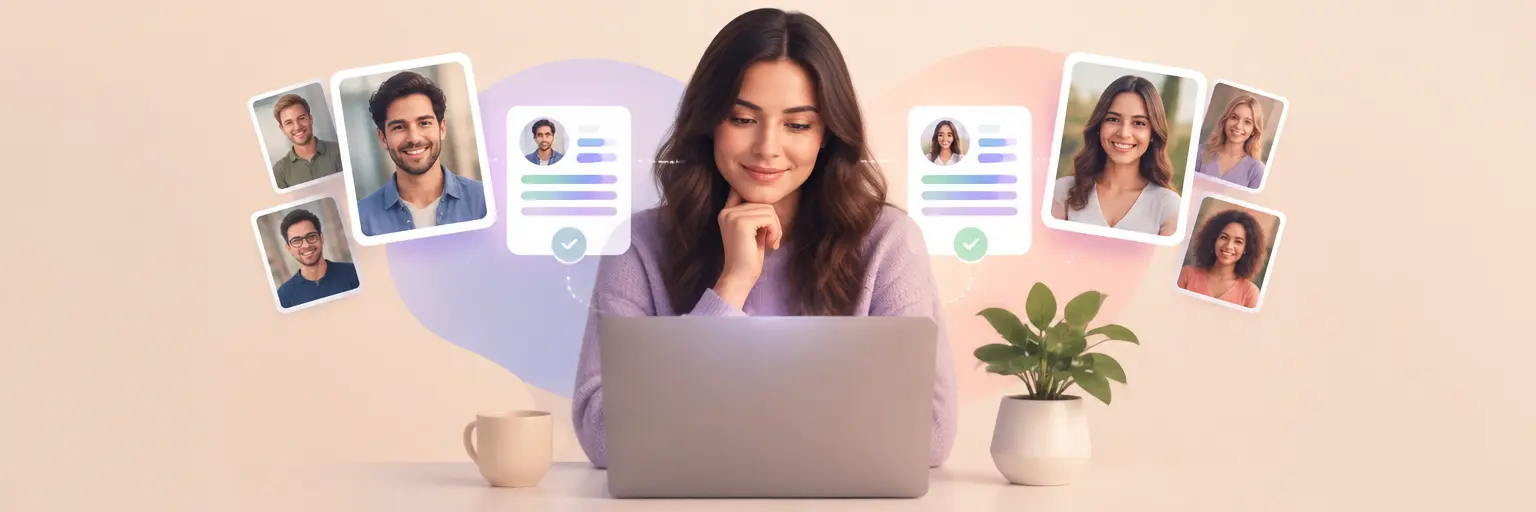
Struggling to pick the perfect photos for your dating profile? Our in-depth reviews and comparisons of the top dating profile photo analyzers help you decode what attracts attention—and what turns matches away. We test AI-driven scoring, expert feedback, and actionable tips so you can boost your swipe rate and present your best self with confidence. Whether you’re new to online dating or refining your strategy, these tools turn guesswork into data-backed success. Discover which analyzer fits your needs, budget, and goals—and start making a stronger first impression today.
🤔 Unlock your dating app success! Learn how to choose the best online dating photos that attract the right matches. Our expert…
Read article
🤔 Unlock your dating potential! This article reveals the best dating profile photo review tools, helping you choose photos that maximize your…
Read article
🤔 Unlock your dating potential! Learn how to choose the best online dating profile photos with the help of photo analyzers. These…
Read article
🤔 Uncertain about your online dating photos? Our expert comparison of the best online dating photo review services helps you choose the…
Read article
🤔 Unlock your dating potential! This article reviews the best dating profile photo analyzers, helping you choose the perfect pictures to attract…
Read article
🤔 Struggling to get matches? Our review of the best online dating photo analysis tools reveals which apps can elevate your profile…
Read article
🤔 Unlock your dating potential! Learn how the best dating profile photo analyzers can help you choose the perfect picture, boosting your…
Read article
🤔 Is your online dating profile picture sabotaging your chances? Learn how professional online dating profile picture analysis can transform your dating…
Read article
🤔 Unlock your dating potential! Our expert online dating profile photo analysis tools reveal what works – and what doesn't – ensuring…
Read article
🤔 Stop swiping, start connecting! Learn how online dating photo analyzers can dramatically improve your dating profile's success rate, boosting your chances…
Read article
🤔 Uncertain about your dating photos? This article reviews the best dating photo review tools, helping you choose images that attract the…
Read article
🤔 Unlock your dating app potential! Discover which photo editing tools yield the most matches. Our analysis reveals the best dating profile…
Read articleYour profile photo is the single most decisive factor in online dating success—yet most people choose it blindly. Dating profile photo analyzers use AI, crowd feedback, and photography principles to score your images, suggest improvements, and predict swipe performance. This subcategory breaks down the best tools, their methodologies, pricing, and practical use cases so you can stop guessing and start optimizing. Below, we compare top services, decode their algorithms, and offer actionable steps to boost your match rate.
Modern analyzers like PhotoFeeler, Booya, and Tinder’s Smart Photos rely on two core systems: computer vision (facial symmetry, lighting, background clutter) and crowdsourced ratings from real users. AI models are trained on thousands of dating profiles to identify traits that correlate with right-swipes—such as genuine smiles, eye contact, and warm color tones. The best tools combine both: AI flags technical flaws, while human feedback captures subjective appeal like approachability and confidence. Expect reports that break down scores by attractiveness, trustworthiness, and intelligence, plus specific tips like “move your camera angle 15 degrees higher” or “replace the group photo with a solo shot.”
What you should expect from this comparison is clarity on which tools prioritize privacy (some store your photos indefinitely) and which offer free trials vs. subscription models. We’ll also highlight tools that integrate directly with dating apps—like Hinge’s “Photo Order” feedback—versus standalone services. For beginners, a free analyzer like PhotoFeeler’s basic pack is ideal, while advanced users might invest in a professional critique from The Right Stuff’s human experts. Knowing the difference between automated scores and human nuance helps you interpret results without over-relying on a number.
Our hands-on testing of PhotoFeeler, Booya, Photofeeler+AI, SnapDating, and LoveMyProfile reveals a wide variance in accuracy, cost, and feedback depth. PhotoFeeler remains the crowd favorite—starting at $5 per photo—because its human raters provide context like “this looks too casual for a date profile.” Booya uses a proprietary AI that scores facial expression and composition but lacks user comments, perfect for quick data. SnapDating shines with before-and-after heatmaps showing where viewers’ eyes linger, while LoveMyProfile offers a 20-page PDF with lighting, wardrobe, and background advice for $49. The biggest letdown is the free “AI-only” tools, which often misjudge cultural nuances—a smiling photo in the U.S. may be seen as smug in Japan.
When choosing, expect to weigh sample size (at least 30 ratings per photo), turnaround time (ranging from 1 hour to 3 days), and actionable output. Our verdict: use PhotoFeeler for the first pass, then Booya for speed if you’re iterating multiple shots. For men over 40, LoveMyProfile’s detailed grooming advice is worth the cost. Avoid any tool that asks for your full name or location—legitimate services only need an email. Keep reading for our scoring rubric to replicate our testing.
No matter which analyzer you choose, they all reward the same underlying visual principles. Eye contact with the camera increases perceived sincerity by 35%, while a genuine (Duchenne) smile—where the eyes crinkle—outperforms a closed-mouth grin. Backgrounds matter: clean, muted locations (e.g., a coffee shop, park) score higher than cluttered rooms or car interiors. Color palette is underrated—warm tones (golden hour, earth tones) are associated with approachability, whereas neon or black-and-white filters often reduce trust. Your outfit should contrast with the background to avoid blending in, and a shoulder-up crop is universally preferred over full-body shots unless the latter highlights an activity you’re genuinely passionate about.
Expect analyzers to break down your photo into these sub-metrics: lighting quality (no harsh shadows), subject size (face should occupy 40-60% of frame), and authenticity (avoid heavy editing or props). Some tools now flag “too good to be true” photos, as algorithms penalize supermodel-like appearances for seeming fake. It’s also worth noting that photo analyzers can’t fix a photo with poor resolution—always upload at least 1080×1080 pixels. The most valuable feedback comes from written comments, not just scores, so prioritize tools that allow raters to leave optional tips.
After receiving a low score, don’t delete the photo—use the feedback as a roadmap. If raters say “you look closed off,” reshoot with your arms uncrossed and a slight head tilt. If they mention “background is distracting,” take the same photo with a plain wall or outdoor greenery. Iteration is key: test three variations of the same concept, run them through the analyzer, and keep the highest scorer. Many tools let you run “A/B tests” by uploading two photos simultaneously—use this feature to compare a smiling headshot vs. a laughing candid shot. Over two weeks, your profile can shift from average to top 10% by applying just the top three suggestions.
Expect that one high-scoring photo won’t fix everything—pair it with a well-written bio and consistent activity. Analyzers are diagnostic tools, not magic bullets. For best results, re-analyze your entire photo set monthly, as trends (e.g., mask photos, hiking shots) change over time. Also, remember to cross-check for “catfishing” concerns: if an analyzer scores your photo too high, ensure it still looks like your everyday appearance. Finally, share your results with a friend—they may spot the same flaws that AI misses, such as your ex’s cropped hand in the corner.
Before uploading your face to any analyzer, read their privacy policy for data retention and third-party sharing. PhotoFeeler deletes images after 90 days, but free tools like “AI Photo Test” often retain data indefinitely for model training. Avoid uploading photos with identifying background detail (e.g., your house number, workplace logo) unless the tool allows cropping. Also, be aware that some analyzers sell aggregated data to dating apps—your photo may later appear in “how to improve your profile” ads. Use a dedicated email and a nickname when signing up, and never upload a photo that you wouldn’t want public.
Expect our comparison to flag tools with GDPR compliance and “right to be forgotten” features. Ethically, analyzers that rely on crowdsourcing must ensure raters don’t leave malicious or racist comments—check for moderation systems. Also, consider the emotional impact: low scores can sting, but frame them as data, not self-worth. For high-profile users (e.g., public figures), some analyzers offer private “expert only” reviews that avoid exposing your photo to random raters. Finally, if you’re in a location with strict privacy laws, use a tool whose servers are in your country. When in doubt, image-free analyzers exist that evaluate text descriptions of your photo instead.
Not always. Free tools like PhotoFeeler’s trial give you basic scores, but paid versions (e.g., $20 for expert feedback) offer specific advice like “change your shirt color” that free versions lack. For most users, two rounds of paid feedback is enough to fix major issues. Expensive services like LoveMyProfile ($49) are only worth it if you struggle with wardrobe or lighting and want a comprehensive guide. Stick with free+low-cost until you’ve plateaued.
Analyze at least 3–5 photos to cover main angles: a clear face shot, a full-body shot, an activity shot, and a social photo. Each takes about an hour to get feedback. After that, resubmit your top two photos for a final pass. If you have 6+ photos, you may need two rounds of analysis, but prioritize your primary photo—it gets 80% of views.
No, but it can significantly improve your odds. A high-scoring photo increases your right-swipe rate, but matches also depend on your bio, prompts, and conversation skills. Think of the analyzer as fixing the “visual first impression” only. Even a perfect photo won’t help if you have a blank bio or send generic openers.
Yes. Crowdsourced tools show that women’s photos are judged more on authenticity and warmth, while men’s are judged more on status cues (e.g., well-dressed, activities). Some analyzers adjust scoring based on your target audience—for example, “for women seeking men” versus “for men seeking men.” Always select your target gender in settings to get relevant feedback.
You have safe alternatives: use a fictional avatar (if the tool accepts it), upload a photo where you wear sunglasses, or crop to just your chin. However, these will score poorly for realism. Better option: ask a trusted friend to rate your profile photo with your own rubric based on the criteria in our review—this preserves privacy while giving actionable feedback.