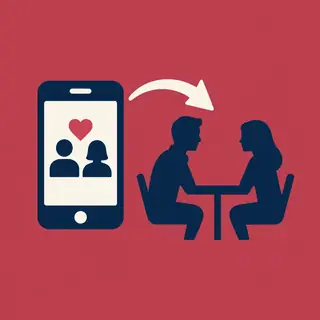
Building Trust in Online Relationships: Your Foundation for Lasting Love
Trust is the invisible bridge that turns a promising online dating connection into a deeply committed, real-world partnership. In the digital realm, where words and photos can be carefully curated, establishing genuine credibility requires intentional effort and emotional intelligence. This subcategory within Long-Term Success is designed to help you move beyond surface-level chatting and create a secure, transparent, and emotionally safe space with your match. Whether you are recovering from a past betrayal or simply want to fast-track intimacy without sacrificing safety, these strategies will empower you to build a relationship that thrives on honesty, consistency, and mutual respect—both before and after you meet in person.
💬 Understanding the Psychology of Digital Trust
Digital trust is not the same as face-to-face rapport; it relies on interpreting cues like response timing, vocabulary, and consistency without the benefit of body language or tone of voice. When you understand that your partner’s digital behavior is a projection of their internal state, you can avoid misreading silence as rejection or short messages as disinterest. The key is to look for alignment between words and actions, such as following through on promised video calls or remembering small details you shared. This psychological framework helps you build trust gradually, reducing anxiety and premature skepticism.
Moreover, digital trust thrives on predictability and vulnerability. By sharing your own fears about timing or miscommunication, you invite your match to do the same, creating a reciprocal cycle of openness. Studies show that couples who explicitly discuss their communication preferences—like how often they check messages or how they handle conflict online—report higher satisfaction. Instead of expecting mind-reading, adopt a curious and non-judgmental approach. This not only accelerates trust but also filters out incompatible partners early, saving you emotional energy.
🔍 Red Flags vs. Green Lights: Calibrating Your Radar
Not every inconsistency is a red flag, but ignoring patterns can be costly. In online dating, green lights include steady engagement, respectful curiosity, and a willingness to move toward video calls or phone chats within a reasonable timeframe. Conversely, red flags are repeated excuses for not showing their face, vague answers about their life, or pressure to share financial or private information. Learning to distinguish between a busy week and a deliberate pattern of evasion is crucial. Create a mental checklist: do they remember your pet’s name, ask follow-up questions, and apologize when they miss a message? These micro-behaviors compound into macro-trust.
However, calibration requires self-awareness too. Your own past trauma can make you see threats where none exist, while loneliness can blind you to genuine warnings. Use a trust journal to log interactions and mark them as “consistent” or “concerning” after each conversation. Over two weeks, review the pattern—not individual slips. If you find a genuine red flag, address it directly with a calm, specific question like, “I noticed you didn’t want to video call this week—can we talk about what’s holding you back?” This turns suspicion into a constructive conversation, which is itself a trust-building exercise.
🛡️ Practical Steps to Verify and Establish Credibility
Building trust online doesn’t mean accepting everything at face value—it means verifying without interrogating. Start with low-stakes checks: ask for their social media handles (even just one) and observe how they interact publicly. A profile that has been active for years with friends and regular posts is more trustworthy than one created three days ago. Next, schedule a video chat early—not because you suspect them, but because seeing their face and hearing their voice reduces the “phantom” feeling of chatting with a stranger. During the call, ask about their neighborhood, workplace, or hobbies in a natural way; their ability to expand on these details is a credibility marker.
Beyond verification, establish shared accountability. Agree on a communication rhythm, such as “we’ll check in every evening” or “we’ll share our weekend plans.” This creates a safety net of predictability. You can also use free online tools like reverse image search on their photos, but do so respectfully—if you find wildly different images, that’s a decisive red flag. Finally, once you move to an exclusive stage, share your real phone number and social media, and encourage them to do the same. This mutual step of transparency is a powerful declaration that you are both investing in a real, long-term connection.
❤️ Turning Transparency into Emotional Intimacy
Trust is not just about safety; it’s the gateway to deep emotional vulnerability. Once you’ve established that your match is credible, you must leverage that security to share more of yourself. Begin by disclosing modest personal stories—your career setbacks, childhood quirks, or fears about dating. Notice how they respond: do they listen, validate, and reciprocate with similar disclosures? This process, called “reciprocal self-disclosure,” is the engine of intimacy. If you only share surface-level likes and dislikes, the connection remains stuck in acquaintance territory. Use the trust you’ve built to ask deeper questions like, “What’s your biggest lesson from a past relationship?” or “What does a successful partnership look like to you?”
Emotional intimacy also requires repair after moments of tension. No matter how strong your digital trust, misunderstandings will happen—a joke taken wrong, a delayed response misinterpreted as neglect. The way you handle these ruptures is more revealing than the rupture itself. Apologize sincerely, explain your intent, and ask clarifying questions instead of withdrawing. This builds a resilient bond where both partners feel safe to be imperfect. Over time, these repair conversations become the cornerstone of your relationship’s memory, proving that you can navigate conflict together, even through a screen.
📅 Transitioning from Online Trust to Offline Safety
Digital trust is a prerequisite, not a destination—the ultimate test is meeting in person. Before that first date, translate your online trust into offline action planning. Share your location with a friend, arrange your own transport, and choose a public, busy venue. These precautions are not about distrusting your match but about preserving your physical safety while allowing emotional trust to grow. Have an explicit conversation about what you both hope from the meeting—casual coffee, a walk, or a meal—so expectations align. Once you meet, notice if your online connection feels the same: does their energy match their digital persona? Is eye contact comfortable? These signals will either reinforce or challenge the trust you’ve built.
After the date, debrief intentionally within 24 hours. Send a message that references a specific moment (“I loved how you described your sister’s cooking”) to show your presence and reinforce the bond. If you both feel a positive connection, schedule a second date but also discuss how you’ll communicate moving forward—should you become more exclusive, how will you handle social media, and what boundaries remain? This proactive planning ensures that your online trust evolves into a structured, real-world partnership, reducing the chances of miscommunication or awkwardness. Remember, the goal is not to rush but to let the trust you’ve built guide the pace.
Frequently Asked Questions
How long does it take to build trust in an online relationship?
There’s no fixed timeline, but research suggests that most couples need 2-4 weeks of consistent daily communication and at least 2-3 video calls to feel a baseline of trust. However, individual experiences vary—some build trust in a week if patterns are extremely consistent, while others need a month. Focus on quality over speed: look for regular check-ins, honest responses, and a genuine willingness to deepen the conversation.
What are the biggest mistakes that break trust before meeting?
The top mistakes include ghosting without explanation, being vague about your life (like not sharing your real name or job), inconsistent messaging that suggests you’re hiding something, and pressuring for personal details too early. Also, failing to follow through on promises—like saying you’ll call but not doing it—erodes credibility quickly. Apologize immediately if you slip, and avoid making promises you can’t keep.
Should I trust someone who refuses to video call?
No, this is a significant red flag. A refusal to video call after 1-2 weeks of consistent chatting often indicates they’re misrepresenting themselves, either in appearance, age, or marital status. In rare cases, they may be shy or have technical issues, so offer a low-pressure voice call first. If they still avoid any live interaction, prioritize your safety and move on—genuine connection requires seeing and hearing each other.
Can I rebuild trust after a lie about my profile?
Yes, but only if the lie is minor (like your height or job title) and you confess voluntarily before they discover it. Rebuilding trust requires a sincere apology, explaining why you lied, and giving them time to verify your corrected information. However, if the lie is about relationship status or identity, it’s rarely recoverable—such lies suggest fundamental dishonesty that will likely repeat. Assess whether the deception was protective or manipulative.
How do I know if my gut feeling says “untrustworthy” or just “different”?
Your gut feeling is often a compendium of subtle cues your conscious mind misses. If you feel uneasy, list three concrete behaviors that triggered it—like inconsistent stories or evasive answers. Then ask yourself if these behaviors could be explained by nervousness or cultural differences. If not, trust your gut. However, if you’re simply uncomfortable with their communication style (e.g., they’re less verbose), that’s not a red flag, just a difference. Give them a chance to adapt.