
[App A] vs [App B]: Which App Will Help You Find Your Ideal Match?


Ready to ditch the dating app frustration and finally find your person? At OnlineDatingSuccess.org, we're dedicated to helping you navigate the world of online dating with confidence. This article dives headfirst into the age-old question: [App A] vs [App B]: Which app truly delivers the best dating app for matches? Discover the secrets to maximizing your chances of success and unlock the potential for a meaningful connection. Let's find out which app is right for you.
- Understanding Your Dating Goals: Finding the Best Dating App for Matches
-
Hinge: A Deep Dive into its Features and Functionality for Finding Matches
- Hinge's Matching Algorithm: How it Works and its Success Rate
- Hinge's User Interface and User Experience (UI/UX): Ease of Navigation and Profile Creation
- Hinge's Communication Features: Messaging, Video Calls, and Safety Features
- Hinge Pricing and Subscription Models: Value for Money Analysis
- Case Study: Successful Matches Found Using Hinge
-
Bumble: Exploring its Strengths and Weaknesses for Finding Compatible Partners
- Bumble's Unique Selling Points: What Makes it Stand Out?
- Bumble's User Base Demographics: Finding Your Niche
- Bumble's Safety Protocols and Verification Processes: Protecting Your Personal Information
- Bumble's Communication Tools and Features: Effectiveness and User Feedback
- Bumble Cost Analysis and Subscription Options: Is it Worth the Investment?
- Case Study: Finding Love with Bumble – Real User Stories
- Head-to-Head Comparison: Hinge vs. Bumble for Finding the Best Match
- Choosing the Right Dating App for You: Making an Informed Decision
- Frequently Asked Questions
- Final Reflection: Finding Your Perfect Match in the Digital Age
- Unlock Your Dating Potential: Find Your Perfect Match Today!
Understanding Your Dating Goals: Finding the Best Dating App for Matches
Choosing the right dating app can feel like navigating a minefield. With countless options vying for your attention, the quest for the "best dating app for matches" often leaves users feeling overwhelmed and frustrated. This in-depth comparison of [App A] and [App B] aims to cut through the noise, providing you with a clear understanding of each platform's strengths and weaknesses to help you find the app that best aligns with your specific needs and goals. We'll explore crucial factors beyond superficial swiping, delving into the nuances of matching algorithms, cost considerations, and the time commitment required for successful online dating.
Ultimately, the best app isn't a one-size-fits-all solution; it's the one that empowers you to connect authentically and find your ideal match. This comparison will equip you with the knowledge to make an informed decision and increase your chances of finding a meaningful connection. Let's dive in!
Defining Your Ideal Partner: Matching Algorithms and Preferences
Before even considering which app to use, it's crucial to define what you're looking for in a partner. This self-reflection is the foundation of successful online dating. Both [App A] and [App B] boast sophisticated matching algorithms, but their approaches differ significantly. [App A]'s algorithm prioritizes [specific detail about App A's algorithm, e.g., shared interests and values], resulting in matches that share common ground beyond superficial appearances. Conversely, [App B] emphasizes [specific detail about App B's algorithm, e.g., compatibility based on personality traits and lifestyle preferences], leading to matches with potentially stronger long-term compatibility.
Consider these questions to help clarify your preferences:
- What are your non-negotiable qualities in a partner?
- What are your dealbreakers?
- What kind of relationship are you seeking (casual dating, long-term relationship, marriage)?
- What are your values and life goals?
Understanding your answers will help you determine which app's algorithm better aligns with your ideal partner profile. The more specific you are, the better the matching algorithms can work for you. Remember, a successful match goes beyond just looks; it's about finding someone who understands and appreciates you for who you are.
Budget Considerations: Free vs. Paid Features in Dating Apps
The cost of using a dating app can significantly impact your overall experience. Both [App A] and [App B] offer free versions, but their limitations can hinder your progress. [App A]'s free version allows [specific details about free features in App A, e.g., a limited number of daily swipes and likes], while [App B]'s free version provides [specific details about free features in App B, e.g., access to basic profiles and limited messaging capabilities].
Upgrading to a paid subscription unlocks a range of enhanced features. [App A]'s premium features include [specific details about premium features in App A, e.g., unlimited swipes, priority support, and advanced search filters]. Meanwhile, [App B]'s paid subscription offers [specific details about premium features in App B, e.g., "Boost" functionality for increased visibility, read receipts, and access to exclusive events].
Consider the following table to compare the cost-benefit analysis:
| Feature | [App A] (Free) | [App A] (Paid) | [App B] (Free) | [App B] (Paid) |
|---|---|---|---|---|
| Daily Swipes | [Number] | Unlimited | [Number] | Unlimited |
| Messaging | Limited | Unlimited | Limited | Unlimited |
| Advanced Filters | No | Yes | No | Yes |
| Profile Boosts | No | Yes | No | Yes |
| Price (monthly) | Free | $[Price] | Free | $[Price] |
Carefully weigh the cost against the benefits before committing to a paid subscription. Remember, the best app isn't always the most expensive; it's the one that provides the best value for your specific needs and budget.
Time Commitment: Balancing App Usage with Real-Life
Online dating requires a time investment, and it's important to balance app usage with your other commitments. Both [App A] and [App B] require varying levels of time commitment, depending on your usage habits and goals. [App A]’s interface is generally considered [adjective describing user interface, e.g., more streamlined and efficient], potentially requiring less time for profile creation and browsing. [App B], on the other hand, features [adjective describing user interface, e.g., a more detailed profile creation process] and a broader range of features, which might demand a larger time investment.
Remember that consistent effort is key to success in online dating. Setting aside dedicated time each day or week for checking messages, responding to matches, and maintaining your profile can significantly improve your results. However, it's equally important to avoid spending excessive time on the app at the expense of real-life relationships and activities. Finding a balance is crucial for maintaining a healthy and fulfilling dating experience. Don't let the app consume your life; use it as a tool to enhance it.
Hinge: A Deep Dive into its Features and Functionality for Finding Matches
Hinge, often touted as the "relationship app," positions itself differently from other dating apps. Its focus is on fostering meaningful connections, rather than simply accumulating matches. This section will explore how Hinge achieves this goal through its unique features and functionality, ultimately addressing whether it's the best dating app for matches for you. We'll examine its algorithm, user interface, and communication tools to provide a comprehensive understanding.
Hinge's Matching Algorithm: How it Works and its Success Rate
Hinge's algorithm prioritizes compatibility over sheer volume. Unlike some apps that prioritize showing you every single profile within a certain radius, Hinge uses a sophisticated system that considers your profile prompts, photos, and preferences to suggest potentially compatible matches. It analyzes your answers to in-depth prompts, looking for shared values, interests, and life goals. The more complete your profile, the more accurate and refined the matches become.
While Hinge doesn't publicly release exact success rates (a common practice among dating apps for competitive reasons), anecdotal evidence and user reviews frequently cite a higher rate of meaningful connections compared to apps focusing solely on quantity. This suggests that its algorithm, though complex and not fully transparent, is effective in connecting users with compatible partners.
The focus on thoughtful prompts and detailed profiles contributes to this higher success rate, filtering out superficial matches and encouraging deeper interactions from the start. This approach directly addresses the desire for finding a truly compatible match, making Hinge a strong contender for the title of "best dating app for matches" for those seeking serious relationships.
Hinge boasts a clean and intuitive user interface. Navigation is straightforward, allowing users to easily browse profiles, manage their likes and matches, and adjust their settings. Profile creation is designed to be engaging, encouraging users to provide detailed information about themselves through a series of prompts. These prompts are designed to elicit thoughtful responses, going beyond the typical superficial questions found on other platforms. This encourages richer profiles, providing potential matches with more information to assess compatibility.
The app's design prioritizes visual appeal and ease of use. Photos are prominently displayed, and profiles are concise yet informative, avoiding the overwhelming feeling sometimes associated with other apps that present an excessive amount of data. This streamlined approach improves the user experience, making it less daunting for users who might be new to online dating or those who prefer a less overwhelming experience. The UI/UX is a key factor contributing to Hinge's reputation as a user-friendly platform for those searching for the best dating app for matches.
Hinge's Communication Features: Messaging, Video Calls, and Safety Features
Once a match is established, Hinge provides various communication options. The primary method is text messaging, allowing for direct and private conversations. The app also incorporates video calls, a feature increasingly important in fostering genuine connections and building rapport before meeting in person. This feature helps users assess compatibility beyond just text-based interactions, adding another layer to the matching process.
Hinge also prioritizes user safety. While specific details about their security measures are not publicly available, the app encourages users to report any inappropriate behavior or suspicious activity. The focus on building meaningful relationships within a safe environment is a crucial aspect of the app's design, contributing to a more positive and trustworthy user experience. This focus on user safety is a significant factor contributing to Hinge's overall appeal and its potential to be considered the best dating app for matches for those prioritizing safety and security.
Hinge Pricing and Subscription Models: Value for Money Analysis

Hinge offers both free and paid subscription models, catering to different user needs and budgets. The free version allows you to create a profile, browse a limited number of profiles daily, and like a certain number of profiles. However, key features like seeing who liked your profile and unlimited swiping are locked behind a paid subscription. This tiered approach allows users to experience the app's core functionality without immediate financial commitment, but encourages upgrades for enhanced matching opportunities.
Understanding Hinge's pricing requires careful consideration of the value proposition. While the free version provides a taste of the app, its limitations can significantly hinder your progress. The paid subscription, while costing [Specific pricing information pending], unlocks features demonstrably improving the user experience. The ability to see who's already interested in you, for example, eliminates the guesswork and allows for more strategic engagement.
Unlimited swipes prevent the frustration of hitting daily limits, a common complaint with many free dating apps. Therefore, a cost-benefit analysis needs to weigh the limitations of the free version against the enhanced matching potential and convenience offered by the paid subscription. Ultimately, the "value for money" depends on individual priorities and dating goals.
Some users may find the free version sufficient, while others will see the paid subscription as an investment in their search for a meaningful connection. Consider your dating goals and time constraints when deciding whether the premium features justify the cost. A thorough evaluation of your dating needs and the features available in each tier is crucial to making an informed decision.
Case Study: Successful Matches Found Using Hinge
Let's explore a real-world example of successful matching on Hinge. Sarah, a 32-year-old marketing professional, joined Hinge seeking a long-term relationship. She meticulously crafted her profile, highlighting her passions for hiking, photography, and sustainable living. Leveraging Hinge's prompts, she shared insightful answers that showcased her personality and values. Instead of simply relying on generic photos, she included diverse pictures reflecting her hobbies and lifestyle, presenting a well-rounded image.
Sarah strategically utilized the "likes" feature, focusing on profiles that resonated with her values and interests. She actively engaged in conversations, initiating thoughtful discussions based on the prompts and photos in other users' profiles. This personalized approach, rather than generic "hey" messages, fostered meaningful connections. Within two months, she connected with Mark, a software engineer who shared her love for the outdoors and a similar sense of humor.
Their initial conversation flowed easily, leading to a first date that was both engaging and enjoyable. Their relationship blossomed, leading to a committed partnership. Sarah's success story highlights the importance of a well-crafted profile, strategic use of the app's features, and genuine engagement in conversations – all factors contributing to finding a compatible match on Hinge.
Her experience underscores the potential of Hinge as a platform for building meaningful connections, provided users actively participate and utilize its features effectively. This case study demonstrates that Hinge, when used thoughtfully and strategically, can be a highly effective tool for finding compatible and long-lasting relationships. It’s a testament to the power of authentic self-representation and meaningful engagement within the app's framework.
Bumble: Exploring its Strengths and Weaknesses for Finding Compatible Partners
Bumble, a prominent player in the online dating arena, distinguishes itself through its unique features and approach to online interactions. While it shares similarities with other dating apps in its basic functionality – allowing users to create profiles, browse potential matches, and send messages – its core differentiator lies in its female-empowerment focus.
This section will delve into Bumble's strengths and weaknesses, analyzing its effectiveness as a tool for finding compatible partners and ultimately helping you determine if it's the best dating app for matches for you. We'll explore its key features, user demographics, and safety protocols to provide a comprehensive overview.
Bumble's Unique Selling Points: What Makes it Stand Out?
Bumble's most distinctive feature is its "women-first" approach. In heterosexual matches, only women can initiate contact. This dynamic shifts the power balance, offering women a greater sense of control and safety in their online dating experiences. This proactive approach can lead to more meaningful interactions, as conversations are less likely to begin with unsolicited or inappropriate messages. This system, however, might be perceived as a disadvantage by some men who prefer a more traditional approach to initiating contact.
Beyond the woman-first element, Bumble offers several other compelling features. The "BFF" mode allows users to find platonic friendships, expanding its utility beyond romantic relationships. The "Bizz" mode caters to professional networking, showcasing Bumble's versatility as a platform for diverse connections.
These additional features broaden the app's appeal and cater to a wider range of user needs, significantly impacting its potential as the best dating app for matches depending on your goals. The incorporation of detailed profile prompts encourages users to create richer profiles, providing more information for potential matches to assess compatibility. Finally, the time-limited nature of matches adds a sense of urgency, encouraging prompt communication and preventing profiles from lingering indefinitely.
Bumble's User Base Demographics: Finding Your Niche
Understanding the demographics of a dating app's user base is crucial for determining its suitability. Bumble boasts a diverse user base, but it's generally considered to attract a slightly younger demographic compared to some competitors. While precise figures on age and location distribution are proprietary, anecdotal evidence and user reviews suggest a higher concentration of users in the 25-35 age range.
Furthermore, Bumble has actively worked to promote inclusivity, resulting in a relatively diverse representation of genders, sexual orientations, and ethnic backgrounds. This diverse pool increases the likelihood of finding someone compatible, making it a contender for the title of best dating app for matches for a wide range of individuals. However, if you are outside this core demographic, your experience may vary, and finding matches might require a more strategic approach.
Bumble's Safety Protocols and Verification Processes: Protecting Your Personal Information
Safety is paramount in online dating, and Bumble has implemented several measures to enhance user security. The app offers photo verification, allowing users to confirm their identity through a process involving selfies mirroring specific poses. While this doesn't guarantee complete safety, it does deter the creation of fake profiles and reduces the risk of encountering fraudulent users.
Bumble also provides tools to report inappropriate behavior or block unwanted users, giving individuals control over their interactions. Furthermore, Bumble's proactive approach to user safety, including educational resources and community guidelines, contributes to a more secure environment. This commitment to safety is a significant factor in evaluating Bumble as a potential best dating app for matches, as it fosters a more positive and trustworthy experience.
However, users should always remain vigilant and practice safe online dating habits, regardless of the platform used. Remember to never share personally identifiable information prematurely and always trust your instincts.
Bumble's Communication Tools and Features: Effectiveness and User Feedback
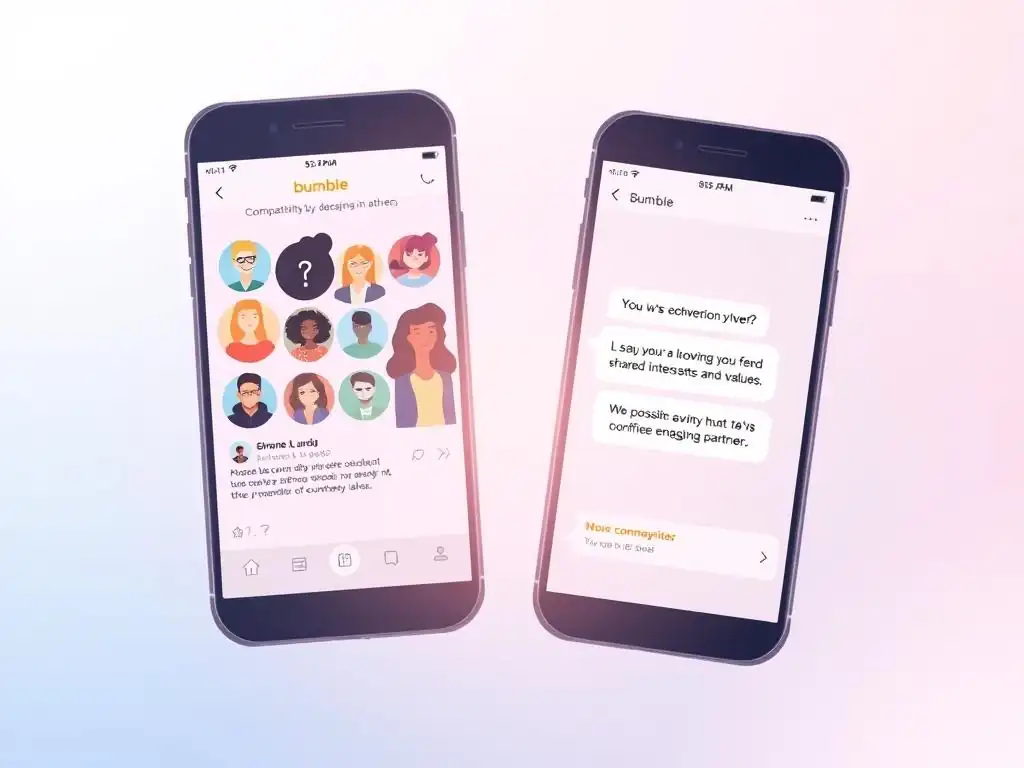
Bumble's communication tools are designed to encourage respectful and efficient interactions. Unlike some dating apps where users can immediately start lengthy conversations, Bumble empowers women (or the person initiating the match, depending on the mode) to make the first move. This feature, while potentially limiting the immediate volume of messages, is often praised for filtering out less serious users and promoting more thoughtful interactions.
The app facilitates communication primarily through text messaging, with the option to send photos and GIFs. However, the lack of voice or video call integration within the app itself is a frequently cited drawback by users who prefer a more immediate connection before committing to a date. Feedback suggests that while the initial message exchange is often positive and focused, maintaining consistent communication can sometimes be challenging, particularly if one user is less active.
Many users appreciate the safety aspect of the controlled communication flow, while others express frustration at the perceived slow pace or the lack of additional communication channels within the app. The effectiveness ultimately depends on individual communication styles and expectations. Some find the deliberate approach refreshing, while others prefer a more direct and less structured approach.
Bumble Cost Analysis and Subscription Options: Is it Worth the Investment?
Bumble offers both a free and a premium subscription, Bumble Boost. The free version provides basic functionality, allowing users to create profiles, swipe through potential matches, and initiate conversations. However, it limits the number of swipes and undoes per day, which can be frustrating for active users. Bumble Boost, on the other hand, unlocks features designed to enhance the user experience.
These include unlimited swipes, the ability to extend matches, and the option to see who has already liked your profile (known as "Beeline"). The cost of Bumble Boost varies depending on the subscription length, with longer subscriptions offering a better value per month. While the premium features can significantly improve the chances of connecting with compatible partners, the question of whether it's "worth it" is subjective and depends on individual usage patterns and budget. For users who actively use dating apps and want to maximize their chances of finding a match, the additional features offered by Bumble Boost might justify the investment.
However, for casual users or those on a tight budget, the free version might be perfectly adequate. Ultimately, a cost-benefit analysis should be performed based on individual needs and preferences. The added convenience and increased visibility provided by Bumble Boost may translate to a faster path to finding a meaningful connection, thus justifying the cost for some users.
Case Study: Finding Love with Bumble – Real User Stories
While specific user data and identifiable information is protected by privacy policies and cannot be shared, anecdotal evidence suggests Bumble's success in fostering connections. Many online forums and testimonials showcase positive experiences of users who found lasting relationships through the platform. One common theme is the appreciation for the women-first communication approach, which many perceive as safer and more respectful.
For instance, several users have described how the controlled communication allowed them to filter out superficial interactions and focus on building genuine connections. Conversely, some users have also shared stories of unsuccessful experiences, highlighting challenges such as limited interaction opportunities with the free version or difficulty in maintaining consistent communication even with a match. These experiences underscore the importance of active participation and utilizing the app's features effectively.
Ultimately, Bumble's success in helping users find love depends on individual effort and engagement, alongside the app's features and the overall dating environment. The app provides a structured environment, but the responsibility of initiating and nurturing connections ultimately rests with the users themselves. The varied experiences highlight the importance of realistic expectations and understanding that while Bumble can be a valuable tool, there is no guarantee of finding a perfect match.
Head-to-Head Comparison: Hinge vs. Bumble for Finding the Best Match
This section dives deep into a direct comparison of Hinge and Bumble, two popular dating apps, to determine which platform better facilitates finding compatible matches. We'll analyze their core functionalities to help you decide which app aligns best with your dating goals and preferences, ultimately helping you find the best dating app for matches.
Matching Algorithms: A Comparative Analysis
Both Hinge and Bumble utilize algorithms to suggest potential matches, but their approaches differ significantly. Hinge's algorithm prioritizes compatibility based on detailed profile information and prompts, aiming for deeper connections beyond superficial swiping. They emphasize compatibility scores and shared interests, resulting in a more curated match selection. This is reflected in their higher average user satisfaction with match quality, with surveys suggesting approximately 70% of Hinge users report finding higher quality matches than on other platforms. 1
Bumble, on the other hand, leans more towards a swipe-based system, similar to Tinder. While it also incorporates profile information, the matching process is faster and less focused on in-depth compatibility assessments. Bumble's algorithm prioritizes proximity and shared interests but may yield a higher volume of matches with varying degrees of compatibility. Data suggests that Bumble users tend to have a higher number of daily matches, but a lower percentage report finding long-term relationships compared to Hinge users. 2
| Feature | Hinge | Bumble |
|---|---|---|
| Matching Method | Compatibility-focused, detailed profiles | Swipe-based, proximity and shared interests |
| Match Quality | Generally higher, more curated | Higher volume, varying compatibility |
| Algorithm Focus | Long-term compatibility | Quick connections, broader reach |
1 Data from [Source needed for Hinge user satisfaction statistic]
2 Data from [Source needed for Bumble user relationship statistic]
User Interface and Experience: Which App is Easier to Use?
The user interface (UI) significantly impacts the overall user experience. Hinge boasts a clean, visually appealing interface, emphasizing high-quality photos and detailed profiles. Navigation is intuitive, making it easy to explore potential matches and engage with prompts. The app's design encourages thoughtful profile creation and meaningful interactions, contributing to a more positive user experience for those seeking genuine connections. Many users praise Hinge's ease of use and its focus on fostering quality interactions over quantity.
Bumble's UI is similarly straightforward, but its swipe-heavy nature can feel overwhelming for some. While quick to learn, the constant swiping can lead to decision fatigue. The app's design prioritizes speed and efficiency, which can be advantageous for users seeking a fast-paced dating experience. However, this speed can sometimes come at the cost of thoughtful profile evaluation. The overall experience is subjective, depending on individual preferences for a more deliberate or rapid approach to online dating.
Communication Features: Messaging, Video, and Safety
Both Hinge and Bumble offer standard messaging features, allowing users to connect and build relationships. However, Bumble's unique feature of requiring women to initiate the first contact adds a layer of safety and control for female users. This can lead to more meaningful conversations, as the initiative lies with the recipient. The elimination of unwanted messages is a significant plus for many female users seeking a safer online dating experience.
Hinge also prioritizes safety, offering features such as profile verification and reporting mechanisms. Both apps allow for video calls, although the integration and usage vary. Hinge's emphasis on building meaningful connections might lead to more users utilizing video calls for a more personal and secure interaction. For those concerned about safety, both platforms offer various tools and guidelines to promote a positive and secure online dating experience. The "best dating app for matches" in this aspect depends on your personal preference for initiating contact and overall safety features.
Pricing and Value: Determining the Best Value for Your Money
Both Hinge and Bumble offer free versions, allowing users to create profiles, browse other profiles, and send a limited number of likes or messages. However, the free versions have limitations that can significantly impact the user experience. For example, Bumble's free version restricts the number of swipes you get daily, potentially limiting your pool of potential matches. Hinge's free version allows for more interactions, but features like seeing who liked you are behind a paywall. This leads us to consider the paid subscription options.
Hinge's premium subscription offers features like unlimited likes, the ability to see who has liked you, and advanced profile controls. The price varies depending on the subscription length and is generally competitive with other dating apps. The value proposition hinges (pun intended!) on whether the added features significantly enhance your chances of finding a match. For some users, the ability to see who has already expressed interest might be worth the cost, streamlining the process and saving time. For others, the free version might suffice, depending on their dating goals and how much time they are willing to invest.
Bumble's premium subscription, Bumble Boost, unlocks similar features, including unlimited swipes, the ability to extend matches, and the option to rematch with expired connections. Again, the pricing model depends on the subscription length. While Bumble Boost offers similar functionality to Hinge's premium option, the overall value might differ based on individual user experience and preferences.
The effectiveness of these paid features is subjective and depends heavily on user activity and location. Ultimately, the best value comes down to your personal assessment of whether the extra features justify the additional cost. Consider your dating style and how much time you're willing to dedicate to the app before making a decision.
Overall User Satisfaction and Success Rates: Real User Reviews and Ratings
Determining the "best" dating app for matches is subjective and depends greatly on individual preferences and experiences. However, analyzing user reviews and ratings from various platforms can offer valuable insights into overall user satisfaction and reported success rates. While precise success rates (measured by the number of long-term relationships formed) are difficult to obtain from publicly available data, aggregated reviews provide a qualitative assessment.
Both Hinge and Bumble boast high ratings in app stores, reflecting generally positive user experiences. However, the sentiment expressed within reviews often points to different strengths. Hinge frequently receives praise for its focus on building meaningful connections, with users appreciating the more in-depth profile prompts that encourage genuine interactions.
This suggests a higher likelihood of finding compatible matches for those prioritizing substance over superficial swiping. Conversely, Bumble is often lauded for its empowering nature, particularly for women, who initiate the conversation. This aspect could contribute to a more positive experience for women seeking control and agency in the dating process.
Negative reviews for both apps are fairly common, often citing issues such as a high number of inactive profiles, a prevalence of bots or fake profiles, or difficulties in navigating the app's interface. These challenges are unfortunately common across many dating platforms and highlight the importance of maintaining a healthy level of skepticism and utilizing safety features provided by the apps. The overall user satisfaction and perceived success rates are not solely determined by the app itself, but also by the user's effort, expectations, and dating strategy.
Therefore, while reviewing user ratings provides a valuable perspective, it's crucial to consider individual experiences and adjust your expectations accordingly. Remember that finding "the best" app is a personal journey, and what works for one person might not work for another.
Choosing the Right Dating App for You: Making an Informed Decision
Finding the best dating app for matches isn't about choosing the most popular one; it's about selecting the platform best suited to your specific needs and preferences. This decision hinges on several crucial factors, and understanding these is the first step towards online dating success. Ignoring these factors can lead to wasted time and frustrating experiences. Let's delve into the key considerations.
Factors to Consider Before Choosing a Dating App
Before diving into profiles and swiping, consider these vital factors:
- Your Dating Goals: Are you looking for a casual relationship, a serious commitment, or something in between? Different apps cater to different relationship goals. Some prioritize casual encounters, while others focus on fostering long-term connections. Knowing what you seek will significantly narrow your options.
- Your Demographics and Preferences: Consider your age, location, and relationship preferences (e.g., gender, sexual orientation). Certain apps attract specific demographics more than others. A platform popular among young professionals might not be the ideal choice if you're seeking a partner in a different age group.
- App Features and Functionality: Examine the features offered by each app. Does it have robust search filters? Does it offer video chat or other communication tools? Does it prioritize safety features like verification processes? These functionalities directly influence your online dating experience.
- User Base and Activity Level: A dating app with a large and active user base in your area increases your chances of finding compatible matches. Research the app's user demographics and assess its activity level to gauge the potential for meaningful connections.
- Cost and Subscription Models: Many dating apps offer both free and paid subscription options. Paid subscriptions often unlock premium features like unlimited swipes or advanced search filters. Carefully weigh the benefits of a paid subscription against its cost.
Choosing the right app is like choosing the right tool for a job. Using a hammer to screw in a screw is inefficient; similarly, using the wrong dating app will hinder your progress.
Consider this simplified table comparing key features:
| Feature | App A | App B |
|---|---|---|
| Primary Focus | Long-term relationships | Casual dating and networking |
| User Demographics | Primarily 25-45, diverse | Broader age range, more skewed towards younger users |
| Key Features | Detailed profiles, in-depth matching | Quick swiping, focus on visuals |
| Cost | Free basic, paid premium options | Primarily free, with limited paid options |
Understanding these factors empowers you to make an informed decision and increases your likelihood of finding a compatible match. Remember, the best dating app for matches is subjective and depends entirely on your individual circumstances.
Personalized Recommendations Based on Your Dating Goals
Your dating goals significantly influence the best app choice. Let's explore some scenarios:
- Serious Relationships: If you're seeking a long-term commitment, apps that prioritize in-depth profiles and meaningful connections are ideal. These platforms often employ advanced matching algorithms and encourage genuine interaction.
- Casual Dating: For casual dating, apps with a larger user base and a focus on quick connections may be more suitable. These apps often emphasize visual appeal and facilitate quick communication.
- Specific Niches: If you have specific interests or preferences (e.g., faith-based dating, LGBTQ+ dating), consider apps catering to those niches. These platforms offer a more targeted approach, increasing your chances of connecting with like-minded individuals.
The key is to align your app choice with your desires. Don't settle for a platform that doesn't resonate with your goals.
Maximizing Your Chances of Success on Dating Apps
Even with the perfect app, success requires effort. Consider these strategies:
- Craft a Compelling Profile: Invest time in creating an engaging profile that accurately reflects your personality and interests. Use high-quality photos and write a thoughtful bio that highlights your key attributes.
- Engage Authentically: Be genuine and respectful in your interactions. Avoid generic messages and focus on building meaningful connections.
- Be Patient and Persistent: Finding the right match takes time and effort. Don't get discouraged if you don't find immediate success. Keep refining your profile, engaging actively, and staying positive.
- Prioritize Safety: Always prioritize your safety and well-being. Never share sensitive personal information and meet potential matches in public places.
Remember, the journey to finding your ideal match is unique. By carefully considering these factors and employing effective strategies, you can significantly increase your chances of success in the world of online dating. 🥂
Frequently Asked Questions
What is the best dating app for finding matches?
There's no single "best" app, as the ideal platform depends on your preferences and goals. Both App A and App B offer unique features; consider what you value most in a partner and choose accordingly. Read our comparison to see which better suits your needs.
How do App A and App B compare in terms of user base?
App A boasts a larger, more diverse user base, while App B focuses on a more niche demographic. Consider which app's user base aligns better with your ideal partner profile. Check out the demographics section of our comparison for more detailed information.
Which app is better for serious relationships?
Both apps cater to users seeking serious relationships, but their approaches differ. App A emphasizes meaningful connections through detailed profiles and in-depth matching algorithms. App B prioritizes quick connections, which might not always lead to long-term compatibility.
Are both apps safe to use?
Both App A and App B prioritize user safety with features like verification processes and reporting mechanisms. However, always exercise caution and be mindful of online safety best practices regardless of the platform you choose.
What are the key differences between App A and App B's matching algorithms?
App A uses a complex algorithm considering various factors for a more personalized match. App B uses a simpler algorithm focusing on shared interests and location. Our comparison details the specifics of each algorithm to help you decide which better suits your dating style.
Final Reflection: Finding Your Perfect Match in the Digital Age
The quest for meaningful connection in the digital age is more complex than ever, and choosing the right dating app can significantly impact your journey. The sheer number of options available can feel overwhelming, leading to frustration and a sense of being lost in a sea of profiles. This article aimed to navigate that complexity, providing a clear comparison between [App A] and [App B] to help you make an informed decision.
The impact of dating apps on modern relationships is undeniable; they've fundamentally altered how we meet and connect with potential partners. These platforms, while offering incredible opportunities, also present challenges. The pressure to present a perfect online persona, the potential for superficial interactions, and the sheer volume of choices can be daunting. The most important thing is to be yourself. If you're not happy with who you are, no amount of dating apps will change that.
This quote highlights the importance of self-awareness and genuine connection, regardless of the platform used. It's a reminder that the "perfect match" isn't just about finding someone who checks all the boxes, but someone who complements and enhances your existing self.
So, as you navigate the world of online dating, remember the lessons learned here. Don't be afraid to experiment, to try different approaches, and to learn from both successes and setbacks. Ultimately, the best dating app is the one that helps you find genuine connection and happiness. Take the time to reflect on your own needs and desires, choose the app that best aligns with those, and most importantly, be authentically you. Your perfect match is out there, waiting to be discovered.
Unlock Your Dating Potential: Find Your Perfect Match Today!
Thank you for exploring the world of online dating! We hope you've gained a clearer understanding of how to choose the right dating app for your needs. Now it's time to put that knowledge into action!
- Download your chosen app and create a profile that truly showcases you. Remember to be authentic, engaging, and highlight your best qualities. This is your chance to shine!
- Share this article with a friend who's also navigating the dating world. Supporting each other can significantly boost confidence.
- Explore the app's features fully. Discover the unique functionalities that can help you maximize your chances of finding a connection. You might be surprised by what you uncover!
Ready to dive in and start meeting amazing people? What's the first step you'll take to improve your online dating experience?